Categories
Diet & Nutrition Questions & Answers (FAQs)

What do elephants eat?

An adult elephant consumes between 300 and 400 pounds (136–181 kg) of vegetation every single day — and spends up to 18 hours doing it. That extraordinary commitment to eating isn’t gluttony; it’s a biological necessity. Elephants have surprisingly inefficient digestive systems that absorb only around 40 percent of the nutrients in everything they eat, which means they must process enormous volumes of food just to meet their energy needs. Understanding what elephants eat reveals a great deal about how these animals shape the ecosystems they live in.

Categories
Different species Visit elephants

Borneo Pygmy Elephants: Where to See Them

The Borneo pygmy elephant is the smallest – and most genetically distinct – subspecies of Asian elephant on earth. Found only on the island of Borneo, and almost entirely within the Malaysian state of Sabah, it’s one of the rarest elephants in the world. Roughly 1,000 to 1,500 of them are left in the wild.

Borneo pygmy elephants (Elephas maximus borneensis) are a subspecies of the Asian elephant found only on the island of Borneo, mostly in the Malaysian state of Sabah. They stand around 2.5 metres (8 feet) tall at the shoulder – roughly 30 to 60 cm shorter than mainland Asian elephants – with rounder faces, larger ears, longer tails, and straighter tusks. Only 1,000 to 1,500 remain in the wild, mostly along the Kinabatangan River and in Tabin, Deramakot, and Danum Valley forest reserves. They’re classified as Endangered by the IUCN and are threatened primarily by palm-oil-driven deforestation.

This guide covers what makes Borneo pygmy elephants a distinct subspecies, how big they actually are, where to see them in Borneo, the palm-oil conflict threatening their habitat, and what responsible tourism for this species looks like.

Categories
Anatomy Elephants in the wild Questions & Answers (FAQs)

Elephant Lifespan: How Long Do Elephants Live?

Elephants are one of the longest-lived land mammals on earth. They grow up slowly, breed slowly, and live long enough to develop the kind of memory, social structure, and cultural knowledge that only a few species ever do. But how long do elephants actually live – and why does captivity so often cut their lifespan short?

Wild elephants live around 60 to 70 years on average, with some individuals reaching their late 70s. African bush elephants and Asian elephants have broadly similar lifespans in the wild. Elephants in captivity typically live shorter lives – usually 15 to 40 years – though sanctuary conditions are significantly better than zoo or circus environments. The oldest documented elephant lived to around 86 years old.

This guide breaks down elephant lifespan by species, by environment (wild vs zoo vs sanctuary), by life stage, and by the threats and health issues that shorten their lives. It also covers how scientists actually measure an elephant’s age, the oldest elephants on record, and what elephant lifespan looks like compared to other animals.

Categories
Anatomy Questions & Answers (FAQs)

test

The elephant trunk is one of the most extraordinary structures in the animal kingdom — a single organ containing between 40,000 and 150,000 distinct muscle units, yet not a single bone. Capable of uprooting a tree one moment and delicately picking up a coin the next, the trunk is the Swiss Army knife of the natural world. Understanding what it is, how it works, and what it does reveals just how deeply evolution has shaped these animals into something genuinely unlike anything else on Earth.

Categories
Anatomy Elephant behaviors Elephants in the wild Questions & Answers (FAQs)

Baby Elephant Facts: Birth, Growth & Life in the Herd

It’s a question that has puzzled scientists, zookeepers and animal lovers alike: Why is it that humans are so fascinated by the calves of elephants?

The answer may lie in our own biology. Elephants are mammals like us. And we’re drawn to live things, especially animals with babies.

It’s true for other species too; just think about how many people stop their cars on the roads when they see deer fawns cross the street or baby seals playing on a beach.

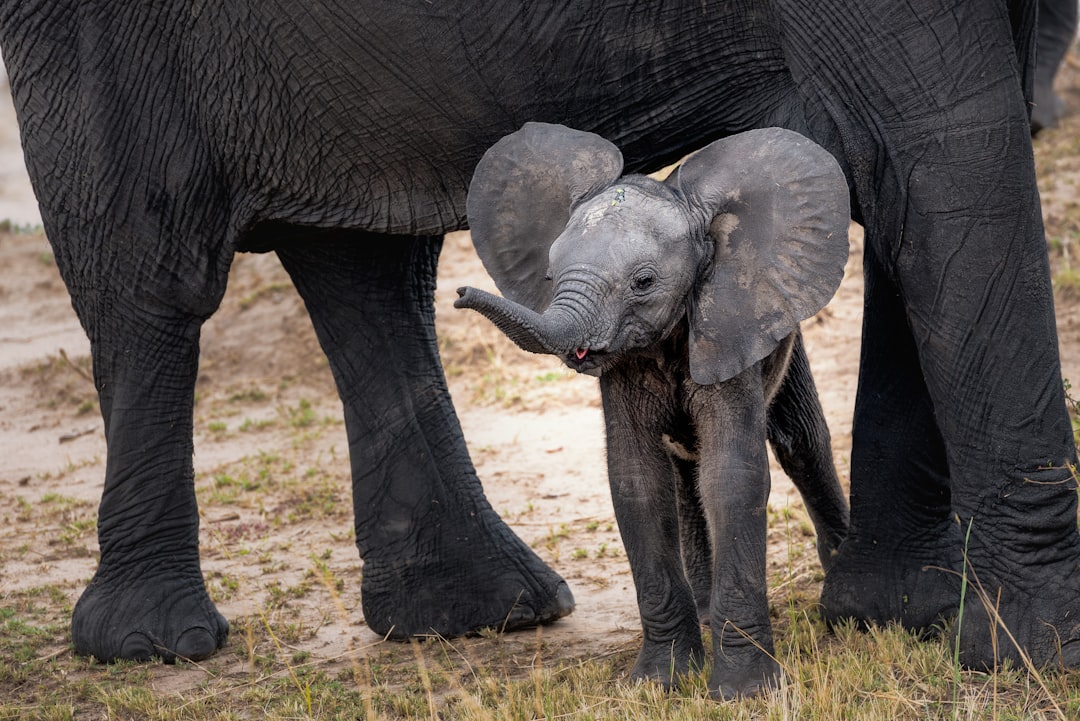
Baby elephants are playful and cute, and they make a lot of noise. They also tend to stay close to their mothers.

One mind-blowing fact about baby elephants is that almost all of them are born at night, most likely because it’s harder for predators to find them.

Categories
Saving elephants

Everything you need to know about Adopting an Elephant

You can’t take an elephant home — but you can fund its survival. Symbolic elephant adoption programs allow anyone to support a named, real elephant living in the wild or in a rehabilitation center, receiving regular photo updates and reports as the animal grows and thrives. It’s one of the most direct, transparent ways to put money into elephant conservation, and it has become one of the most popular wildlife giving formats in the world. This guide explains exactly how it works, which programs are worth trusting, and how much it costs.

Categories
Anatomy Questions & Answers (FAQs)

How Many Stomachs Does An Elephant Have?

Elephants being as big as they are, some will think they must have more than one stomach. But they don’t!

Elephants have just one stomach — a simple, single-chambered organ. Unlike cows and sheep, which are ruminants with four stomach chambers, elephants are hindgut fermenters. This means microbial fermentation of plant fibre happens in the cecum and large intestine, not in the stomach itself.

Elephants are big animals with large appetites to match. They take up a lot of space, and they require a lot of food to keep going.

In this article, we will explore the anatomy of the “inner-elephant” go through its complex digestive system.

Categories
Anatomy Elephants in the wild Questions & Answers (FAQs)

How Much Can An Elephant Lift?

An elephant is the largest land animal on Earth. These colossal creatures can weigh up to 6 tons and stand as tall as 5 meters (16 feet) when fully grown depending on the type of elephant.

An adult elephant’s strength and weight are impressive, but how much can an elephant lift? They have been known to uproot trees, break fences, and even break steel chains with their trunk or tusks.

The trunk’s muscle and strength make elephants capable of lifting up to 660-700 pounds (270-320 kg) with their trunk.

To find out how much weight an elephant can lift, we’ll explore their anatomy, their strength and weight in comparison to humans, and some examples of how much they can lift in real life.

Categories
Different species Elephants in the wild Questions & Answers (FAQs)

What are the Differences Between African Elephant and Asian Elephants?

The Asian and African elephants are both types of the same elephant species. Yet, they belong to different genera because there are so many variances between the two types of Elephants.

Africa and Asia are home to their respective species of elephants, known as Asian and African elephants.

Both types of animals are friendly and congregate in huge groups called herds.

African and Asian elephants are easiest to tell apart by their ears, the shape of their heads, and their tusks.

Ethan of ElephantGuide.com

The simplest way to tell African and Asian elephants apart is by their ears. African elephants have enormous ears that are shaped like the continent of Africa. On the other hand, Asian elephants have much smaller, round ears.

There are two living species within this genus: the larger African savanna elephant, known scientifically as L. Africana, and the smaller African forest elephant, known scientifically as L. cyclotis.

The only living species of the genus Elephas, the Asian elephant (Elephas maximus), is also known as the Asiatic elephant.

The three subspecies of the Asian elephant are E. m. indicus, which lives in mainland Asia; E. m. Maximus, which is from Sri Lanka; and finally, E. m. sumatranus native to Sumatra Island.

Categories
Elephant behaviors Questions & Answers (FAQs)

Why Do Elephants Throw Dirt On Themselves?

When you see an elephant, you might wonder what it’s thinking. They’re among the largest land animals on Earth, but they also have some of the strangest behavior.

An elephant can lift a tree with its trunk, or run around, knock things over, and throw dirt. But is there a good explanation for why elephants like throwing dirt on themselves, and for all these other strange activities?

In fact, almost everything an elephant does is related to staying healthy and protecting themselves against the elements.

An elephant is one of the most fascinating animals in the world. They are known for their size and their intelligence, and social behaviors.

What exactly is the reason why elephants throw dirt on themselves, why the dust bathing? There must be some sort of logic behind it all. Let’s take a closer look.