
It’s one of the most haunting legends in the animal world: somewhere out in the bush lies a secret elephant graveyard, a place ancient elephants travel to when they sense the end is near. It’s been retold in Tarzan stories and brought to life in Disney’s The Lion King. But is any of it true? The short answer is no — and the real story is even more interesting.
The short answer: no — elephant graveyards are a myth. There is no evidence elephants travel to a secret place to die. The legend grew from real clusters of elephant bones, which have a simpler explanation.
Do elephants have graveyards?
No. Despite the enduring legend, there is no scientific evidence that elephants instinctively journey to a special communal place to die. Researchers who have studied wild elephants for decades have never found a true “graveyard.” What people have found are places with unusually many elephant bones — and that is where the myth begins.
Where did the elephant graveyard myth come from?
The legend has a few roots, all grounded in something real:
- Clusters of bones. Explorers and ivory hunters sometimes found several elephant skeletons in one area and assumed the animals had gathered there to die.
- Worn-out teeth. Old elephants wear through their final set of molars and can no longer chew tough vegetation, so they linger near water and soft plants — and often die in those same spots, leaving bones in clusters.
- Pop culture. The idea spread through Sir H. Rider Haggard’s novel The Ivory Child (1916), old Tarzan films, and most famously the spooky graveyard in Disney’s The Lion King.
Where do elephants actually go to die?
Nowhere special — they die where they happen to be. The one real pattern is about teeth: elephants get six sets of molars in a lifetime, and when the last set wears out (usually around 60–70 years old — see how long elephants live), they can no longer grind up coarse food. Weak and undernourished, they stay close to water and soft marsh vegetation — so it’s common for old elephants to die in those areas, which is exactly why bones pile up there. No mystical journey required.
What field research actually shows
The most systematic evidence comes from Cynthia Moss, who has studied the Amboseli elephant population in Kenya since 1972 — one of the longest-running wildlife studies in history. Her findings don’t support the graveyard myth, but they reveal something far more striking about how elephants relate to death.
Moss and her colleagues documented consistently that elephants investigate the bones of their dead, and do so in ways that distinguish elephant remains from those of other species. When presented with the bones of buffalo and rhino alongside elephant remains, elephants spent significantly more time with the elephant bones — touching and turning them with their trunks, especially the skulls and tusks. This selectivity rules out simple curiosity about any large carcass.
A particularly striking set of observations came in 1986, when Moss and researcher Joyce Poole offered elephants the skull of a recently deceased matriarch alongside skulls from buffalo and rhino. The elephants returned repeatedly to the matriarch’s skull specifically, handling the tusks and facial bones with focused attention — strongly suggesting they were recognising an individual, not just a species. Family members showed stronger reactions than unrelated elephants.
What actually drives bone clusters is equally straightforward. As an elephant’s final set of molars wears flat — typically between 60 and 70 years of age — the animal can no longer process coarse vegetation. Instinctively, old elephants stay near water and favour soft riverine plants: marshes, riverbeds, floodplains. Because elephants die in these locations for the same biological reason, bones accumulate in exactly those spots over decades. It looks like a graveyard; it is simply a death pattern driven by diet and geography.
Scientists have a formal term for what Moss observed: osteological awareness — the recognition of and behavioural response to the skeletal remains of one’s own species. Elephants display it more consistently and elaborately than virtually any other non-human land animal.
Do elephants mourn their dead?
Here’s the genuinely remarkable part. While they don’t keep graveyards, elephants are one of the very few animals that clearly react to their dead. They’ll stop at the bones and tusks of a dead elephant, gently touching and turning them with their trunks, and have been seen returning to the remains of relatives — behaviour that looks a lot like grief. These mourning behaviours raise a fascinating question: do elephants actually cry? It’s tied to their extraordinary memory and the strength of their family bonds.
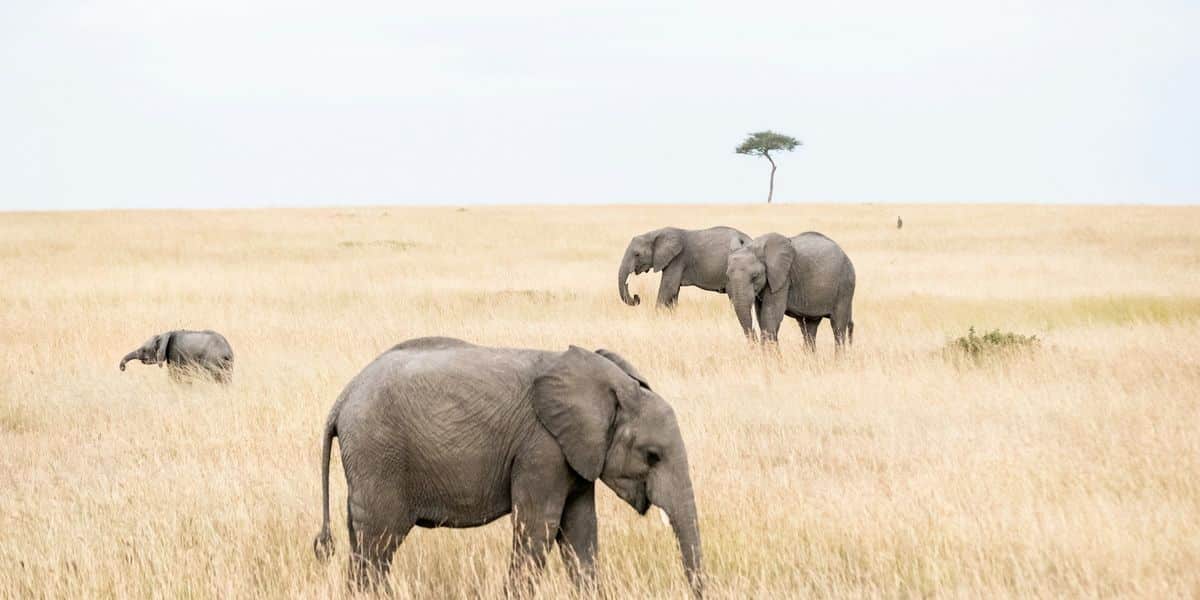
Elephants don’t visit graveyards — but they do pause over the bones of their dead, touching them gently with their trunks in what looks like mourning.
Do elephants bury their dead?
Not in the human sense — but observed behaviour comes remarkably close. Elephants have been documented covering dead herd members with dirt, leaves, and branches, a behaviour that appears in no other land mammal outside some primates. The covering is not practical burial in the sense of concealment or hygiene; researchers believe it serves a social and emotional function, an expression of the bond between the living and the dead.
The most consistently documented cases involve covering dead calves and fallen matriarchs. Herd members have been observed piling vegetation and soil over the body, sometimes working at it for hours. In several recorded instances, elephants remained near the body for days before finally moving on — and returned weeks or even months later to spend time near the remains.
This behaviour matters for the graveyard question because it illustrates something important: the myth, while factually wrong, was not born from nothing. It captured a genuine truth about elephant death awareness — that these animals have a relationship with their dead that goes far beyond indifference. The graveyard concept simply located that awareness in the wrong place (a mystical destination) rather than the right one (a deep social response that can occur anywhere a herd member dies).
The Lion King elephant graveyard
The shadowy, bone-filled elephant graveyard where Simba and Nala meet the hyenas in The Lion King is pure storytelling — a dramatic “forbidden place,” not a real location. It’s a great example of how a centuries-old myth keeps living on in modern pop culture. In the 1994 original film, the Elephant Graveyard is presented as hyena territory at the edge of the Pride Lands — a forbidden zone that Simba is explicitly warned to avoid. The 2019 live-action remake kept the same scene largely intact. Neither film is scientifically accurate, but both drew on the same Victorian-era legends that had been circulating for over a century before Disney adapted them — legends that themselves grew from genuine puzzles explorers encountered in the African bush.
The bottom line
Elephant graveyards aren’t real — the legend simply grew from clusters of bones left by old elephants dying near water. What is real is how deeply elephants respond to death. Keep exploring: elephant memory, elephant herds, and how long elephants live.
Frequently asked questions
No. Elephant graveyards are a myth. There is no scientific evidence that elephants travel to a communal place to die. Clusters of elephant bones found in the wild have a practical explanation: old elephants congregate near water as their teeth wear out, and die there for the same reason, causing bones to accumulate over decades.
Elephant molars wear through over a lifetime. When the final set is gone, elephants can no longer chew coarse food and gravitate toward soft riverine vegetation and water sources. Because many old elephants end up in the same type of environment for the same biological reason, their bones accumulate in those spots — creating what looks like a graveyard but is simply a pattern of where old elephants die.
Yes — more than almost any other non-human animal. Elephants have been observed touching and examining the bones of dead herd members, returning to the remains of relatives, and remaining near a body for days after death. This behaviour is tied to their exceptional memory and strong family bonds.
The legend grew from real bone clusters found by Victorian-era explorers and ivory hunters who assumed elephants had gathered there to die. It was then amplified by adventure novels, Tarzan films, and most famously Disney’s The Lion King, cementing the idea in popular culture.
Not in the human sense, but elephants have been documented covering dead herd members with dirt, branches and leaves — behaviour unique among land mammals outside some primates. They also remain near the body for extended periods and have been observed returning to the remains weeks or months later.
Moss’s Amboseli research (1972–present) confirmed no graveyard exists, while also revealing remarkable bone-recognition behaviour: elephants specifically seek out and handle the skulls and tusks of their own dead relatives, not random elephant bones. Her 1986 experiment — offering elephants a matriarch’s skull alongside buffalo and rhino skulls — showed elephants returning repeatedly to their own kin’s remains.
No. It is a fictional dramatic device drawn from the Victorian-era myth. No specific real-world location inspired it. The scene appears in both the 1994 original and the 2019 live-action remake, but neither film reflects actual elephant behaviour.
Bones scatter over time through weather, scavengers and human collection (for ivory, in the case of tusks). Bones can persist for decades in arid environments. The characteristic concentration of bones in riverine areas — the original source of the “graveyard” myth — is simply where old elephants spend their final days near water.