
Elephant anatomy is full of extraordinary adaptations — from a trunk powered by 40,000 muscles to the surprising fact that these giants are one of the few large mammals that truly cannot jump. Contrary to popular belief, their front leg joints are actually wrist equivalents — explore the full anatomy in our article on elephant legs and knees.
Elephant Anatomy: A Body Built for Giants
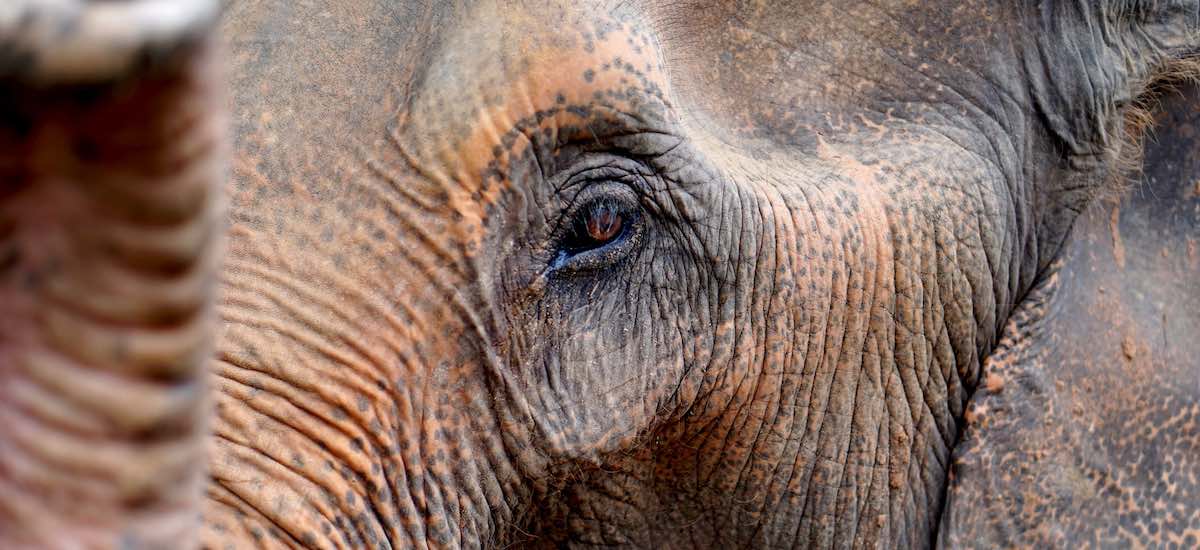
The African Bush Elephant is the largest land animal on Earth. Adult males can stand up to 13 feet tall at the shoulder and weigh up to 14,000 lbs (6,350 kg) — but a newborn calf weighs just 200–320 lbs at birth, growing to that enormous adult mass over 40+ years. Asian elephants are slightly smaller, but no less impressive. Their skin alone can reach up to one inch thick, protecting them from both the sun and thorny vegetation while retaining enough sensitivity to feel a fly landing on their back.
The elephant trunk is one of the most complex structures in the animal kingdom. Around 6 feet long and containing roughly 40,000 individual muscles (with no bones at all), the trunk can hold up to 2.5 gallons of water and is sensitive enough to pick a single blade of grass from the ground. It functions as a nose, a hand, a snorkel, and a social tool — all at once.
Both African elephant species grow tusks — male and female alike. These are modified upper incisor teeth that keep growing throughout an elephant’s life, sometimes exceeding 10 feet in length. Elephants use them for digging for water, stripping bark from trees, and defending themselves against predators. Tusk size can also signal dominance within a herd.
The skeleton is another fascinating area of elephant biology. Curious about how many bones an elephant has? The answer might surprise you. Elephants also go through six sets of molars in a lifetime — each set replacing the last as it wears down. When the final sixth set is gone, the elephant can no longer chew food properly, which is why age-related tooth wear ultimately limits their lifespan. Despite their thick grey hide, elephants are also not hairless — they carry sparse, wiry bristles across their body, and calves are born noticeably fuzzy. Discover more about elephant hair.
Surprising Elephant Body Facts
Elephant ears are more than just oversized flaps — they are a sophisticated cooling system. Packed with dense networks of blood vessels, the ears radiate heat away from the body when flapped. African elephants have much larger ears than their Asian relatives, shaped loosely like the African continent itself. The bigger ear size in African elephants is directly tied to the hotter, more open environments they live in. Learn more about why elephants have such big ears.
One of the most widely shared elephant facts is also one of the most accurate: elephants cannot jump. Their body mass makes it mechanically impossible for all four feet to leave the ground at the same time. Yet despite this limitation, they are far from slow. Elephants can reach speeds of around 25 mph in full charge. Find out more about why elephants can’t jump and how fast they can run.
Elephants are among the strongest animals alive. Using just their trunk, they can lift around 770 lbs — roughly the weight of a large horse. Read more about how much an elephant can lift. Their closest extinct relatives, mammoths, shared many of the same physical traits: tusks, long trunks, and similar skeletal proportions. Explore the full comparison between mammoths and elephants to see how they stack up.
Elephant digestion is surprisingly inefficient. They process only around 40% of what they eat, which means they must consume enormous quantities of vegetation — up to 300 lbs per day — just to meet their energy needs. Their multi-chambered digestive system is built for volume rather than efficiency. Discover more about the elephant’s stomach and how their digestion works.
In the wild, elephants typically live 60 to 70 years. Their lifespan is directly tied to their teeth: once the sixth and final set of molars wears down, they can no longer break down food efficiently enough to survive. It is a remarkable biological clock built right into their jaw. Learn more about elephant lifespan and what determines how long they live.
Elephant Anatomy & Body Facts: Our Latest Articles
Explore our full collection of elephant anatomy and body fact articles below — each one packed with verified facts, expert insight, and vivid detail.
- Elephant Lifespan: How Long Do Elephants Live?

- How Much Does an Elephant Weigh? Size & Weight by Species

- Do Elephants Have Knees? The Surprising Truth About Elephant Leg Anatomy

- Do Elephants Have Hair? The Surprising Truth About Elephant Fur

- Elephant Teeth: How Many Sets Do They Get — and What Happens When the Last One Wears Out?

- Elephant Skin: How Thick Is It, Why Is It Wrinkled, and What Makes It Unique?

Nature’s great masterpiece, an elephant; the only harmless great thing.
John Donne
Why should you read our articles?
- Our team is composed of seasoned African wildlife journalists with extensive field knowledge.
- Contributors have been showcased in esteemed productions such as “Planet Earth” and National Geographic Magazine.
- Celebrated photographers with a keen eye for capturing the essence of African elephants in their natural habitats.
- Devoted advocates who’ve participated in hands-on elephant conservation projects, making tangible impact.
- Unwavering commitment to enlightening readers on the wonders of the incredible elephants and the importance of preserving their ecosystems.