
Elephants are in crisis — both African and Asian species face mounting pressures that push them closer to extinction with every passing year. Understanding the fight to save them is the first step to joining it.
Why Elephants Need Our Help
Africa’s elephants are in a far more precarious position than most people realise. The African Forest Elephant was reclassified as Critically Endangered by the IUCN in 2021, while the African Bush Elephant is listed as Endangered. Across the continent, an estimated 415,000 African elephants remain — a fraction of the millions that roamed freely just a century ago. Decades of ivory poaching and escalating habitat destruction have taken an enormous toll on wild populations that cannot recover quickly given elephants’ slow reproductive rates.
Asian elephants face an equally urgent crisis. Fewer than 40,000–50,000 individuals survive in the wild, and roughly 60% of them live outside protected areas — in fragmented forest patches, on the edges of farmland, and in direct competition with rapidly expanding human communities. Like their African cousins, Asian elephants are listed as Endangered, and their range has contracted dramatically as forests are cleared for agriculture and development. Learn more about why elephants are endangered and how many elephants are left in the world in our detailed guides.
The threats converging on both species are complex and interconnected. Poaching for the illegal ivory trade continues to devastate populations in Central and West Africa despite international bans. Habitat loss driven by deforestation and agricultural expansion destroys the vast home ranges elephants need to find food, water, and mates. Human-elephant conflict — as people and elephants compete for the same shrinking land — leads to retaliatory killings that claim hundreds of elephant lives every year. Without urgent, coordinated conservation action, future generations may only know elephants from photographs.
How Conservation Efforts Are Making a Difference
Despite the grim statistics, determined organisations around the world are pushing back. WWF, Save the Elephants, African Wildlife Foundation, and Elephant Family are among the leading forces deploying anti-poaching patrols, funding community rangers, and establishing wildlife corridors that allow elephant herds to move safely between fragmented habitats. These corridors are particularly critical — without them, small isolated populations become genetically vulnerable and increasingly prone to conflict with local communities living on their periphery.
Climate change is adding a new and growing layer of pressure to already stressed populations. Prolonged droughts dry up waterholes, reduce vegetation, and force elephants to travel further in search of resources — increasing the likelihood of human-elephant conflict. Habitat fragmentation compounds the problem, leaving herds with fewer options when their traditional ranges become unsuitable. Read our full guide on how climate change affects elephant habitats to understand the scale of this emerging threat.
Individuals can make a meaningful contribution to elephant conservation. Supporting ethical elephant sanctuaries that prioritise welfare over entertainment helps fund genuine rescue and rehabilitation work. Avoiding ivory products — even antique pieces — removes demand from a trade that still drives poaching. Choosing responsible wildlife tourism operators that follow best-practice guidelines ensures your visit generates conservation value rather than causing harm. Donating to reputable conservation organisations funds the rangers, researchers, and community programmes that form the frontline of elephant protection. Ecotourism already generates an estimated $23 million per year for African economies through elephant-focused tourism alone — proof that living elephants are worth far more than dead ones.
Conservation Chronicles: Our Latest Articles on Protecting Elephants
From anti-poaching breakthroughs to on-the-ground sanctuary stories, our conservation team covers the full spectrum of efforts to protect elephants worldwide. Explore the latest articles below.
- Human-Elephant Conflict: Causes, Costs & Solutions
- Elephant Poaching: Facts & Statistics
- How to Help Save Elephants: 6 Real Ways That Work
- Do Elephants Migrate? Movement, Routes & Home Ranges
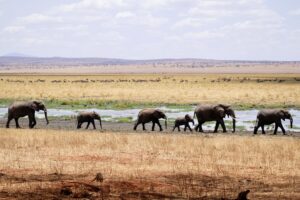
- Reasons Why Elephants Are Endangered
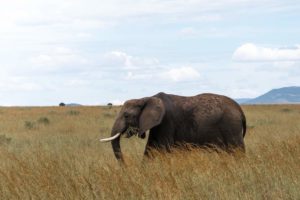
- Everything You Need To Know About Elephants And Water
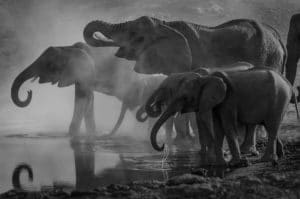
The least I can do is speak out for those who cannot speak for themselves.
Jane Goodall
Why should you read our articles?
- Our team is composed of seasoned African wildlife journalists with extensive field knowledge.
- Contributors have been showcased in esteemed productions such as “Planet Earth” and National Geographic Magazine.
- Celebrated photographers with a keen eye for capturing the essence of African elephants in their natural habitats.
- Devoted advocates who’ve participated in hands-on elephant conservation projects, making tangible impact.
- Unwavering commitment to enlightening readers on the wonders of the incredible elephants and the importance of preserving their ecosystems.