Few animals carry as much symbolic weight as the elephant. Across the world — from Hindu temples to feng shui front doors to tattoo studios — the elephant stands for strength, wisdom, memory, loyalty and good fortune. Here’s what the elephant symbolizes, its spiritual meaning, and how that meaning shifts across cultures, trunk positions, tattoos and even dreams.
The short answer: elephants symbolize strength, wisdom, memory, loyalty and good luck. Spiritually they’re tied to the Hindu god Ganesha (remover of obstacles), Buddhist purity, and feng-shui prosperity — and an elephant with its trunk up is a classic good-luck charm.
What does an elephant symbolize?
At its heart, the elephant is a symbol of quiet, dependable power — strength without aggression. The core meanings:
| Symbol | What it represents |
|---|---|
| Strength & power | The largest land animal — might that is calm and controlled, not violent |
| Wisdom & intelligence | One of the smartest animals; associated with good judgement and learning |
| Memory | “An elephant never forgets” — long memory and loyalty to the past |
| Family & loyalty | Tight, matriarch-led herds = devotion, protection and community |
| Patience & stability | A grounded, steady, unhurried presence |
| Good luck & prosperity | A bringer of fortune, abundance and protection in many cultures |
Elephant spiritual meaning
As a spirit animal, the elephant is a guide to grounded strength and wisdom — encouraging patience, loyalty to family, and the confidence to push through obstacles without losing your gentleness. Its famous long memory also makes it a symbol of honouring the past and learning from experience.
Elephant symbolism across cultures
The elephant is sacred or auspicious in many traditions:
| Culture / tradition | What the elephant means |
|---|---|
| Hinduism | Ganesha, the elephant-headed god, is the remover of obstacles and lord of new beginnings — honoured before any venture |
| Buddhism | The white elephant symbolises purity and wisdom; one appeared in Queen Maya’s dream foretelling the Buddha’s birth |
| Africa | A symbol of royalty, power and leadership — the strength of a great ruler |
| Christianity | An older Western reading: chastity, patience and temperance, and a symbol of Christ trampling the serpent in medieval bestiaries |
| China | The word for elephant sounds like the word for “sign” or “auspicious”, so elephants stand for peace and good omens |
| Thailand | The white elephant is royal and sacred; historically only a king could own one |
| Feng shui | An emblem of good luck, wealth, fertility and family harmony |
What does an elephant with its trunk up mean?
In feng shui and folk belief, the direction of an elephant statue’s trunk matters:
- Trunk up — the classic good-luck position: it “showers” good fortune, energy, victory and positivity.
- Trunk down — associated with stability, fertility, grounding and steady, accumulating energy.
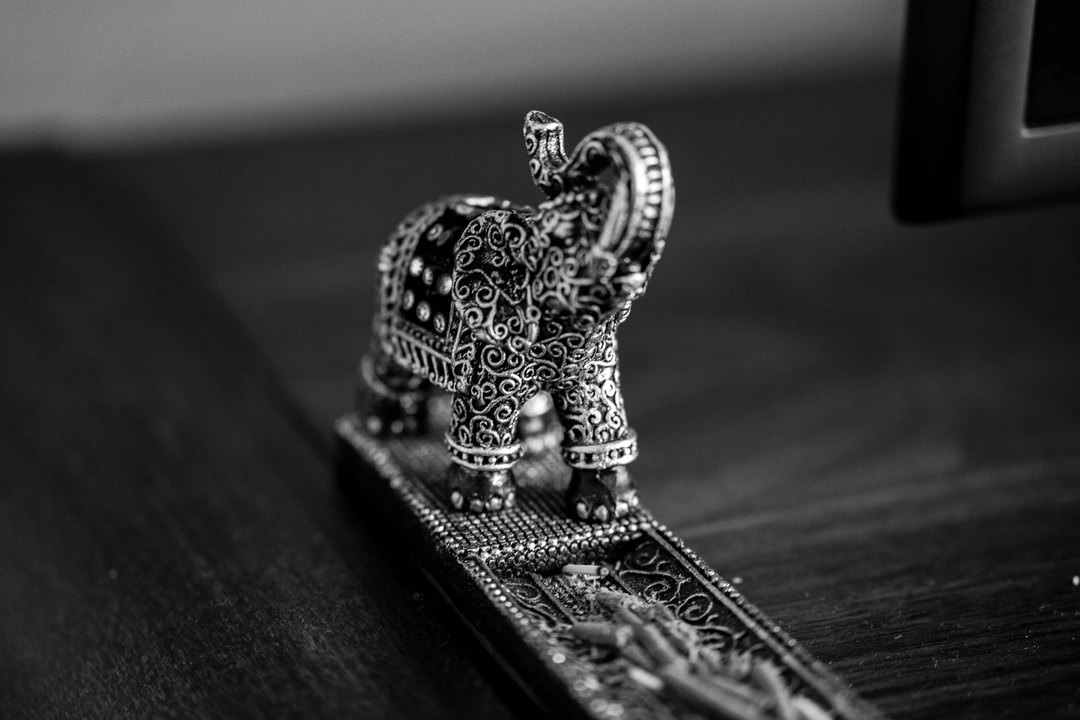
An elephant with its trunk raised is one of the world’s most popular good-luck symbols — said to shower fortune on the home.
What do white, pink and blue elephants symbolize?
Colour changes the meaning more than most people expect, and in one case it reverses it completely.
White elephants are the most loaded. In Buddhism a white elephant appeared in Queen Maya’s dream before the Buddha’s birth, and in Thailand white elephants were royal property that no ordinary person could own or put to work. That is exactly where the English idiom comes from: a Siamese king could ruin a courtier he disliked by gifting him a sacred white elephant, which was enormously expensive to keep and forbidden to use. So a “white elephant” in English means a costly, useless burden, while in its country of origin it means the opposite: purity, royalty and divine favour.
Pink elephants have no traditional symbolism at all. The association with hallucination is modern and literary, popularised by Jack London in 1913 and then fixed in popular culture by the Dumbo sequence. It is a useful reminder that not every elephant image carries ancient meaning.
Blue and multi-coloured elephants appear mainly in Hindu and Thai religious art, where colour marks a figure as divine rather than literal. Airavata, the mount of the god Indra, is usually depicted white or pale and sometimes many-headed. Treat colour in devotional art as a signal of status, not a separate symbol.
Where to place an elephant statue
If you are buying an elephant as a charm rather than an ornament, feng shui and Vāstu both have opinions about where it goes. These are traditions rather than rules, but they are consistent enough to be worth knowing.
| Placement | What it is said to do |
|---|---|
| Facing the front door, from inside | Invites luck and opportunity into the home |
| A pair flanking the entrance | Protection and guardianship of the household |
| Living room or family area | Family harmony, loyalty and unity |
| Desk or study | Focus, memory and career progress |
| Bedroom, as a pair | Fidelity and a strong partnership |
Trunk position interacts with placement, and it is the question people ask most. A raised trunk is read as showering fortune outward, a lowered trunk as gathering and storing it — and contrary to a widespread internet myth, trunk down is not bad luck. We unpack that properly in elephant trunk up vs down.
Elephant tattoo meaning
An elephant tattoo usually carries the same core symbolism: strength, wisdom, loyalty, memory and good luck. People often choose one to honour family bonds, mark resilience through a hard time, or carry a little luck with them. A small elephant tattoo tends to emphasise the gentle, lucky side; a larger or Ganesha-style piece leans into power and spiritual protection.
The design matters as much as the animal: a Ganesha piece reads as devotional, a mandala as meditative, a mother and calf as family, and a trunk-up elephant as luck. Placement is about how public you want it rather than a change in meaning. Our full guide to elephant tattoo meaning covers every design, the mental-health association, and the cultural conventions worth respecting before you book.
What does dreaming about an elephant mean?
Dream interpreters often read an elephant as a sign of strength, wisdom and memory — or, given its size, a “big” issue or responsibility you’re facing. A calm elephant can suggest stability and good fortune ahead; a charging one, an obstacle to confront.
The bottom line
However you encounter it — as Ganesha, a feng-shui charm, a tattoo or a dream — the elephant symbolizes strength, wisdom, memory, loyalty and good luck. Much of that meaning is rooted in how elephants really live: see their remarkable memory and their close family herds, or get to know the three species themselves.
Frequently asked questions
Strength, wisdom, memory, loyalty and good luck. Across cultures the elephant represents calm, dependable power and prosperity.
Grounded strength and wisdom — a call to be patient, loyal to family, and steady in the face of obstacles. In Hinduism the elephant god Ganesha removes obstacles; in Buddhism the white elephant signifies purity and wisdom.
It’s the classic good-luck position — said to shower good fortune, energy and victory. A trunk-down elephant symbolises stability, fertility and grounding.
Usually strength, wisdom, loyalty, memory and good luck — often chosen to honour family or mark resilience.
Yes — especially in feng shui and across Asia, where elephants symbolise luck, wealth, fertility and protection, most famously with the trunk raised.
Because Siamese kings could gift a sacred white elephant to a courtier they wanted to ruin. The animal was royal, so it could not be worked or given away, but it was enormously expensive to keep. The English idiom kept the burden and dropped the reverence, which is why a white elephant means the opposite in English to what it means in Thailand.
Traditionally facing the front door from inside, so it invites opportunity in, or as a pair flanking the entrance for protection. A desk elephant is associated with focus and memory. These are feng shui and Vāstu conventions rather than rules.
No traditional symbolism, no. The link to hallucination is modern and literary, popularised by Jack London in 1913 and then cemented by Dumbo. Unlike white elephants, pink ones carry no religious or cultural meaning.