You’ve seen them everywhere — on mantelpieces, above doorways, tattooed on forearms, dangling from keychains: the elephant with its trunk curled upward. But does the direction of the trunk actually mean something? In symbolism, feng shui and Vāstu, it absolutely does — and the trunk up vs. trunk down question is one of the most-asked in the whole world of elephant meaning.
The short answer: an elephant with its trunk up is the classic good-luck symbol — it’s said to fling fortune, energy and joy into a space. An elephant with its trunk down isn’t “bad luck” — it represents a quieter, protective, resource-gathering energy tied to nurturing, longevity and steady accumulation.
What Does an Elephant with Its Trunk Up Mean?
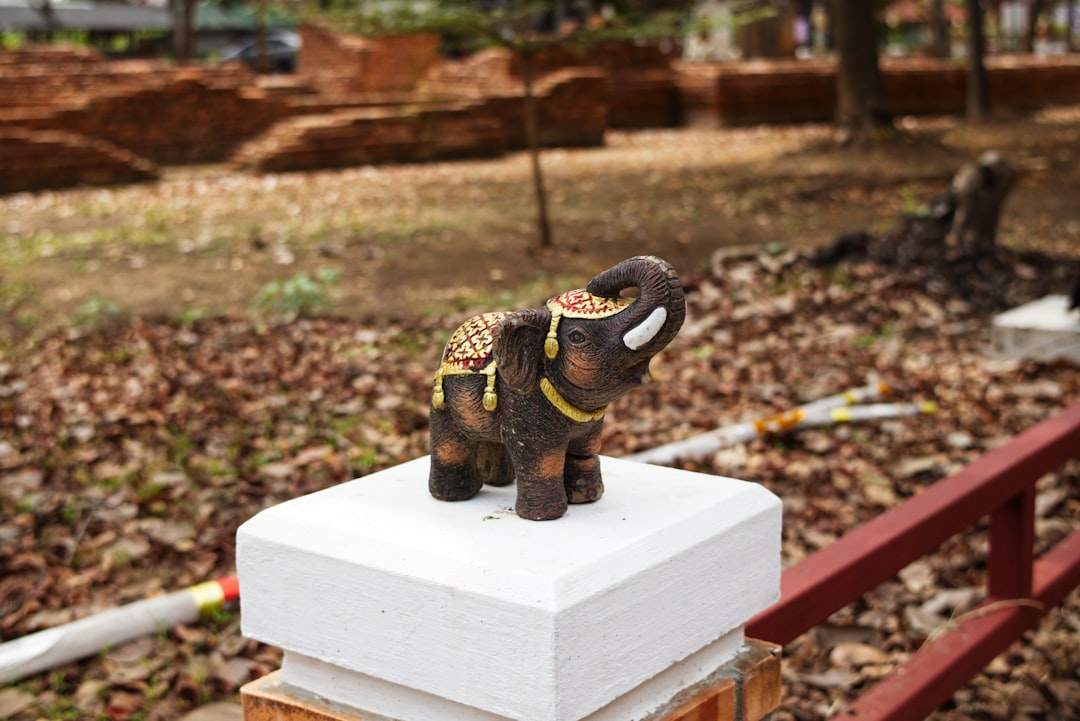
A raised trunk is the pose you’ll find on the vast majority of “good luck” elephant statues, and for good reason. In symbolic tradition the upturned trunk is read as an elephant showering the room with blessings — like a fountain spraying good fortune, prosperity and positive energy outward. It stands for celebration, victory, and the welcoming of new opportunities.
In feng shui terms, the trunk-up posture is strongly Yang: outward-facing, active, expansive and celebratory. That’s why it’s the go-to charm for people chasing career growth, a promotion, exam success, or simply a fresh burst of luck. Place a trunk-up elephant near an entryway, on a desk, or in a living area and it’s said to invite success and achievement into your life.
An elephant with its trunk raised is one of the world’s most popular good-luck symbols — said to shower fortune, energy and joy on everyone in the room.
What Does an Elephant with Its Trunk Down Mean?
Here’s the myth worth busting first: a trunk-down elephant is not bad luck. That’s a persistent internet misconception. Instead of projecting fortune outward, the downward trunk represents energy being gathered and stored — accumulation, endurance and quiet strength.
In feng shui, the downward trunk is linked to water energy, which is traditionally the element of wealth — so a trunk-down elephant is associated with the slow, steady building of prosperity rather than a sudden windfall. It’s also tied to fertility, nurturing and protection: the pose is often recommended for couples hoping to start a family, or placed to safeguard the home and its occupants. Think of it as the patient, protective counterpart to the trunk-up elephant’s exuberance.
Trunk Up vs. Trunk Down: Side by Side
| Trunk Up | Trunk Down | |
|---|---|---|
| Core meaning | Showering luck, energy, victory | Gathering wealth, protection, nurturing |
| Feng shui energy | Yang — outward, active, celebratory | Yin-leaning — inward, stable, accumulating |
| Best for | Career, success, new opportunities, mood-lifting | Family, fertility, home protection, steady saving |
| Common placement | Entryway, desk, living room | Bedroom, near valuables, family spaces |
| Myth to ignore | — | “Trunk down = bad luck” (false) |
Where the Meaning Comes From
The trunk-position tradition draws on a few overlapping cultural threads. In Hindu symbolism the elephant is inseparable from Ganesha, the elephant-headed remover of obstacles and god of new beginnings — which is why raised-trunk elephants read as blessings and fresh starts. In feng shui (Chinese) and Vāstu Shastra (Indian) home-harmony systems, the elephant is a protector and a magnet for auspicious energy, with placement and posture both mattering. And in the broader Western “good luck charm” tradition, the upturned trunk simply became shorthand for luck itself.
None of this is about the living animal’s behaviour — a real elephant raises its trunk to smell, trumpet or greet, not to bless anyone. If you’re curious about the wider meaning of the animal itself, see our full guide to what an elephant symbolizes.
Does Trunk Direction Matter for Tattoos and Jewelry?
For tattoos, figurines and jewelry, the same symbolism carries over — and people do choose deliberately. A trunk-up elephant tattoo is the popular pick for luck, optimism and moving forward after a hard chapter, while a trunk-down design tends to be chosen for its themes of strength, protection and family bonds. That said, plenty of artists and buyers pick a pose purely for how it looks. There’s no rule that a trunk-down tattoo will bring you misfortune — the “luck” reading is a tradition, not a curse. For what each tattoo design is read as beyond trunk position, see our guide to elephant tattoo meaning.
How to Place a Good-Luck Elephant at Home
- Facing the door, from inside: a common feng shui placement is a statue facing an entry door (looking in), to invite protective, lucky energy into the home.
- Trunk up on your desk: for career and achievement energy, keep a small trunk-up elephant on a work desk or office shelf.
- Trunk down in family spaces: for nurturing, fertility and home protection, place a trunk-down elephant in bedrooms or shared living areas.
- Pairs and herds: two elephants are often used to represent partnership and loyalty; a mother-and-calf pairing reinforces family and protection themes.
Ultimately, placement traditions vary between feng shui and Vāstu practitioners, so treat these as guidelines rather than hard rules — the intention you bring to the object matters as much as its posture.
The bottom line
An elephant with its trunk up symbolizes luck, energy and success being showered outward; an elephant with its trunk down symbolizes protection, nurturing and the steady gathering of good fortune — and it is not bad luck, despite the myth. Both are auspicious in their own way. Keep exploring what elephants represent in our guide to elephant symbolism and meaning, or read up on the real animal behind the symbol — from how elephant herds work to their famous memory.
Frequently asked questions
No. This is a common misconception. A trunk-down elephant represents protection, nurturing and the steady accumulation of wealth and longevity — a quieter, gathering energy rather than misfortune. Both trunk-up and trunk-down elephants are considered auspicious.
For classic “shower me with luck and success” energy, choose a trunk-up elephant. For protection, family, fertility and steady wealth-building, a trunk-down elephant is traditional. Neither is unlucky.
A raised trunk is read as Yang energy — outward, active and celebratory. It is said to fling good fortune and positive energy into a space, which is why trunk-up elephants are the most popular good-luck placement near doors and desks.
Symbolically, yes — trunk up is chosen for luck and optimism, trunk down for strength, protection and family. But there is no curse attached to either; many people simply pick the pose they find most beautiful.
Elephants carry deep symbolic weight across cultures — strength, wisdom, memory and loyalty — and are tied to the Hindu god Ganesha, remover of obstacles. The raised-trunk “showering blessings” image made the elephant a widespread good-luck charm.