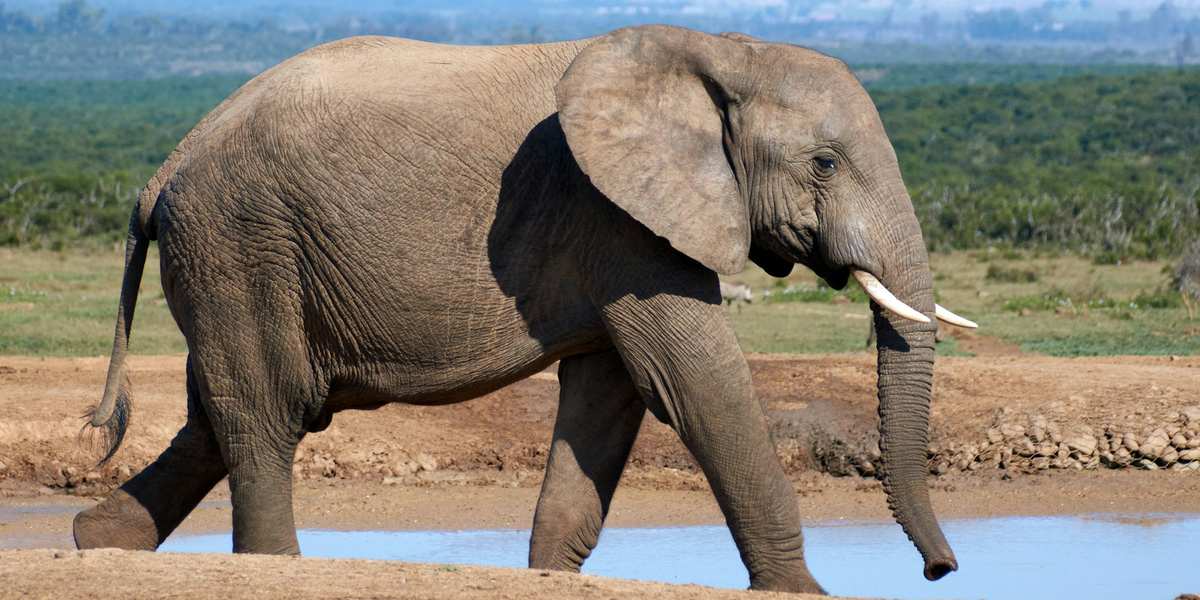
The biggest elephant in the world is the African bush elephant — the largest living land animal on Earth. But the single largest elephant ever recorded was a colossal bull shot in Angola in 1955, estimated at around 10,900 kg (24,000 lb) and standing four metres at the shoulder. It is so big it still greets visitors in the rotunda of the Smithsonian’s National Museum of Natural History.
Quick answer: the African bush elephant is the biggest elephant species alive today, with big bulls weighing around 6,000 kg. The biggest individual ever recorded weighed roughly 10,900 kg — nearly double a typical bull. And if you count extinct relatives, an ancient elephant called Palaeoloxodon may have been the largest land mammal that ever lived.
What is the biggest elephant in the world?
The biggest elephant alive today is the African bush elephant (Loxodonta africana), which is also the largest land animal on the planet. A fully grown bull stands roughly 3.2 to 4 metres at the shoulder and weighs about 6,000 kg — around the same as four small cars. Females are smaller, at roughly 2,600 to 3,500 kg. For the full breakdown of how heavy elephants get, see how much an elephant weighs.
That makes even an average bush elephant bigger than any other animal walking the Earth — bigger than a rhino, a hippo, or a giraffe. But the very biggest individuals on record dwarf even a typical bull.
The biggest elephant ever recorded
The largest elephant ever recorded was an enormous African bush bull shot in 1955 near the Cuando River in Angola. Known as the Fénykövi elephant after the hunter who took it, the animal was estimated to weigh about 10,900 kg (24,000 lb) — close to 12 US tons — and stood just over 4 metres (13 ft 2 in) at the shoulder.
Mounted in 1959, the Fénykövi elephant has stood in the rotunda of the Smithsonian’s National Museum of Natural History ever since — the largest mounted land mammal in any museum.
To put that in perspective, that single bull weighed almost twice as much as a typical adult and carried tusks and a frame on a scale no living elephant has matched in the wild since.
| Record | Elephant | Estimated weight | Notes |
|---|---|---|---|
| Biggest species alive | African bush elephant | ~6,000 kg (bulls) | Largest living land animal |
| Biggest ever recorded | Fénykövi elephant (1955) | ~10,900 kg | 4 m at the shoulder; Smithsonian |
| Biggest Asian elephant | Asian elephant bull | ~5,400 kg | Up to ~3 m at the shoulder |
| Biggest ever (extinct) | Palaeoloxodon namadicus | ~22,000 kg (estimate) | Possibly the largest land mammal ever |
Biggest elephant species, ranked
There are three living elephant species, and they are not the same size. The African bush elephant is comfortably the largest, the Asian elephant sits in the middle, and the African forest elephant — only recognised as a separate species in 2021 — is the smallest. (For the wider family tree, see our guide to the three species of elephant.)
| Species | Typical bull weight | Shoulder height | Rank by size |
|---|---|---|---|
| African bush elephant | ~6,000 kg | 3.2–4 m | Biggest |
| Asian elephant | ~4,000–5,400 kg | 2.5–3 m | Middle |
| African forest elephant | ~2,700–6,000 kg | 2.2–2.5 m | Smallest |
The two African species also differ in more than size — ears, tusks and habitat set them apart too. We cover those in detail in African vs Asian elephants.
Was there ever a bigger elephant? Extinct giants
Yes — and they were astonishing. The biggest elephant that may have ever lived was Palaeoloxodon namadicus, an extinct straight-tusked relative from Ice Age Asia. Based on a fragment of thigh bone, some scientists estimate it could have stood over five metres at the shoulder and weighed around 22 tonnes — potentially the largest land mammal in history, heavier even than the biggest mammoths.
Mammoths were no minnows either: the steppe mammoth (Mammuthus trogontherii) is thought to have reached 14–15 tonnes. Next to those prehistoric heavyweights, today’s record bull elephants are merely very large.
Famous big elephants in history
A handful of individual elephants became famous partly for their sheer size. Jumbo, the African bull of London Zoo and later P. T. Barnum’s circus, stood around 3.2 metres and gave the English language the word “jumbo” for anything oversized. More recently, Kenya’s great “tuskers” — bulls such as Satao and Tim, whose tusks nearly swept the ground — became symbols of just how big and old a wild elephant can grow when it survives the poaching that claims most giant bulls young.
The bottom line
The biggest elephant in the world is the African bush elephant, the largest land animal alive. The biggest individual ever recorded — the Fénykövi bull at roughly 10,900 kg — remains in a league of its own, and extinct relatives were bigger still. Want the everyday numbers behind these giants? Start with how much elephants weigh and why elephants are mammals.
Frequently asked questions
The biggest elephant in the world is the African bush elephant, which is also the largest living land animal. Adult bulls typically weigh around 6,000 kg and stand 3.2 to 4 metres tall at the shoulder.
The largest elephant ever recorded was a bull shot in Angola in 1955, estimated at about 10,900 kg (24,000 lb) and just over 4 metres at the shoulder. It is mounted in the rotunda of the Smithsonian’s National Museum of Natural History.
The African bush elephant is the largest of the three living elephant species, followed by the Asian elephant, with the African forest elephant the smallest.
The biggest individual elephant on record weighed an estimated 10,900 kg — almost double the weight of a typical adult bull, which is around 6,000 kg.
African bush elephants are bigger than Asian elephants. A big African bull can reach 6,000 kg and 4 metres at the shoulder, while Asian bulls top out around 5,400 kg and 3 metres.