
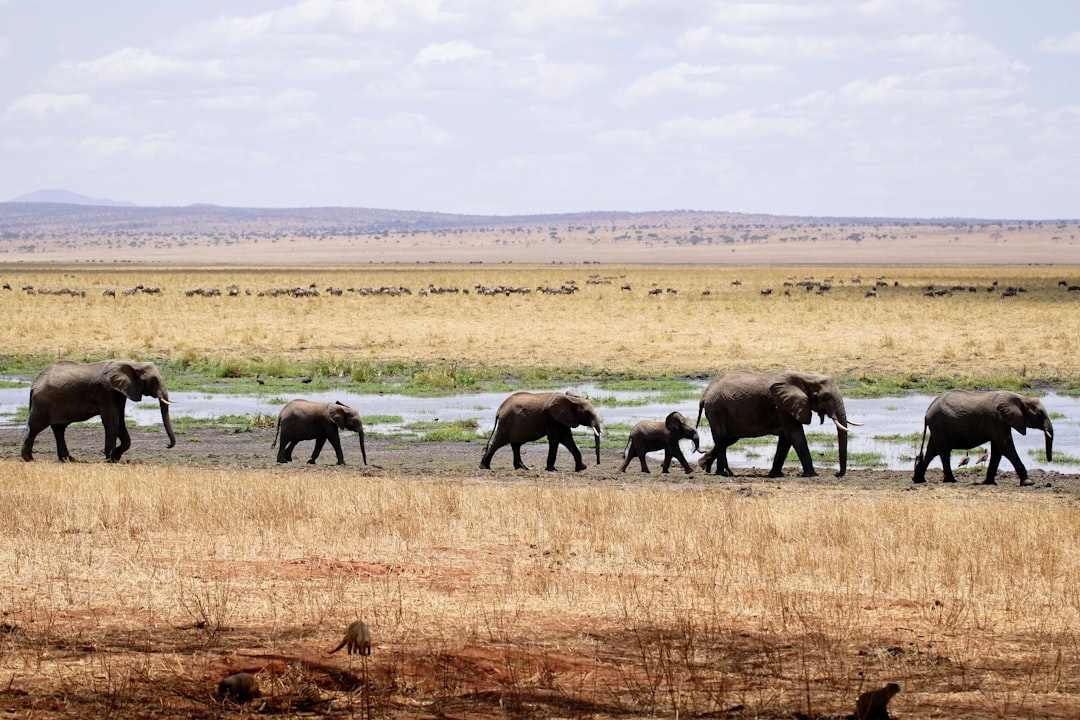
In the space of a single century, Africa’s elephants fell from millions to a few hundred thousand — and the sharpest losses came from a poaching crisis that peaked in the early 2010s. This is the story of elephant poaching in numbers: how many are killed, how the ivory trade works, how bad the crisis got, and where things stand today.
The short answer: at the height of the crisis around 2010–2012, an estimated 100,000 elephants were killed for ivory in just three years (Wittemyer et al., PNAS 2014). Poaching has fallen significantly since that 2011 peak, but it hasn’t stopped — and forest elephants remain in freefall, now listed as Critically Endangered.
Elephant Poaching by the Numbers
A snapshot of the scale of the problem, then the detail behind each figure below:
- ~26 million elephants in Africa around 1800; ~1.3 million by 1979; roughly 415,000–550,000 today (estimates vary by source and year).
- ~100,000 elephants killed for ivory in 2010–2012 alone (Wittemyer et al., PNAS 2014).
- 30% decline in savanna elephants across 18 countries between 2007 and 2014 (Great Elephant Census, 2016).
- Up to 86% decline in African forest elephants over 31 years, driving their 2021 reclassification as Critically Endangered (IUCN).
How Many Elephants Are Poached Each Year?
There is no single agreed number, because poaching is counted two different ways — CITES’ MIKE program (Monitoring the Illegal Killing of Elephants) extrapolates from carcasses found at monitored sites, while academic studies model continent-wide losses. The two approaches produce different figures, so the honest answer is a range:
| Period | Estimated elephants killed | Source / note |
|---|---|---|
| 1980s | ~75,000/year (Africa) | Pre-ban crisis; population fell 1.3M → ~600,000 by 1989 |
| 2011 (peak) | ~25,000 (MIKE) to ~40,000 (modeled) | Disputed range — conservative site data vs. academic modeling |
| 2010–2012 | ~100,000 over three years | Wittemyer et al., PNAS 2014 (the origin of the “100/day” figure) |
| 2020–2024 | Well below the 2011 peak; roughly stable | CITES MIKE — improving but not eliminated |
The widely-quoted “100 elephants a day” line comes from averaging that 2010–2012 peak-crisis figure — it describes the worst years, not today’s ongoing rate. For the fuller picture of everything threatening elephants, see why elephants are endangered.
The 2007–2014 Poaching Crisis
The modern crisis was driven by surging ivory demand in Asia — especially a fast-growing Chinese middle class — combined with organized transnational crime and weak enforcement in range and transit states. Two internationally-sanctioned “one-off” stockpile sales (49 tonnes to Japan in 1997, and 108 tonnes to China and Japan in 2008) are blamed by many conservationists for re-stimulating demand and providing cover to launder illegal ivory — though the causal link is debated among economists. Whatever the trigger, killing rates climbed steeply from 2007 and peaked around 2011.
At the peak of the crisis, poaching was killing African elephants faster than they could reproduce — a net population decline of roughly 8% a year.
The Great Elephant Census: Measuring the Damage
The scale only became undeniable with the Great Elephant Census (2016) — a $7-million aerial survey funded by Microsoft co-founder Paul G. Allen and led by Dr. Mike Chase of Elephants Without Borders. Ninety scientists flew more than 460,000 km across 18 countries to physically count savanna elephants. The findings, published in the journal PeerJ:
- 352,271 savanna elephants counted across the surveyed range — about 93% of the region’s total.
- A 30% decline (roughly 144,000 elephants) between 2007 and 2014.
- An ongoing decline rate of about 8% per year at the time of the survey — primarily from poaching.
Forest Elephants vs. Savanna Elephants
Africa’s two elephant species have fared very differently. The elusive forest elephant (Loxodonta cyclotis), hidden in Central African rainforest and slow to reproduce, was hit even harder than its savanna cousin. When the IUCN split the two into separate species in 2021, the assessments were stark:
| Species | Decline | Period | IUCN status (2021) |
|---|---|---|---|
| African forest elephant | Up to 86% | 31 years | Critically Endangered |
| African savanna elephant | ~60% | 50 years | Endangered |
One caution on more recent numbers: a 2024 count reported more forest elephants than before, but that reflects a new DNA-based counting method — not a real population rebound. Read more on the species split in African vs Asian elephants and bush vs forest elephants.
Inside the Ivory Trade
Poaching is a demand problem. Tusks are hacked from killed elephants in Africa, moved by organized criminal networks through transit hubs (historically ports in Kenya, Tanzania, Mozambique, Nigeria and Vietnam), and sold into Asian consumer markets where carved ivory has long been a status symbol. The trade’s economics track the crisis closely — wholesale ivory prices in China roughly tripled during the 2000s boom, then collapsed as enforcement tightened:
| Year | Approx. wholesale ivory price (China) | Context |
|---|---|---|
| 2014 | ~$2,100 / kg | Pre-ban peak (Save the Elephants price monitoring) |
| 2015 | ~$1,100 / kg | Demand softening amid crackdown |
| 2017 | ~$730 / kg | China announces and enacts its domestic ivory ban |
CITES and the Fight to Ban Ivory
The international response runs through CITES (the Convention on International Trade in Endangered Species). Key milestones:
- 1989 — CITES moves the African elephant to Appendix I, banning international commercial ivory trade effective January 1990. Prices crashed and poaching fell through the 1990s.
- 1997 & 2008 — two controversial “one-off” legal stockpile sales to Japan and China reopened the demand debate.
- 2017 — China closes its domestic ivory market, the world’s largest, after prices had already begun falling.
- Ongoing — the US, UK, and others have since enacted near-total domestic ivory bans.
Did China’s Ivory Ban Work?
Partly. After China shut its legal domestic market at the end of 2017, wholesale ivory prices fell sharply and surveys showed reduced consumer intent to buy. But enforcement in one country doesn’t erase demand — trafficking and sales partially shifted to neighboring markets in Vietnam, Laos and Myanmar. The ban was a major win, not a final one.
Elephant Poaching Today
The trend line is genuinely encouraging. CITES’ MIKE data shows the proportion of illegally killed elephants rose to a peak in 2011 and has declined significantly since, holding roughly stable from 2020 to 2024 — far below crisis levels. But poaching hasn’t ended: it remains a leading cause of elephant death in parts of West and Central Africa, and the underlying threats of habitat loss and shrinking migration corridors continue to grow. See also how many elephants are left in the world.
Watch: Inside the Ivory Trade
The bottom line
Elephant poaching drove one of the fastest large-mammal declines in modern history — roughly 100,000 elephants killed in three peak years, and a 30% crash in savanna elephants over 2007–2014. Intense international effort, led by CITES and China’s 2017 ban, has pushed poaching well below its peak, but forest elephants remain Critically Endangered and the fight is far from over. The most powerful lever ordinary people hold is demand: see how to help save elephants.
Frequently asked questions
Estimates vary by method. CITES MIKE data extrapolates to roughly 25,000 a year at the 2011 crisis peak, while a 2014 PNAS study (Wittemyer et al.) put 2010–2012 losses at about 100,000 over three years. Poaching has fallen sharply since 2011 but hasn’t stopped.
A 2016 aerial survey funded by Paul G. Allen and led by Elephants Without Borders, covering 18 African countries. It counted 352,271 savanna elephants and found a 30% decline — about 144,000 animals — between 2007 and 2014, published in the journal PeerJ.
Yes. When the IUCN split them into separate species in 2021, forest elephants were listed as Critically Endangered (up to an 86% decline over 31 years) and savanna elephants as Endangered (about a 60% decline over 50 years).
Largely yes — wholesale ivory prices in China fell from around $2,100/kg in 2014 to about $730/kg by 2017, and consumer demand dropped. However, some trafficking shifted to Vietnam, Laos and Myanmar, so the problem was reduced rather than eliminated.
CITES moved the African elephant to Appendix I in 1989, banning international commercial ivory trade from January 1990. Two later “one-off” stockpile sales in 1997 and 2008 reopened controversy over whether legal sales stimulate poaching.
Yes, though far less severe than at the 2011 peak. CITES monitoring shows poaching has been roughly stable and below crisis levels from 2020–2024, but it remains a leading cause of elephant death in West and Central Africa, alongside growing habitat loss.