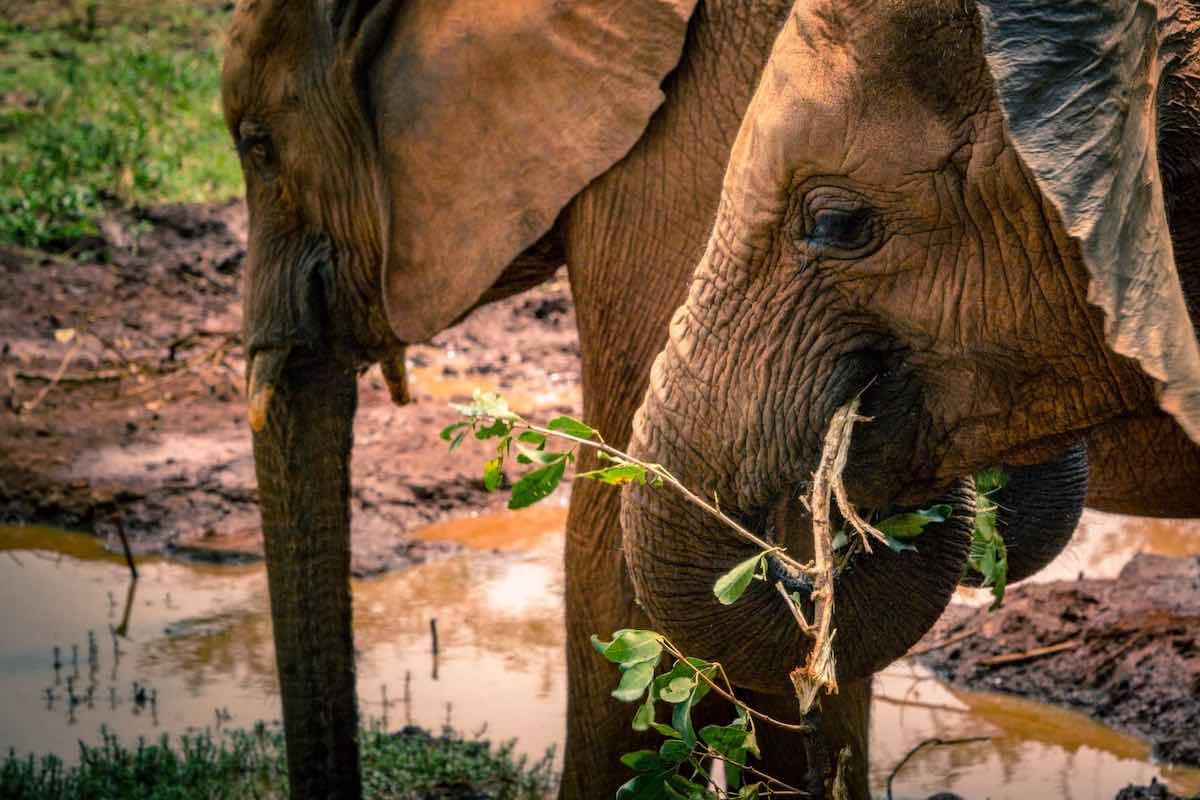
Kenya is, without question, one of the world’s greatest destinations for seeing elephants in the wild. From the iconic plains of Amboseli — where giant bulls roam with Kilimanjaro as their backdrop — to remote northern conservancies run by the Samburu people themselves, the country offers an unmatched range of elephant encounters at every budget and style of travel.
Kenya holds an estimated 36,000 African savanna elephants, making it home to one of the continent’s most significant and well-studied populations. Thanks to decades of dedicated conservation — from national parks to privately managed conservancies — elephant numbers here are slowly recovering after the ivory crisis of the 1980s and 90s. That recovery story is part of what makes a Kenya elephant safari so compelling: you’re witnessing conservation work in action.
We’ve hand-picked eight exceptional locations spread across the country — covering wild game drives, intimate orphan visits, and community-run sanctuaries that barely existed a decade ago. Whether you have a week-long safari or a single afternoon in Nairobi, there’s an elephant experience in Kenya that fits.
1. Amboseli National Park
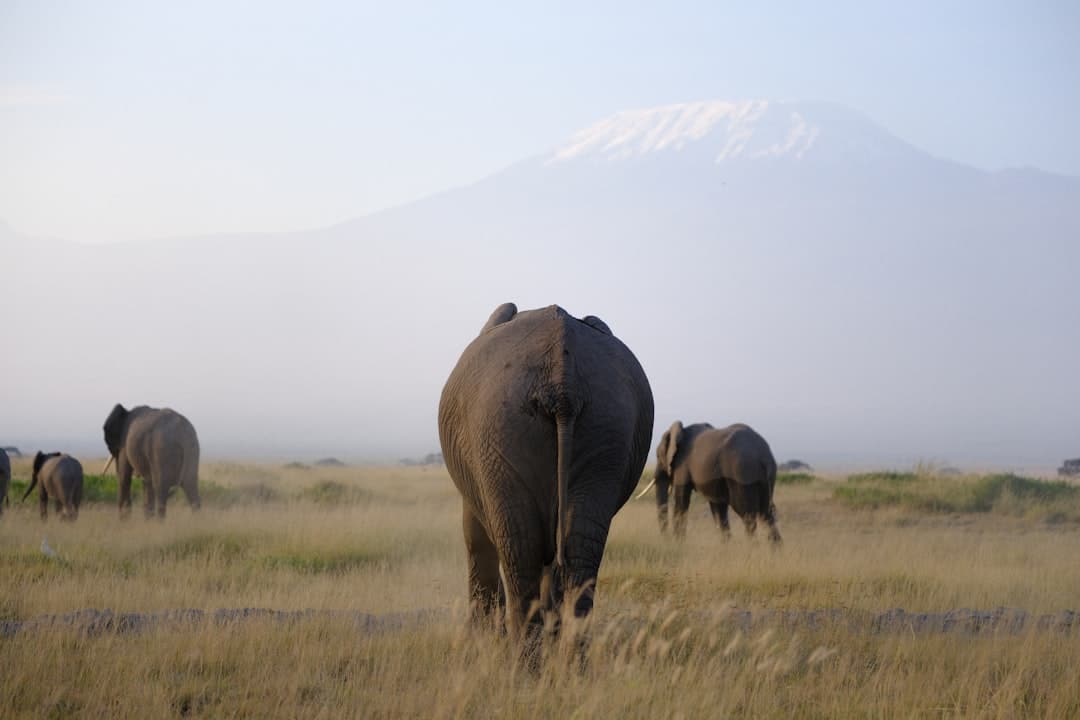
Amboseli National Park is the postcard image of Kenya: vast open plains, enormous elephant herds, and the snow-capped summit of Mount Kilimanjaro rising just across the Tanzanian border. At 392 km², it punches well above its weight as the single most productive park in Africa for watching elephants at close range. The park’s relatively low vegetation means elephants are visible almost constantly, and many have been individually known to researchers since the Amboseli Elephant Research Project began in 1972 — the longest continuous study of any wild animal population on Earth.
Amboseli’s elephant families have become so accustomed to vehicles that you can park a few metres away and simply watch natural behaviour unfold — calves playing, matriarchs leading families to the swamps, massive bulls moving silently through the dust. The best game drives are at dawn, when the air is clear and Kilimanjaro’s peak emerges from the clouds.
Quick facts:
| Number of Elephants: | ~2,000 (one of the most studied herds in Africa) |
| Location: | https://goo.gl/maps/z16JqB2pTaHi129XA |
| Homepage: | https://amboseli.com |
Accommodation ranges from the high-end Amboseli Serena Safari Lodge to more affordable tented camps along the park boundary. The best time to visit is during the dry seasons — January to March and July to October — when wildlife concentrates around the park’s permanent swamps fed by underground streams from Kilimanjaro. The swamp areas around Observation Hill offer particularly spectacular elephant photography, especially in the late afternoon when the light turns golden and the mountain is at its most photogenic.
For families and first-time safari-goers, Amboseli is often the single best park in Kenya. The combination of large breeding herds, habituated animals, and that extraordinary Kilimanjaro backdrop makes it almost impossible to leave disappointed.
Location:
Video:
2. Masai Mara National Reserve
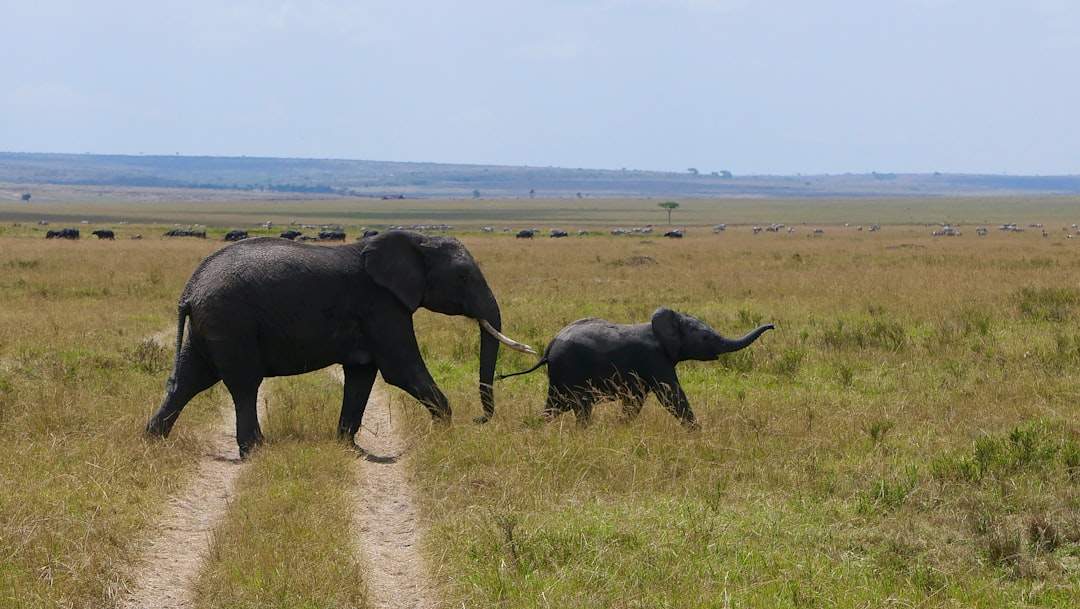
The Masai Mara is Kenya’s most famous wildlife reserve and a cornerstone of any serious elephant safari in Africa. Covering 1,510 km² of open savanna and riverine forest in the southwest of the country, it forms the northern section of the greater Serengeti-Mara ecosystem — one of the most biologically diverse regions on the planet. Elephants here move freely between the Mara and the Serengeti, crossing the border according to rainfall and forage rather than any human boundary.
The Mara supports around 2,500 elephants, and encounters are a daily occurrence on most game drives. Families gather along the Mara River, where elephants drink, play and occasionally cross in dramatic fashion. Bulls are frequently seen patrolling territorial boundaries, and during the July–October period when the Great Migration is passing through, the combination of wildebeest, zebra and elephant creates wildlife spectacles unlike anywhere else on earth.
Quick facts:
| Number of Elephants: | ~2,500 |
| Location: | https://goo.gl/maps/HpJsrspq7j4wPY1m6 |
| Homepage: | https://www.masaimara.com |
The Mara Triangle, managed by the Mara Conservancy, is widely considered the best-managed section of the reserve and where elephant sightings are most reliable. Beyond the core reserve, the surrounding Maasai-owned conservancies — including Naboisho, Ol Kinyei and Mara North — offer exclusive game drives with far fewer vehicles and genuinely intimate encounters.
For photographers, the Mara’s combination of big skies, golden grass and dramatic lighting makes it arguably the finest elephant photography destination in Africa. Stay at least three nights to experience the full range of conditions — misty morning drives, bright midday herds at the river, and the orange light of late afternoon when everything seems to glow.
Location:
Video:
3. Tsavo National Park
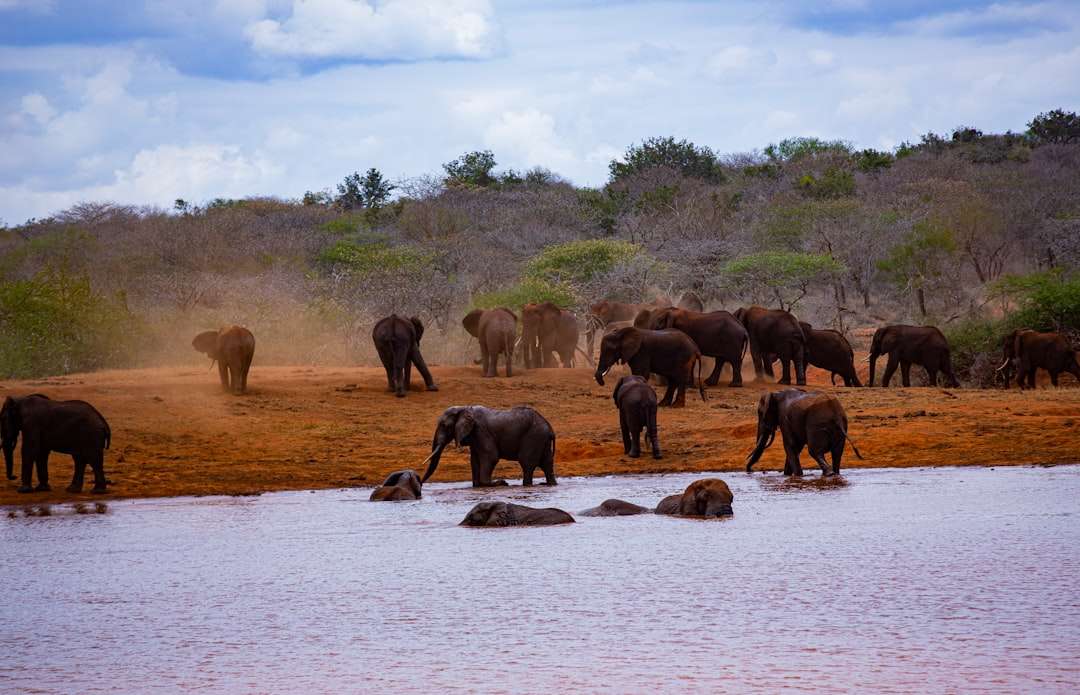
Tsavo is Kenya’s largest protected area — over 20,000 km² split between Tsavo East and Tsavo West — and home to the largest single elephant population in the country. It’s a rawer, wilder experience than Amboseli or the Mara: fewer tourists, vast distances, and a landscape dominated by red volcanic soil that gives Tsavo its most iconic feature. The elephants here roll in that red earth to protect their skin from the sun and insects, turning them a distinctive terracotta colour unlike any elephants you’ll see elsewhere in Africa.
Tsavo is also where Kenya’s greatest tuskers live. It’s estimated that around 10% of Africa’s remaining “big tusker” bulls — bulls with tusks long enough to touch the ground — roam Tsavo East, making it the single most important refuge for this rare phenotype on the continent. Seeing one of these magnificent animals in the bush is a safari experience that stays with you for life.
Quick facts:
| Number of Elephants: | ~15,000 (Kenya’s largest population; ~10% of Africa’s big tuskers) |
| Location: | https://goo.gl/maps/pLTyPmnH4mXJqib86 |
| Homepage: | https://www.tsavopark.com |
Tsavo East is easier to navigate and better suited to elephant watching — its open semi-arid bush means animals are visible at greater distances. The Galana River is the focal point: a permanent water source that draws enormous herds during the dry season, particularly between June and October. Tsavo West offers more varied terrain with volcanic hills, underground rivers and the Mzima Springs, where hippos and crocodiles share the water with elephant families coming to drink.
This is a park for travellers who want a genuinely wild, uncrowded experience. Combine it with Amboseli on a loop itinerary — the drive between the two parks passes through Chyulu Hills and takes in spectacular scenery — for a contrast of landscapes and elephant personalities that sums up southern Kenya beautifully.
Location:
Video:
4. Samburu National Reserve
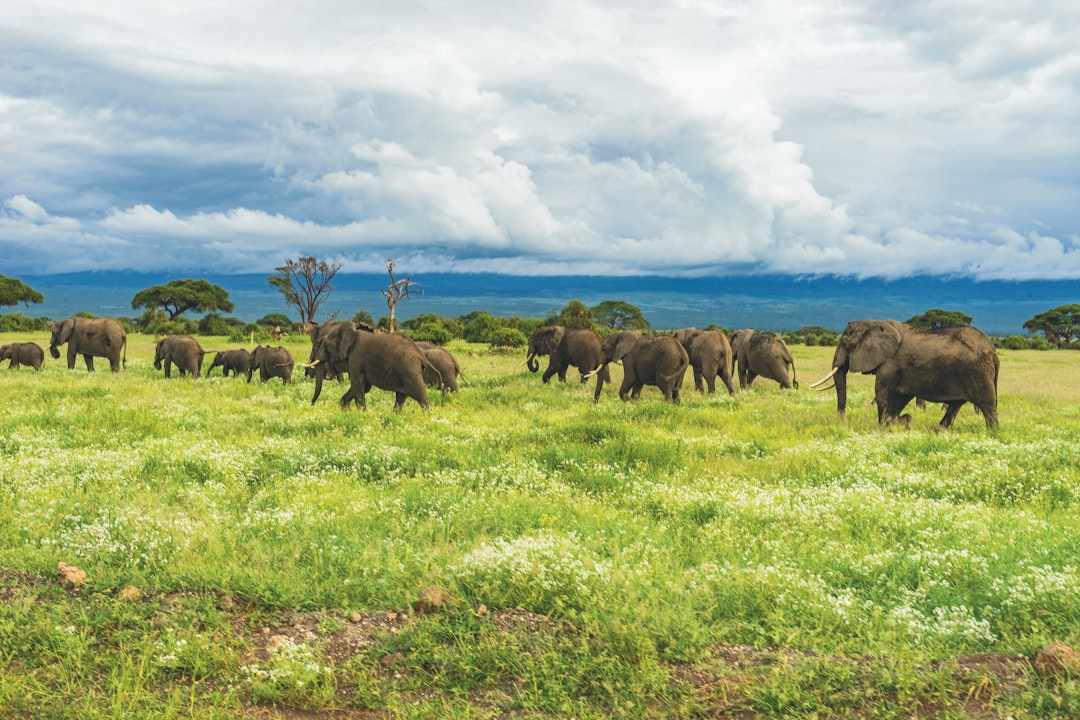
Samburu National Reserve sits in Kenya’s arid north, straddling the Ewaso Ng’iro River — the lifeline of the region and the reason elephants gather here in extraordinary concentrations. The reserve covers 165 km² but functions as part of a much larger ecosystem alongside the adjacent Buffalo Springs and Shaba National Reserves, giving wildlife and especially elephants a vast corridor to move through.
Samburu is home to around 900 elephants organised into 60–70 family groups that have been studied continuously since 2001 by Save the Elephants, whose research station sits within the reserve. This means the elephants are exceptionally habituated — families will walk calmly past a parked vehicle within a few metres, going about their business without a second glance. It’s one of the most intimate wild elephant experiences in Kenya.
Quick facts:
| Number of Elephants: | ~900 (60–70 family groups) |
| Location: | https://goo.gl/maps/KAxbngkbNNWAn1Gj6 |
| Homepage: | https://www.samburureserve.com |
Elephant Watch Camp, run by Saba Douglas-Hamilton, daughter of elephant researcher Iain Douglas-Hamilton, is widely regarded as the finest camp for elephant experiences in the whole of Kenya. The camp is deliberately unfenced, meaning elephants — and other wildlife — move freely through the property day and night. Guests have woken to find breeding herds grazing outside their tents at sunrise.
Samburu’s northern location also means it’s home to wildlife species found nowhere else in Kenya: reticulated giraffe, Grevy’s zebra, gerenuk and Beisa oryx — the so-called “Samburu Special Five.” Combined with the elephant encounters, this makes it one of the most rewarding wildlife destinations in East Africa for travellers who want something beyond the usual safari circuit.
Location:
Video:
5. Lewa Wildlife Conservancy
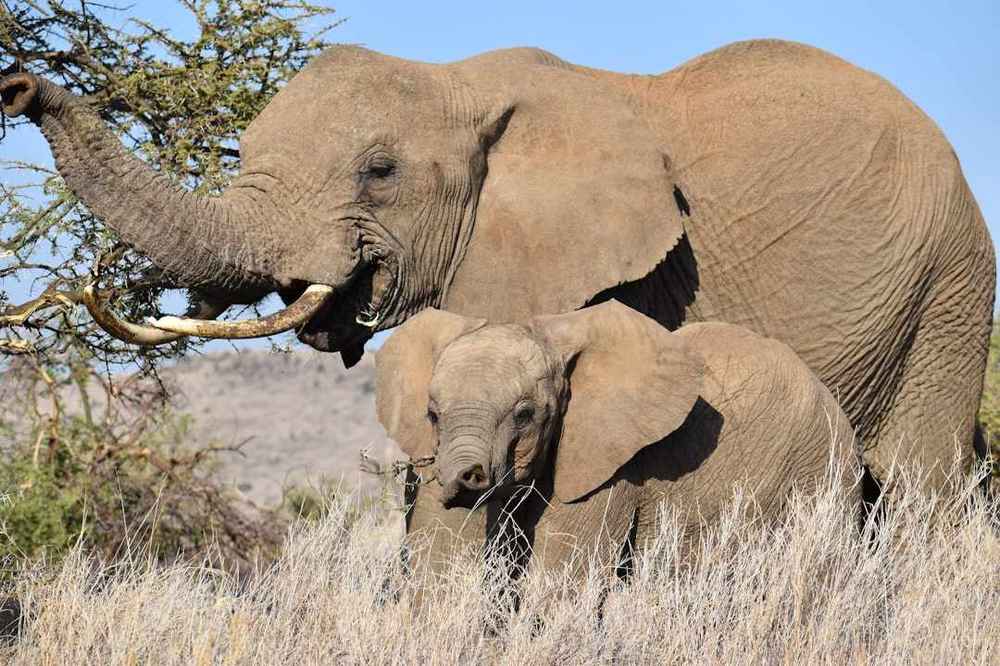
Lewa Wildlife Conservancy is one of Africa’s great conservation success stories. A former cattle ranch that was progressively converted into a wildlife conservancy from the 1980s onwards, it now protects over 250 km² of the Laikipia Plateau on the lower slopes of Mount Kenya — and has been recognised as a UNESCO World Heritage Site as part of the Mount Kenya ecosystem since 2013.
Lewa is best known for its black rhino programme — it hosts around 14% of Kenya’s entire black rhino population — but the conservancy’s elephant population of over 400 is equally impressive. The elephants here include resident families and seasonal visitors from the wider Laikipia landscape, many of them part of the 2,000-strong Laikipia–Samburu elephant population that was the subject of the landmark Elephants Without Borders census. During dry years, elephants from Samburu travel over 100 km south along ancient migratory routes to drink at Lewa’s permanent water sources.
Quick facts:
| Number of Elephants: | 400+ (part of wider Laikipia–Samburu population) |
| Location: | https://goo.gl/maps/4k8QKXy7nd1L1bCA7 |
| Homepage: | https://www.lewa.org |
A stay at Lewa offers something rarer than a standard game drive: true insight into how a modern African conservancy operates. Rangers conduct anti-poaching patrols, research teams monitor individual animals, and community programmes support the Maasai and Borana communities who live along the conservancy’s borders. Guided walking safaris — often led by rangers who know each elephant by name — are among the most memorable wildlife experiences available in East Africa.
Lewa is usually combined with Samburu on a Laikipia circuit itinerary, and the two complement each other perfectly — Samburu’s raw northern wilderness against Lewa’s more managed, richly diverse landscape. Several of the luxury lodges on Lewa run their own elephant conservation programmes and can organise visits to research stations in the field.
Location:
Video:
6. Ol Pejeta Conservancy
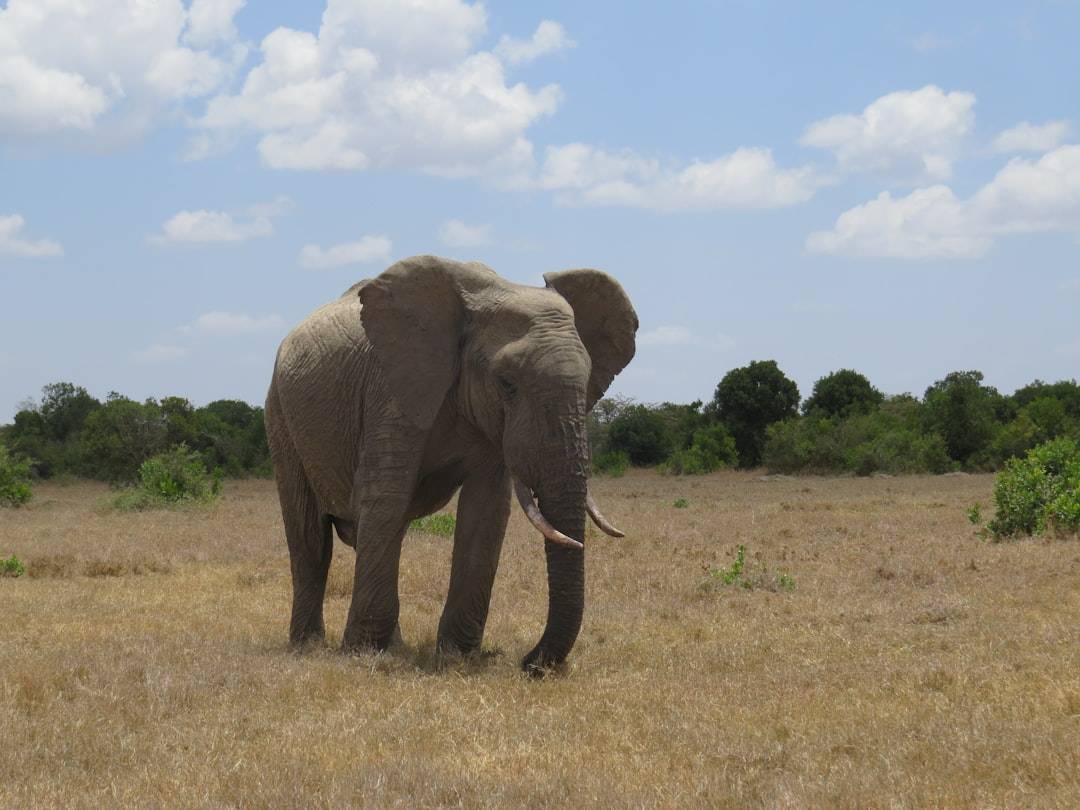
Ol Pejeta Conservancy is a 360 km² not-for-profit wildlife sanctuary in Laikipia County, straddling the equator on the western slopes of Mount Kenya. It was historically a cattle ranch owned by the Lonrho Corporation before being converted into a conservancy in the 1980s. Today it is East Africa’s largest black rhino sanctuary and one of the most intensively managed wildlife areas in Kenya — and for elephant enthusiasts, it represents an experience that’s genuinely different from anywhere else on this list.
Ol Pejeta sits at the heart of a critical elephant corridor connecting the Aberdare Mountains to the east with the Laikipia rangelands to the west. Elephants move through the conservancy seasonally, and the resident population of around 100–150 animals has become accustomed to vehicles. What makes Ol Pejeta especially compelling is the density of activity: you can watch elephants, rhinos, lions and chimpanzees (at the Jane Goodall Chimpanzee Sanctuary) in a single day, making it one of the most species-rich game drives in Kenya.
Quick facts:
| Number of Elephants: | 100–150 resident (migratory corridor visitors additional) |
| Location: | https://maps.app.goo.gl/olpejeta |
| Homepage: | https://www.olpejetaconservancy.org |
The conservancy is also home to Sudan, Najin and Fatu — the last three northern white rhinos on Earth — making it a place of profound global conservation significance. The juxtaposition of these extremely endangered rhinos with the healthier elephant population drives home the stakes of African wildlife conservation in a way that no documentary can fully replicate. Ol Pejeta’s visitor fees directly fund its anti-poaching and community development programmes, so every ticket sold makes a tangible difference.
Nanyuki, the gateway town to Ol Pejeta, is easily reached from Nairobi in under four hours, making this an accessible add-on to any Kenya itinerary. Day visits are possible but an overnight stay is strongly recommended — the early morning drives when elephants move to the water points are exceptional.
Location:
Video:
7. Sheldrick Wildlife Trust
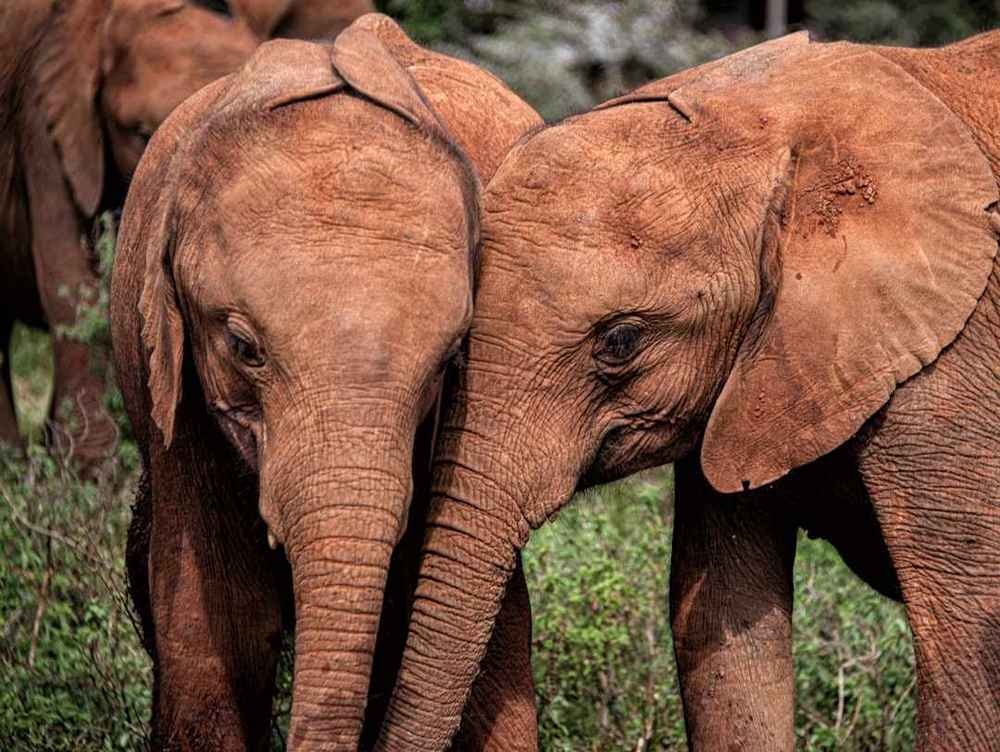
The Sheldrick Wildlife Trust (SWT) has been rescuing and rehabilitating orphaned elephants in Kenya since 1977, when founder Daphne Sheldrick developed the world’s first successful formula for raising newborn elephant calves — a breakthrough that has since saved hundreds of lives. Today the Trust operates a network of field units and stockades across Tsavo, Amboseli and Meru, but its most visited facility is the Nairobi Nursery, located inside Nairobi National Park just a few kilometres from the city centre.
Every morning from 11am to noon, visitors can watch the nursery’s current cohort of orphan calves — typically 20–40 animals ranging in age from a few weeks to three years — come out for their daily mud bath and milk feed. It’s an intensely moving experience: each calf has a name, a story (usually involving poaching or human-wildlife conflict), and a team of dedicated keepers who sleep alongside them through the night. Visitors learn the rescue history of each calf, and the interactions between calves and keepers demonstrate the extraordinary emotional intelligence of elephants.
Quick facts:
| Number of Elephants: | 20–40 orphans in care at the Nairobi Nursery at any time |
| Location: | https://goo.gl/maps/TL1NF8QLm1tgPZsD6 |
| Homepage: | https://www.sheldrickwildlifetrust.org |
Advance booking is essential — the SWT limits daily visitor numbers to keep the experience intimate and stress-free for the calves, and spots sell out days or weeks in advance during peak season. The visit runs for exactly one hour and takes place rain or shine. Foster parents — anyone who has adopted an elephant through SWT’s programme — receive early entry at 10:45am ahead of the general public.
For travellers transiting through Nairobi or on a tight schedule, the SWT Nursery is the single best use of a spare morning in the city. Combine it with an afternoon game drive in Nairobi National Park itself — one of the only national parks in the world inside a capital city — and you have a full day of outstanding wildlife experiences without leaving the metropolitan area.
Location:
Video:
8. Reteti Elephant Sanctuary
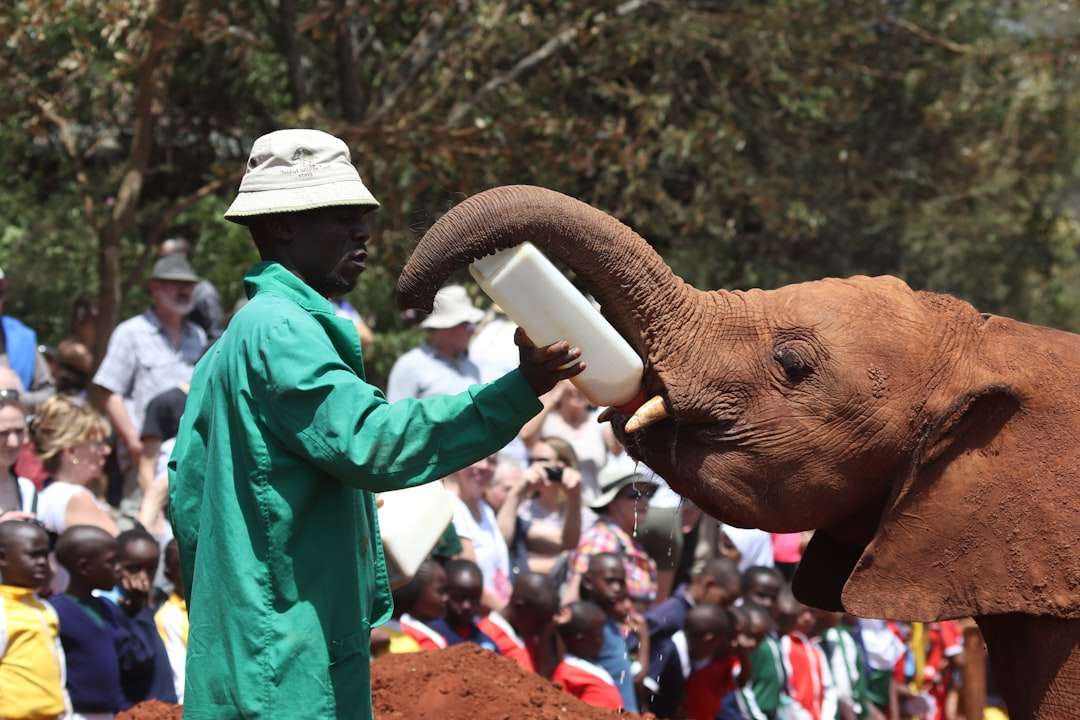
Reteti Elephant Sanctuary is Africa’s first community-owned and community-run elephant orphan sanctuary — and one of the most remarkable conservation stories to emerge from the continent in recent years. Founded in 2016 by members of the Samburu community in Namunyak Wildlife Conservancy in northern Kenya, Reteti is staffed entirely by local people, with Samburu rangers and keepers who have developed some of the most intimate and scientifically observed bonds between humans and wild elephants anywhere in Africa.
The sanctuary currently cares for around 30 orphaned calves, most of them from northern Kenya — victims of drought, human-wildlife conflict or separation from their herds. Unlike conventional sanctuaries where ownership lies with an NGO or international charity, Reteti is owned and governed by the Namunyak community trust, meaning the benefits flow directly to the families who live alongside these elephants. This model is being watched closely by conservationists worldwide as a blueprint for the future of African wildlife protection.
Quick facts:
| Number of Elephants: | ~30 orphans in care (number varies as calves are released) |
| Location: | https://maps.app.goo.gl/reteti |
| Homepage: | https://www.reteti.org |
Visiting Reteti is logistically more demanding than the SWT Nairobi Nursery — the sanctuary is located in Namunyak Conservancy in Samburu County, roughly an eight-hour drive from Nairobi or accessible by small charter aircraft to the Sarara airstrip. Most visitors stay at Sarara Camp, the luxury tented camp that sits adjacent to the sanctuary and whose fees directly fund the elephant programme. The combination of a full elephant safari experience and an overnight stay at Sarara, where camp lighting and dawn sounds feel utterly remote, is one of the most sought-after experiences in Kenya.
Visitor numbers are deliberately limited to protect the welfare of the calves and the community’s ownership of the experience. This is not a theme park or tourist attraction — it’s a working sanctuary where you are a guest of the Samburu people, watching them care for animals their ancestors lived alongside for centuries. For travellers who want to connect with something genuinely meaningful on a Kenya safari, Reteti belongs on every itinerary.
Location:
Video:
Conclusion
Kenya offers a breadth and depth of elephant experiences that no other country can match. Whether you choose the classic big-skies drama of Amboseli and the Masai Mara, the raw wilderness of Tsavo’s red-dusted giants, the intimate northern encounters at Samburu and Lewa, or the deeply human stories being told at Ol Pejeta, Sheldrick and Reteti — every one of these locations offers something distinct and memorable.
If you only have time for one destination, Amboseli remains the single most iconic choice for its combination of elephant numbers, habituation and that extraordinary Kilimanjaro backdrop. But if you can extend your trip into northern Kenya — adding Samburu, Lewa or Ol Pejeta — you’ll discover a side of the country that most visitors never see, where the conservation work is perhaps even more urgent and the encounters even more intimate.
And if there’s one destination on this list that deserves to be far better known internationally, it’s Reteti. Africa’s first community-owned elephant sanctuary is a model for what conservation can look like when local people are genuinely in charge — and the elephants there seem to know it.
Amboseli National Park is widely regarded as the finest place to see elephants in Kenya. It supports around 2,000 highly habituated elephants against the spectacular backdrop of Mount Kilimanjaro, and the Amboseli Elephant Research Project has studied its herds continuously since 1972 — making these some of the most extensively documented elephants on Earth. For sheer numbers, Tsavo National Park holds Kenya’s largest population of around 15,000 elephants.
Yes — Kenya has two outstanding elephant orphan experiences. The Sheldrick Wildlife Trust in Nairobi National Park is open daily from 11am to noon and offers access to 20–40 infant orphans being rehabilitated for eventual release. For a more remote, community-focused experience, Reteti Elephant Sanctuary in Samburu County is Africa’s first community-owned elephant sanctuary, run by the Samburu people and best visited as part of a stay at Sarara Camp. Both require advance booking.
Kenya is home to an estimated 36,000 African savanna elephants, making it one of the most significant elephant populations on the continent. The number has been recovering since the ivory poaching crisis of the 1980s and 1990s, thanks to strong anti-poaching laws and community conservation models. The largest concentration — around 15,000 — is found in the combined Tsavo East and West National Parks.
Elephants can be seen year-round in Kenya, but the best conditions vary by park. In Amboseli and Tsavo, the dry seasons (January–March and July–October) concentrate elephants around permanent water sources and make game drives most productive. In the Masai Mara, July–October coincides with the Great Migration and peak wildlife activity. Samburu, Lewa and Ol Pejeta are excellent throughout the year, though the long dry season (July–October) brings the largest elephant aggregations to water points.

One reply on “Best Places to See Elephants in Kenya”
[…] The David Sheldrick wildlife trust is located in Nairobi and was established in 1977. This organization works 24/7 to provide care for orphaned elephants. It’s one of the leading conservation organization’s which supports elephant cruelty-free tourism in Kenya. […]