

Vietnam is home to one of the most precarious elephant populations in Asia. Once numbering in the thousands, the country’s wild Asian elephants have declined to fewer than 130 individuals — scattered across nine provinces in small, fragmented herds struggling to survive amid rapid agricultural expansion. Seeing elephants in Vietnam is not a guarantee; it is a privilege, and increasingly a responsibility.
The good news is that Vietnam’s approach to elephant tourism has undergone a quiet revolution. The days of elephant riding — once central to tourism in the Central Highlands — are coming to an end. Yok Don National Park made history in 2018 as the site of Vietnam’s first ethical elephant tourism experience, run in partnership with Animals Asia, and the wider province of Dak Lak has been systematically shifting its model away from contact-based tourism since 2021. Visiting elephants in Vietnam today means supporting that transformation.
Here are the four best places to see elephants in Vietnam — ranging from the country’s only dedicated ethical elephant tour to remote national parks where wild herds still move through ancient highland forests.
1. Yok Don National Park
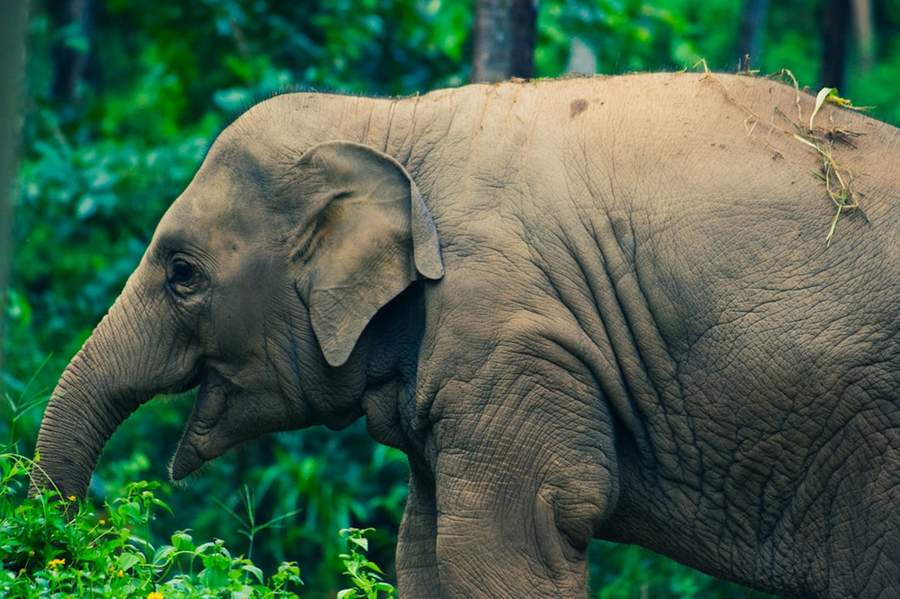
Yok Don National Park, located in Dak Lak Province in Vietnam’s Central Highlands, is the country’s most important site for elephant tourism — and the only place in Vietnam offering a fully ethical, observation-based elephant experience. The park covers 1,155 km² of dry dipterocarp forest along the Cambodian border and holds between 28 and 60 wild Asian elephants, the largest remaining wild herd in the country. In addition to the wild population, four former riding elephants now live semi-wild within the park under the care of their mahouts, freed from tourism work since 2018.
The ethical elephant tour, developed in partnership with Animals Asia, involves a guided forest trek to find the elephants in their natural environment. There are no rides, no tricks, no direct contact with visitors — just a respectful observation from a safe distance, following the mahouts who know each elephant by behaviour and temperament. It’s a small-group experience, limited by the park to preserve the quality of the encounter and the welfare of the animals. Prices start at 800,000 VND per person for a half-day tour.
Quick facts:
| Number of Elephants: | 28–60 wild + 4 semi-wild former riding elephants |
| Location: | https://maps.app.goo.gl/yokdon |
| Homepage: | https://www.yokdonpark.vn |
To book the ethical elephant tour, email [email protected] or call the park directly on +84 (0) 262 3783 049. Advance booking of at least 48 hours is recommended, especially during peak season (December–March). The nearest base is Buon Ma Thuot, Dak Lak’s provincial capital, which has a domestic airport with connections from Ho Chi Minh City and Hanoi.
Yok Don is also excellent for birdwatching — over 300 bird species have been recorded — and for seeing the wider social dynamics of elephant herds in a forest setting very different from the open savannas of Africa. The dry season (November–April) offers the best chance of finding the elephants in accessible areas near water sources.
Location:
Video:
2. Cat Tien National Park
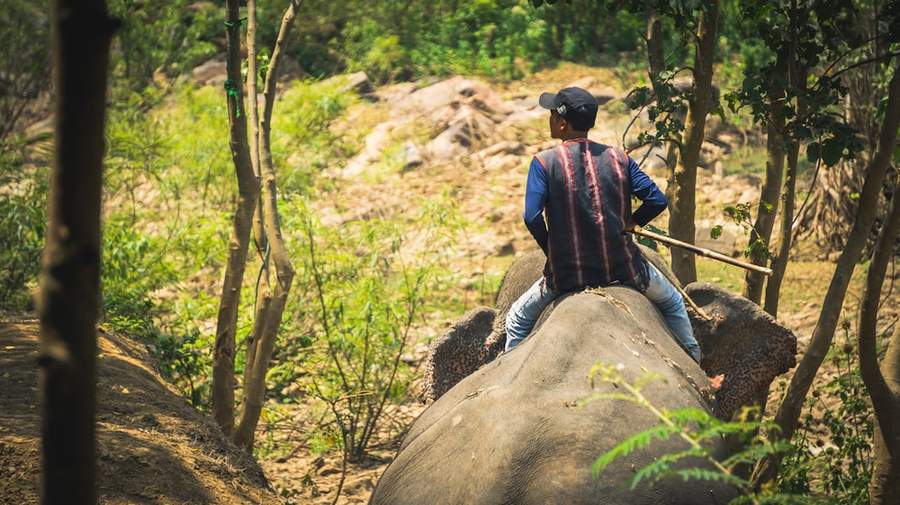
Cat Tien National Park is Vietnam’s most accessible major wildlife reserve and one of only two lowland tropical rainforests remaining in Southeast Asia. Located in Dong Nai Province, roughly 150 km north of Ho Chi Minh City, it covers 720 km² of river-fed forest and has been a UNESCO Biosphere Reserve since 2001. Fewer than 20 wild Asian elephants survive here — a critically small number — but Cat Tien remains an important sanctuary and the closest place to Saigon where wild elephants can still be found.
Elephant sightings at Cat Tien are rare and unpredictable, which is both the honest reality and part of what makes them so remarkable when they happen. The park’s rangers monitor movement and can advise on recent sightings, and the park’s network of walking trails, night safaris and boat trips on the Dong Nai River offer genuinely immersive wildlife experiences even when elephants are not present. The wider wildlife — including wild herds of gaur, rare gibbons, crocodiles and hundreds of bird species — makes Cat Tien one of the most biodiverse destinations in Vietnam.
Quick facts:
| Number of Elephants: | Fewer than 20 wild Asian elephants |
| Location: | https://maps.app.goo.gl/cattien |
| Homepage: | https://www.vuoncattien.com |
The park has basic accommodation — the Cat Tien National Park Tourist Centre offers guesthouses and bungalows — and the Crocodile Lake area is particularly productive for nocturnal wildlife. For elephant-focused visitors, staying overnight significantly increases your chances of an encounter, as elephants are most active at dawn and dusk.
Cat Tien is best visited between December and April when the dry season makes trails accessible and wildlife more visible around water sources. During the rainy season (May–November) the forest is lush and birdlife exceptional, but trails can be muddy and elephant sightings harder to predict.
Location:
Video:
3. Pu Mat National Park
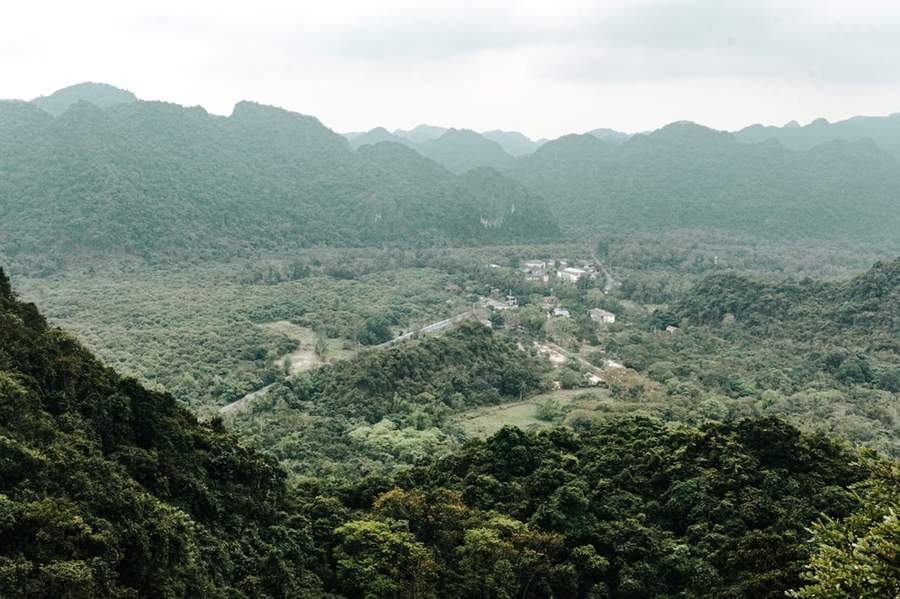
Pu Mat National Park is one of Vietnam’s least-visited but most ecologically significant protected areas. Located in Nghe An Province in the northern Central Highlands, it covers 940 km² of near-pristine subtropical forest stretching to the Laotian border. Approximately 15 wild Asian elephants live in the park’s deeper forests — a tiny but stable herd that researchers believe has been resident here for generations, moving seasonally between Vietnam and Laos along corridors that predate any national boundaries.
Elephant encounters at Pu Mat are genuinely rare and should be treated as a potential bonus rather than an expectation. The park is remote — the nearest large city, Vinh, is around 200 km away — and infrastructure is basic. But for travellers willing to go off the standard tourist circuit, Pu Mat offers one of the most authentic jungle experiences in Southeast Asia. The park is part of the Western Nghe An Biosphere Reserve and is internationally recognised for its biodiversity: it shelters some of Asia’s most endangered wildlife, including the saola, one of the world’s rarest large mammals, as well as gaur and clouded leopard.
Quick facts:
| Number of Elephants: | ~15 wild Asian elephants |
| Location: | https://maps.app.goo.gl/pumat |
| Homepage: | https://www.vuonquocgiapumat.vn |
The best entry point is the town of Con Cuong, served by overnight trains from Hanoi (around 8 hours) and connecting buses. The park’s main visitor centre is located near the Con Cuong entrance, and multi-day trekking permits can be arranged through local guides. Longer treks deeper into the forest give the best chance of finding signs of elephant presence — footprints, dung and damage to young trees are often more visible than the elephants themselves in this dense highland environment.
Location:
Video:
4. Dak Lak Elephant Conservation Center
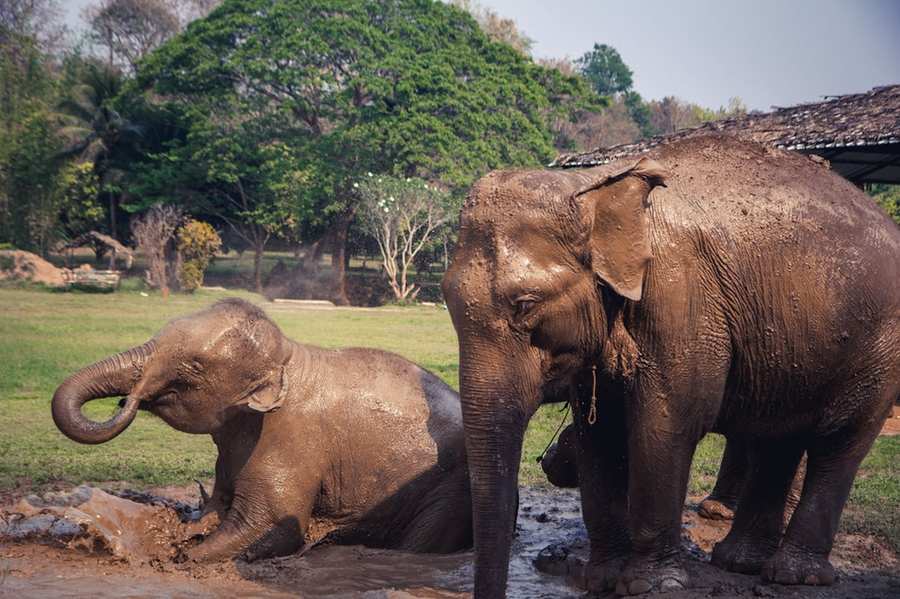
The Dak Lak Elephant Conservation Center in Buon Don, Dak Lak Province, is the most direct place in Vietnam to see and learn about the rehabilitation of elephants that have been removed from harmful tourism and logging work. The center cares for elephants that are retired, injured or confiscated from operators who were using them in ways that violate Vietnam’s increasingly strict animal welfare laws. It represents the leading edge of a province-wide shift in how Dak Lak — historically the centre of Vietnam’s elephant riding industry — is reimagining its relationship with these animals.
Unlike traditional elephant camps, the center focuses on the health and recovery of its charges rather than performance or physical interaction with visitors. Elephants are encouraged to exhibit natural behaviours — foraging, mud bathing, socialising — under the supervision of trained keepers. Visits are conducted as guided observation experiences, and the education component is strong: rangers explain the history of each elephant and the broader conservation challenges facing Vietnam’s captive and wild populations. It’s a sobering and ultimately hopeful experience that puts Vietnam’s elephant crisis in clear human terms.
Quick facts:
| Number of Elephants: | Varies (retired and rehabilitating captive elephants) |
| Location: | https://maps.app.goo.gl/daklak |
| Homepage: | https://www.animalsasia.org |
The center is located near Buon Don village, about 45 km west of Buon Ma Thuot, making it easy to combine with a visit to Yok Don National Park on the same trip. The surrounding Buon Don area has significant cultural interest too — it was historically the home of the M’nông elephant catchers, the community whose traditional knowledge of elephant behaviour underpinned the whole of Vietnam’s captive elephant industry. Their story, told by knowledgeable local guides, adds important context to what you see at the center.
Location:
Video:
Conclusion
Vietnam is not an easy destination for elephant watching. The country’s wild population is critically small, and encounters are never guaranteed. But that scarcity is precisely what makes each of these four locations meaningful. Whether you choose the ethical guided walk at Yok Don, a night safari in Cat Tien’s ancient rainforest, a multi-day trek into the highlands of Pu Mat, or a visit to the conservation center in Buon Don — you are engaging with one of Asia’s most urgent wildlife stories.
What Vietnam offers that most of Southeast Asia does not is a genuine ethical framework, still being built in real time. By visiting these locations and choosing operators that align with the Animals Asia and Dak Lak government standards, travellers are voting with their feet for a model of elephant tourism where the animals come first. That matters enormously when fewer than 130 wild elephants stand between the species and extinction in this country.
Yes, but very few. Vietnam’s wild Asian elephant population has declined from around 2,000 in 1980 to fewer than 130 individuals today, scattered across nine provinces. The largest concentrations are in Yok Don National Park (28–60 elephants), Cat Tien National Park (fewer than 20) and Pu Mat National Park (around 15). Seeing wild elephants in Vietnam requires patience, the right time of year, and knowledgeable local guides.
Yok Don National Park in Dak Lak Province is Vietnam’s only officially endorsed ethical elephant experience, developed in partnership with Animals Asia. Since 2018, four former riding elephants have been freed of constraints and now roam semi-wild with their mahouts. Visitors join small guided forest walks to observe the elephants at a respectful distance — no riding, no tricks, no physical contact. Booking in advance via [email protected] is recommended.
Elephant riding is being phased out across Vietnam. Yok Don National Park ended elephant riding in 2018. A 2021 memorandum between Animals Asia and the Dak Lak provincial government set out a roadmap for ending riding province-wide. Several large operators in the Buon Don area have stopped offering rides since 2022–2023. While some smaller, unregulated operators may still offer riding, this is actively discouraged by Vietnam’s tourism authorities and strongly advised against by international animal welfare organisations.
Fly or take a train to Buon Ma Thuot, the capital of Dak Lak Province, which has a domestic airport with connections from Ho Chi Minh City and Hanoi. From Buon Ma Thuot, Buon Don village and the Yok Don park entrance are approximately 45 km west by road — easily reached by rented motorbike, taxi or organised tour. Buon Ma Thuot is also the base for visiting the Dak Lak Elephant Conservation Center in the same area.