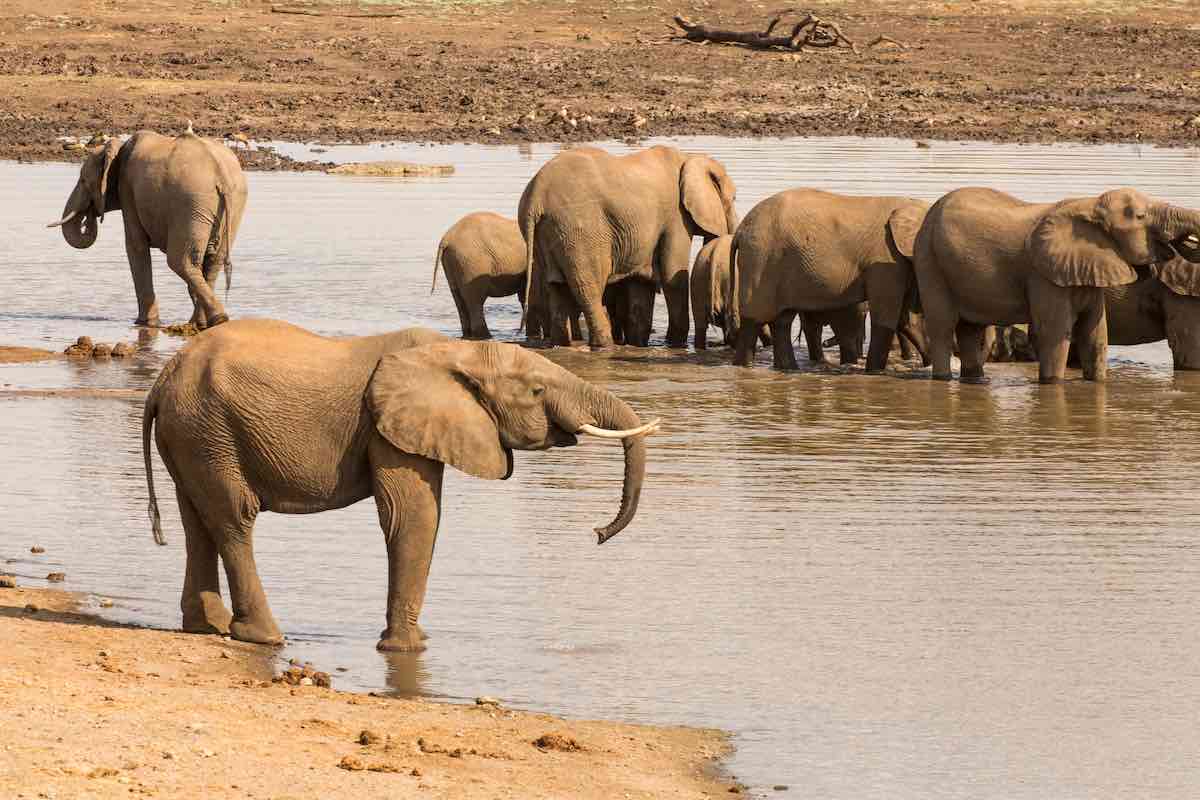
South Africa is home to one of the largest and most accessible elephant populations on Earth. From the sweeping bushveld of Limpopo and Mpumalanga to the lush coastal forests of the Garden Route, few countries offer such variety in elephant-watching settings. The country’s well-developed safari infrastructure makes it one of the most rewarding African destinations for wildlife travelers of all experience levels.
Unlike destinations such as Botswana or Kenya, South Africa’s wildlife areas range from vast wilderness reserves to smaller private conservancies that offer intimate, close-up encounters. Many parks are Big Five destinations, meaning elephants share terrain with lions, leopards, rhinos, and buffalo. The country also has a growing number of elephant-focused sanctuaries working in conservation and rehabilitation.
South Africa’s elephant story is one of remarkable recovery. After being hunted to near-extinction across many regions during the 19th century, conservation efforts and protected area expansion have seen populations rebound dramatically. Globally, African elephant numbers continue to face pressure from poaching and habitat loss, but within South Africa’s protected areas, populations are stable and in some cases growing. Here are the best places to see elephants in South Africa today.
1. Kruger National Park
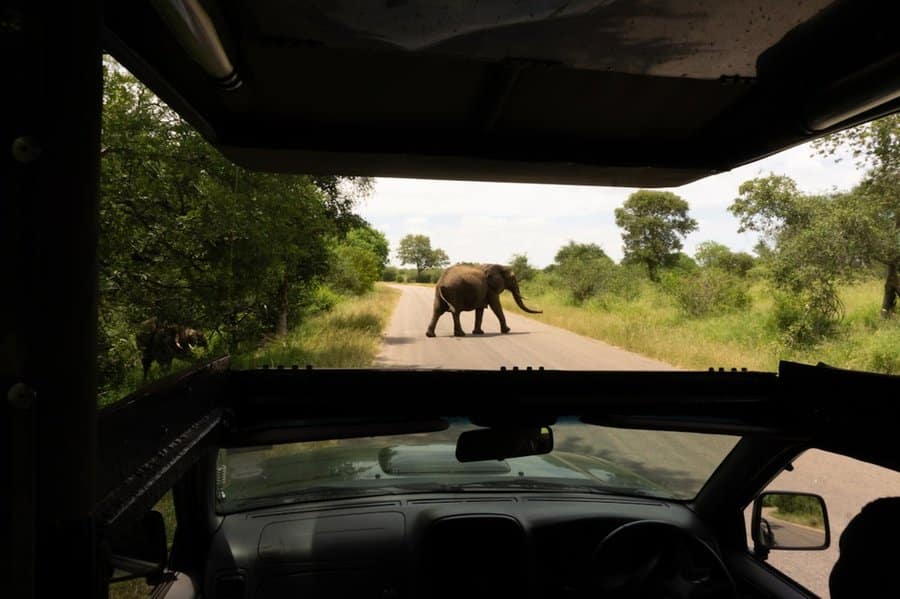
Kruger National Park is the undisputed elephant capital of South Africa. Spanning nearly two million hectares of Lowveld bushveld across Limpopo and Mpumalanga provinces, it holds an estimated 20,000 African elephants — one of the largest protected elephant populations anywhere in the world. The park’s sheer size means encounters feel wild and unscripted, with herds of 30 or more not uncommon at waterholes during the dry season.
Kruger is a year-round destination, but the dry winter months (May to September) offer the best elephant viewing. With vegetation stripped back, elephants congregate around rivers and permanent water sources, making them far easier to spot. The southern and central regions of the park — accessible from Skukuza, Lower Sabie, and Berg-en-Dal rest camps — tend to produce the most consistent sightings.
The park’s elephant population is actively managed by SANParks, which monitors herd dynamics and carries out population surveys. Kruger was once home to the legendary “Magnificent Seven” tuskers — super-bulls with tusks reaching the ground. While most are gone now, exceptional large-tusked bulls are still sighted in the southern and Letaba regions, drawing dedicated photographers from around the world.
Quick facts:
| Number of Elephants: | ~20,000 |
| Location: | https://goo.gl/maps/GVsBu9yYvQoYGiiD7 |
| Homepage: | https://www.sanparks.org/parks/kruger |
Self-drive safaris are a defining part of the Kruger experience. The park’s 2,500 km of roads wind through multiple ecosystems, from granite-studded hills in the south to mopane shrubveld in the north. For guided experiences, numerous private concessions border the park — Singita, Londolozi, and &Beyond Kirkman’s Kamp all offer open-vehicle game drives where rangers can legally go off-road in pursuit of elephant herds.
The Olifants Rest Camp, perched on a cliff above the Olifants River, is one of the best spots in the park to watch elephants drink and swim below. Early morning and late afternoon are the golden hours. Elephant-led bush walks, guided by armed SANParks rangers, are available from select camps and give an incomparable ground-level perspective on elephant behavior.
Location:
Video:
2. Addo Elephant National Park
Addo Elephant National Park, in the Eastern Cape, is one of South Africa’s great conservation success stories. When the park was established in 1931, only 11 elephants survived in the region — hunted almost to extinction by farmers protecting their crops. Today, more than 600 elephants roam its protected land, making Addo one of the densest elephant concentrations on the continent relative to the park’s size.
Addo is compact enough that a one-day visit often produces reliable elephant sightings. The Hapoor waterhole, visible from the main camp’s restaurant deck, draws elephants almost continuously in summer. Visitors regularly describe watching 50 or 60 elephants arriving to drink and mud-bathe as one of the most spectacular wildlife experiences in Africa.
Quick facts:
| Number of Elephants: | 600+ |
| Location: | https://goo.gl/maps/ABe519ygfR4rACAQ7 |
| Homepage: | https://www.sanparks.org/parks/addo |
What makes Addo especially appealing is its accessibility from Cape Town or Gqeberha (Port Elizabeth). The main game area is just 72 km north of Gqeberha, making it an easy day trip or weekend destination. The park has expanded significantly over the decades and now includes a marine section protecting great white sharks and southern right whales — making it one of the few parks in the world to combine Big Five and marine wildlife experiences in a single reserve.
Addo’s elephants are well habituated to vehicles and often approach safari cars with curiosity rather than aggression, making for extraordinary close-range photography. The park is also famous for its flightless dung beetles — the world’s highest concentration — which thrive in this elephant-rich environment. Best time to visit is year-round, though summer (November to February) sees elephants most active near waterholes.
Location:
Video:
3. Hluhluwe-iMfolozi Park
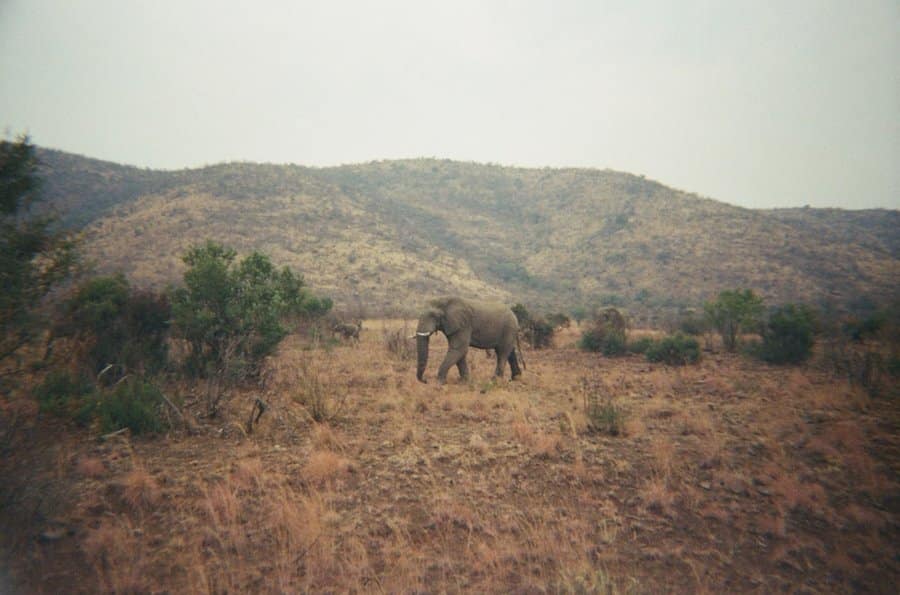
Hluhluwe-iMfolozi Park is Africa’s oldest proclaimed nature reserve, established in 1895 in the Zululand heartland of KwaZulu-Natal. It is most famous for saving the white rhino from extinction in the 1950s, but its elephant population is equally impressive — over 650 elephants roam 96,000 hectares of hilly bushveld, acacia savanna, and riparian forest.
Elephants were reintroduced to Hluhluwe-iMfolozi in 1981 after being absent for decades. The population has grown so successfully that the park has periodically supplied elephants to other reserves across Africa through translocation programs. The varied topography — rolling hills, deep gorges, and open plains — creates a visually dramatic backdrop for game drives quite distinct from Kruger’s flat bushveld.
Quick facts:
| Number of Elephants: | 650+ |
| Location: | https://www.google.com/maps/place/Hluhluwe-iMfolozi+Park |
| Homepage: | https://www.kznwildlife.com/ |
The park is split into two sections — Hluhluwe in the north and iMfolozi in the south — connected by a corridor. Hilltop Camp in the Hluhluwe section offers sweeping panoramic views over the valley and is one of the most scenically positioned camps in South Africa. Both sections offer self-drive and guided game drives, as well as walking safaris in the iMfolozi Wilderness Area — one of the few places in southern Africa where multi-day wilderness trails operate on foot among the Big Five.
Elephant sightings are reliable year-round, but the dry season (June to October) concentrates wildlife around rivers and waterholes. The Hluhluwe section’s thicker vegetation means elephants can disappear into the canopy with surprising ease, which adds an element of suspense to each game drive. The park is a four-hour drive from Johannesburg and roughly three hours from Durban.
Location:
Video:
4. Pilanesberg National Park
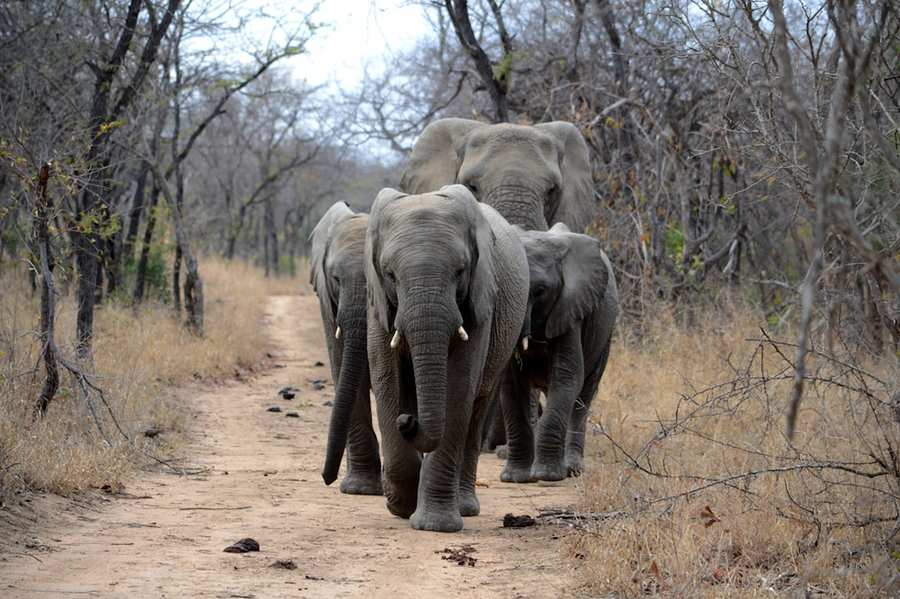
Pilanesberg National Park sits inside the caldera of an ancient volcano in North West Province, just three hours from Johannesburg and adjacent to the Sun City resort complex. Its unique circular geology creates a visually striking landscape of concentric ridges, open grasslands, and several large lakes. The park holds over 200 elephants, making it one of the most accessible Big Five destinations for visitors based in Johannesburg or Pretoria.
Established in 1979 through “Operation Genesis” — one of the largest animal relocation programs in history — Pilanesberg was populated with elephants, lions, rhinos, and other species translocated from parks across southern Africa. Young, traumatized elephants reintroduced in those early years contributed to behavioral issues in the 1990s, extensively studied by researchers and documented in work on elephant social structure. Today, the herds are well-adjusted and provide consistently excellent viewing.
Quick facts:
| Number of Elephants: | 200+ |
| Location: | https://goo.gl/maps/rKiG6e7hER7y9UjPA |
| Homepage: | https://www.pilanesbergnationalpark.org |
The game-viewing road network in Pilanesberg is well-maintained and easy to navigate on a self-drive. The Mankwe Game Tracking Hide, positioned over the large Mankwe Dam, is a particular highlight — elephants wade into the dam to drink and bathe, sometimes entirely submerging in the water during summer. Kwa Maritane and Bakubung Bush Lodge are the two most popular private lodges within the park, offering guided open-vehicle game drives at dawn and dusk.
Pilanesberg is one of very few malaria-free Big Five safari destinations in South Africa, which makes it especially popular with families traveling with young children. Its proximity to Sun City allows visitors to combine a family resort stay with a genuine wildlife encounter. Best months for elephant sightings are May through September, when the dry conditions bring animals to visible waterholes.
Location:
Video:
5. Tembe Elephant Park
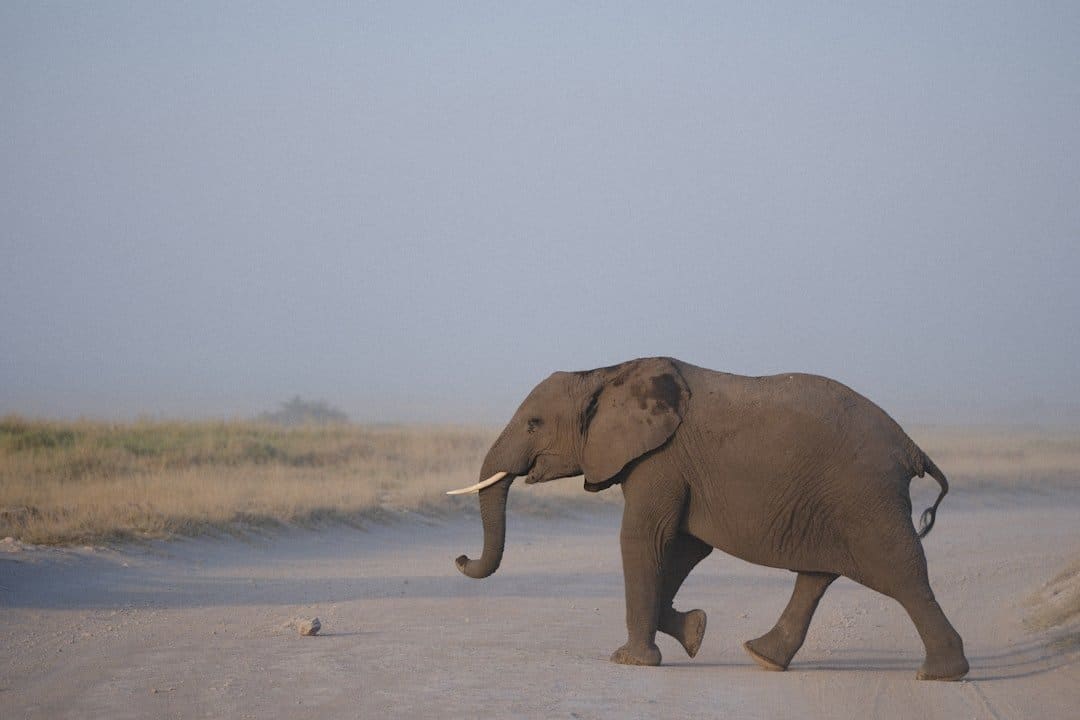
Tembe Elephant Park in northern KwaZulu-Natal protects one of Africa’s last populations of large-tusked elephants. The park’s 22,000 hectares of sand forest and pans sit on the Mozambique border, and its 220-plus elephants regularly cross between the two countries as part of a transfrontier conservation area. Tembe’s bulls are renowned among elephant enthusiasts — some carry tusks exceeding 50 kg per side, a genetic trait nearly eradicated elsewhere in Africa by decades of selective poaching on big-tusked individuals.
The sand forest habitat at Tembe is unique and dense, creating an atmospheric environment quite different from the open bushveld of Kruger or Pilanesberg. Game viewing here requires patience and skilled tracking — elephants can disappear into the thick canopy with surprising ease. For serious wildlife enthusiasts and photographers, that challenge is a significant part of the appeal.
Quick facts:
| Number of Elephants: | 220+ |
| Location: | https://g.page/TembeElephantPark |
| Homepage: | https://www.tembe.co.za |
Tembe is managed by Ezemvelo KZN Wildlife in partnership with the local Tembe community, and access is restricted to 4×4 vehicles or guided tours from the lodge. The park’s sole accommodation, Tembe Elephant Lodge, is an intimate camp with an elevated deck overlooking a waterhole. This waterhole is floodlit at night, offering the remarkable experience of watching large-tusked elephants emerge from the sand forest to drink under spotlights.
Because visitor numbers are strictly controlled, Tembe offers one of the least crowded elephant-watching experiences in South Africa. It is a destination for wildlife purists — the remoteness, endemic habitat, and the extraordinary genetic quality of the elephants set it apart from more accessible parks. Best time to visit is May through September, when elephants spend more time at open waterholes.
Location:
Video:
6. Gondwana Game Reserve
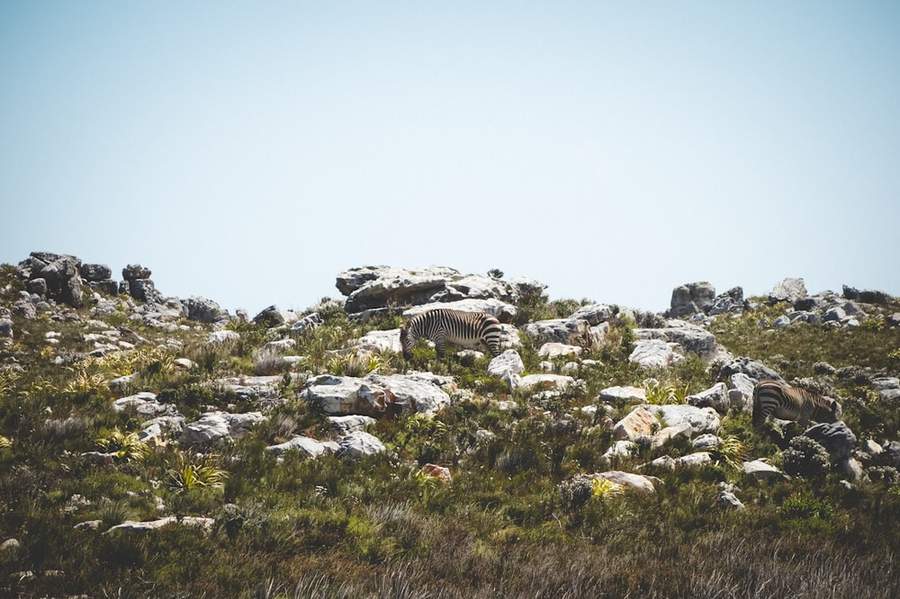
Gondwana Game Reserve, near Mossel Bay on the Garden Route, is home to the southernmost free-roaming elephant herd in the world. This distinction alone makes it a remarkable destination — the reserve’s elephants roam through fynbos and renosterveld, the Cape Floral Kingdom biome, rather than the bushveld habitats most people associate with African elephants. The contrast of grey giants moving through flowering proteas and restios creates an entirely unique spectacle.
Gondwana was the first private game reserve to reintroduce the Big Five to the Western Cape, and it remains one of the few malaria-free Big Five reserves accessible from Cape Town — just four hours along the N2. The reserve spans 11,000 hectares of wide valleys and mountain ridges with sweeping ocean views on clear days.
Quick facts:
| Number of Elephants: | Small breeding herd |
| Location: | https://www.google.com/maps/place/Gondwana+Game+Reserve |
| Homepage: | https://www.gondwana-game-reserve.com |
Accommodation at Gondwana ranges from the flagship Gondwana Lodge — a luxury tented camp with private plunge pools and panoramic deck views — to the more accessible Fynbos Self-Catering option. All game drives are guided, conducted in open Land Cruisers in small groups. Evening drives often produce the most dramatic elephant encounters, as herds move onto open grasslands in the cooler hours.
Gondwana’s position on the Garden Route makes it a natural addition to any Cape Town-based itinerary. Whale watching at Hermanus, the Cango Caves, and Tsitsikamma National Forest are all within a day’s drive. Conservation fees are included in the lodge rate, supporting ongoing rewilding work. For visitors wanting Big Five wildlife combined with one of the world’s most botanically extraordinary landscapes, Gondwana is genuinely unmatched in South Africa.
Location:
Video:
7. Knysna Elephant Park
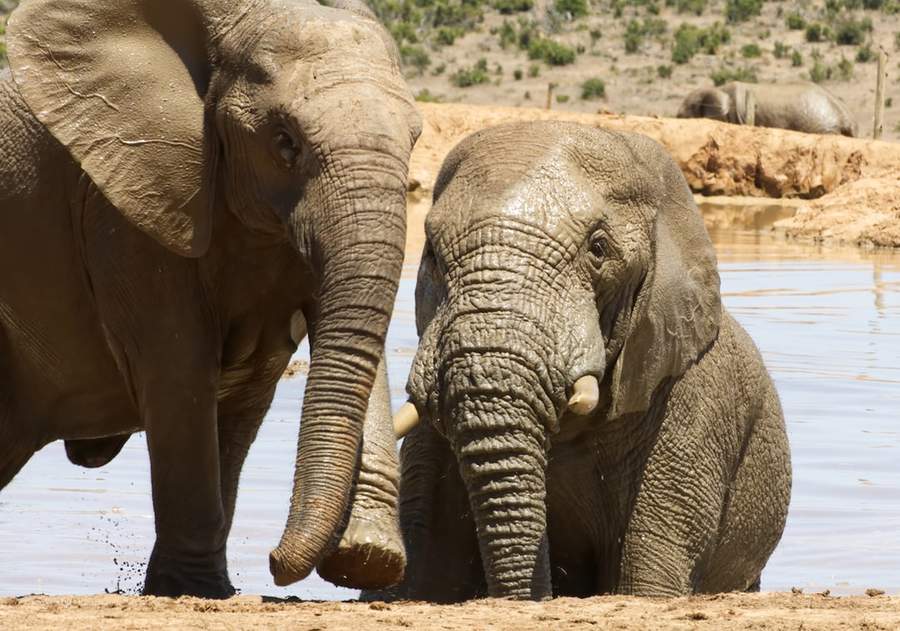
The Knysna Elephant Park, set in indigenous forest near Knysna on the Garden Route, is the home of a small group of rescued elephants — currently around five individuals. These animals were orphaned or born in captivity and cannot be released into the wild. What the park offers is something different from a wilderness game drive: an educational, close-contact experience rooted in elephant welfare and conservation storytelling.
The park has operated since 1994 and follows a strict non-exploitation model. Interactions are conducted on foot in small groups, with trained elephant guides leading visitors to meet the herd in their forest and grassland habitat. The experience is deliberately intimate — visitors learn the individual histories of each elephant, many of whom survived traumatic pasts, and observe them in natural behavior rather than performing tricks or carrying riders.
Quick facts:
| Number of Elephants: | ~5 (rescued) |
| Location: | https://www.google.com/maps/place/Knysna+Elephant+Park |
| Homepage: | https://www.knysnaelephantpark.co.za |
For families traveling the Garden Route, Knysna Elephant Park offers one of the most engaging wildlife experiences available. Children can observe elephants feeding, mud-bathing, and interacting with their keepers in a way that simply is not possible on a standard game drive. The park’s forest setting — part of the ancient Knysna indigenous forest, one of the last temperate forests in Africa — gives the experience an atmospheric, otherworldly quality.
It is worth noting that the park’s elephants are separate from the famous wild Knysna forest elephants that once roamed the surrounding forests. That wild population has dwindled to perhaps a single individual — one of the most poignant wildlife stories in South Africa — though the Knysna forest ecosystem is being actively studied by conservationists. The Knysna Elephant Park’s rescued herd represents a different, compassionate response to elephants in need of care and a stable home.
Location:
Video:
Conclusion
South Africa’s extraordinary range of ecosystems — from the tropical bushveld of Limpopo to the fynbos coastline of the Western Cape — means that elephant watching here is never one-dimensional. Kruger and Hluhluwe-iMfolozi deliver the classic African wilderness experience at scale, while Addo’s remarkable recovery story and Pilanesberg’s accessibility make both ideal for first-time safari visitors. Tembe offers something rarer: the chance to see genetically exceptional, large-tusked bulls in near-wilderness conditions, while Gondwana and Knysna show that memorable elephant encounters extend well beyond the traditional safari heartland.
When planning a visit, the dry season between May and September is the optimal window across most parks — vegetation drops, water sources concentrate, and elephants become predictably visible. South Africa’s malaria-free parks — Addo, Pilanesberg, Gondwana — are viable year-round family destinations. Internal flights from Johannesburg to Kruger’s Phalaborwa or Hoedspruit airports make the northern parks easily reachable even on short itineraries.
South Africa deserves its place alongside Kenya, Botswana, and Tanzania at the very top of any elephant-watching itinerary. Whether you are planning a classic Kruger self-drive, a coastal Garden Route loop, or an expedition to Tembe’s sand forests to track large-tusked bulls, the country offers elephant safari experiences to suit every style and budget.
Kruger National Park is the most reliable destination, with around 20,000 elephants. Addo Elephant National Park in the Eastern Cape is a close second, especially for visitors flying into Gqeberha (Port Elizabeth), and offers an extraordinary density of elephants in a smaller, more accessible area.
The dry season, from May to September, is generally the best time. Reduced vegetation and scarcer water sources concentrate animals around rivers and waterholes, making sightings more predictable. Addo and Pilanesberg are productive year-round thanks to their permanent water sources.
South Africa is home to approximately 25,000 to 30,000 African elephants, with Kruger National Park accounting for around 20,000 of those. The population has grown steadily thanks to decades of conservation work and protected area management.
Yes, self-drive safaris in parks like Kruger, Addo, and Pilanesberg are safe provided visitors follow park rules: remain in the vehicle, keep a respectful distance, and never feed or approach the animals. Park rangers and gate staff provide safety briefings on arrival.