Categories
Diet & Nutrition Elephants in the wild Questions & Answers (FAQs)

What are Elephants favorite fruits?

Elephants are one of the most fascinating animals on earth. They are big, strong, and have a very unique appearance. But what do you know about an Elephant’s diet?

In this article, we will explore the different fruits that elephants enjoy eating. We will also look at some of the benefits that these fruits provide for elephants.

So if you want to learn more about what fruits elephants like to eat, keep reading!

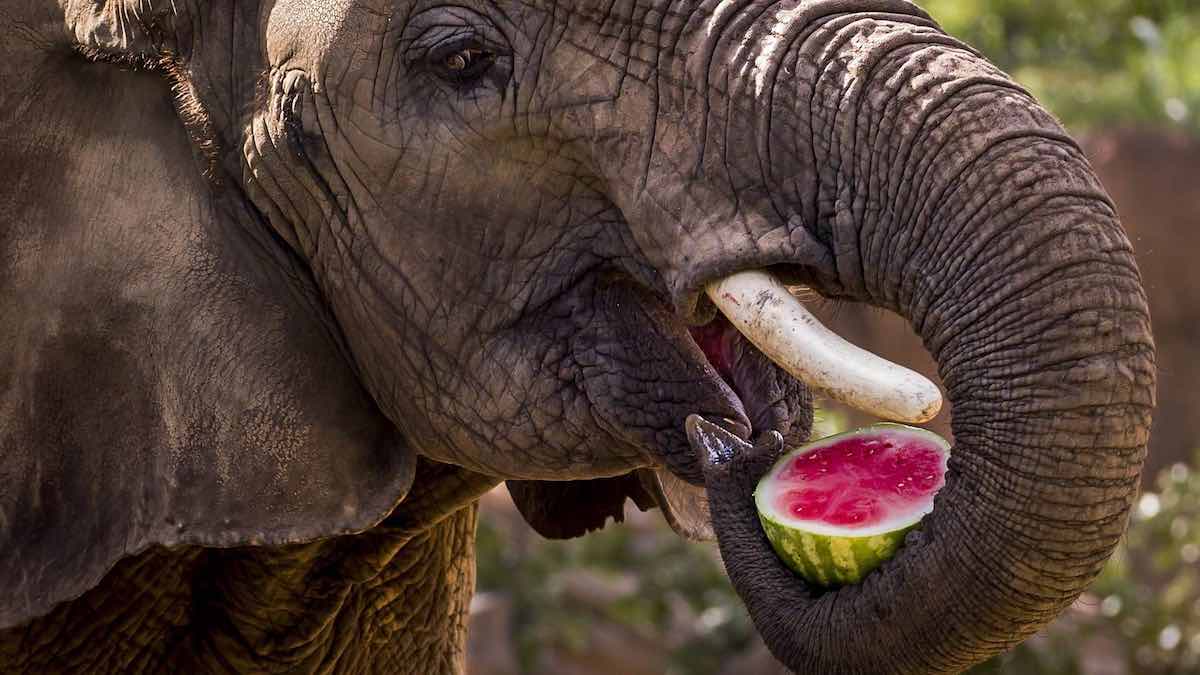
🍌 An elephant’s single favourite fruit? Bananas — followed closely by watermelons and mangoes.

Categories
Anatomy Elephant behaviors Questions & Answers (FAQs)

How Do Elephants Breathe?

When you think of elephants, the first thing that probably comes to mind is their gigantic size. They’re definitely big creatures. In fact, they’re the largest terrestrial mammal on Earth and they can be found in Africa (the African elephants) and in Asia (the Asian elephants). Read more about the difference between the elephant species.

An adult male elephant usually measures around 10 feet in height and can weigh up to 11 tons.

And while it’s obvious that these massive creatures have a large lung capacity and take frequent breaths of air, how do elephants breathe?

An elephant’s lungs are unusually small for its body size compared to other animals its sizes like humans, hippopotamuses, or moose.

Categories
Diet & Nutrition Elephant behaviors Elephants in the wild

How Do Elephants Get Their Food?

When you think of an elephant, your first thoughts are probably not about how they get their food. Most people probably wouldn’t have any idea how elephants go about feeding themselves on a daily basis. However, this is something that we all should know about. We know that most animals are plant-eaters.

However, it’s surprising to find out that there are so many different types of herbivores with unique methods for getting their food and nutrition.

With so many different species in the animal kingdom, it’s interesting to see where the elephants fit in with regard to where they get their food from.

In this article, we will see how do elephants get their food, what they eat in order to survive, and what are their eating behaviors are.

Categories
Elephant behaviors Questions & Answers (FAQs)

Why Do Elephants Charge?

Have you ever been on a safari or witnessed an elephant charge? While it may seem like a rare occurrence, it’s more common than you think.

Elephants, despite not being naturally aggressive creatures, can be provoked to charge when they feel threatened or in danger. This could be due to loud noises, unfamiliar smells, or simply being startled.

But why do elephants charge? While it can be difficult to understand the complexities of elephant behavior, there are a few theories as to why they might charge. Some male elephants might use mock charges as an opportunity to demonstrate their strength and power.

In this article, we’ll delve deeper into the reasons behind elephant charges, and explore ways to avoid such a situation if you find yourself on a savanna. We’ll also look at the measures that can be taken to prevent charging incidents from happening in the first place.

Whether you’re a seasoned safari-goer or simply curious about elephant behavior, this article is for you.

Categories
Elephant behaviors Elephants in the wild

How Do Elephants Clean Themselves?

Elephant Bathing Habits: A Fascinating Look at Their Hygiene and Social Life

Elephants are known for their intelligence, empathy, and the strong social bonds they form with one another. One fascinating aspect of their lives is the way they keep themselves clean and healthy through unique bathing rituals.

These practices also play a significant role in their overall well-being and social dynamics.

In this article, we explore the various methods elephants use to stay clean, such as submerging in water, spraying water with their trunks, and rubbing themselves with sand or dirt for exfoliation. We also discuss their natural adaptations for cooling down and the importance of cooperation within their communities for maintaining good hygiene.

Join us on this captivating journey into the world of elephant bathing habits, where we uncover the secrets behind their remarkable approach to hygiene and well-being.

Categories
Conservation efforts Questions & Answers (FAQs) Saving elephants

How Does Climate Change Elephant Habitats?

Climate change is having a profound and devastating impact on elephant habitats around the globe. Elephants are considered keystone species, meaning that their presence in an ecosystem can determine the overall health of its environment.

As climate change brings about increased temperatures, more frequent and severe weather events, and other changes to the environment, it affects not only direct resources like food and water but also the broader environment in which elephants live and their opportunity to thrive and reproduce.

The most significant disruption caused by climate change is the alteration of elephants’ natural migration patterns, as their traditional food and water sources become harder to find.

With fewer resources available, they are compelled to move into smaller areas where resources are denser — but this is associated with human-elephant conflict as we compete for the same, in some cases, limited resources.

As resources become scarce due to the general impacts of climate change, elephants are forced to compete with other species for food, water, and habitat, leading to increased conflict and harm to elephants.

Changes in temperature and rainfall patterns can also lead to changes in vegetation patterns, affecting the food supplies of elephants and leading to malnutrition and reduced health.

Furthermore, climate change is leading to an increase in the frequency and intensity of extreme weather events, such as heatwaves, droughts, and hurricanes, which can cause significant damage to elephant habitats, leading to further declines in the number of elephants.

Categories
Conservation efforts Elephants in the wild Questions & Answers (FAQs)

Reasons Why Elephants Are Endangered

The elephant is the largest known mammal to live on land. This creature’s large tusks, enormous ears, and muscular but sensitive legs make it stand out among other animals.

Even though all elephants share some similarities, every species has distinct features. But there are still some main reasons why elephants are endangered in the world today.

There are three living species of elephant: African bush elephant (also known as savannah elephant), African forest elephant and the Asian elephant. Asian elephants have smaller ears and a level back, while African elephants have larger ears and a more concave back. Meanwhile, the Asian elephant is listed as endangered by the IUCN.

In this article we’ll discusses why elephants are endangered, their natural habitats, what makes them significant to the wildlife world, the dangers they face as a species, and ways we can prevent their extinction. Read on!