
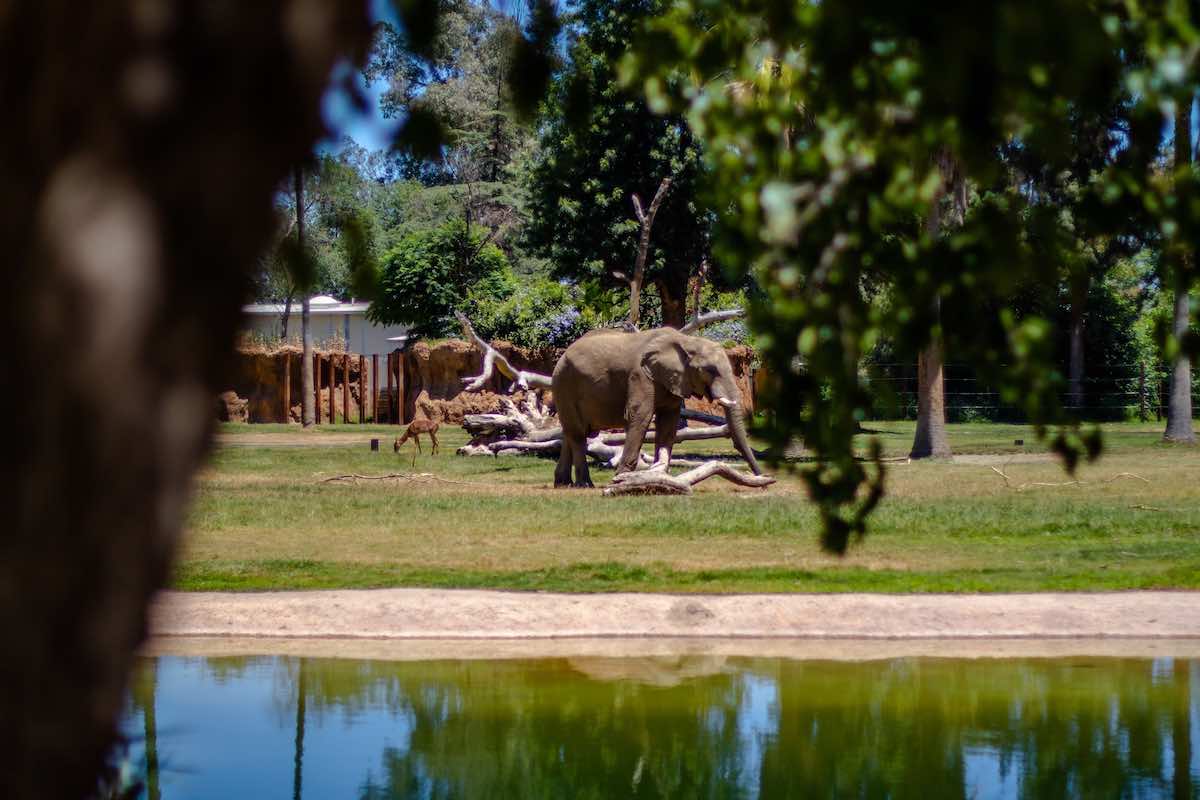
Seeing elephants in person is unforgettable. In the US, the options have changed significantly over the past decade – circuses with elephants have been phased out, elephant rides are no longer offered at zoos or theme parks, and the responsible options now fall into two clear buckets: accredited sanctuaries and AZA-accredited zoos with proper elephant habitats.
The best elephant experiences in the US are at accredited sanctuaries (The Elephant Sanctuary in Tennessee, Performing Animal Welfare Society in California, Elephant Refuge North America in Georgia) and AZA-accredited zoos with large elephant habitats (San Diego Zoo, Smithsonian National Zoo, Oregon Zoo, Dallas Zoo, Columbus Zoo, among others). Most sanctuaries are not open for public visits, but many offer livestreams, virtual tours, and open-house days. Elephant rides are no longer offered anywhere in the US, and this is a good thing for elephant welfare.
This guide covers every major US sanctuary with elephants (if you would rather see them in the wild, our seasonal viewing guide covers when to go), the AZA zoos with the best elephant habitats, why elephant rides are no longer available (and shouldn’t be), and what ethical elephant viewing actually looks like in 2026.
US Elephant Viewing Options at a Glance
| Type | Examples | Open to public? | Best for |
|---|---|---|---|
| Accredited sanctuary (closed) | Tennessee, PAWS, ERNA, Black Beauty (TX) | No visits | Supporting welfare; livestream and open-house days |
| Public-access sanctuary / ranch | Myakka Elephant Ranch (FL) | Yes, ticketed | Hands-off educational programs |
| Retired-circus retirement facility | White Oak (FL), Endangered Ark (OK) | Limited / seasonal tours | Seeing retired Ringling & circus elephants |
| AZA-accredited zoo | San Diego, National Zoo, Oregon Zoo, Dallas Zoo | Yes | Seeing elephants in person with welfare standards |
| Safari park | San Diego Zoo Safari Park, Wildlife Safari (OR) | Yes | Larger habitats, more natural viewing |
| Elephant rides | None in the US | — | Not available – see welfare section below |
US Elephant Sanctuaries
Accredited elephant sanctuaries exist to give retired circus, zoo, and exotic-pet elephants a better last chapter of life. Most of them are intentionally closed to the public – the animals there have spent decades in human-facing environments, and the goal is to give them space and privacy, not another crowd.
That doesn’t mean you can’t engage with them. Most offer livestreams, virtual tours, periodic open-house days, and robust education programs.
The Elephant Sanctuary in Tennessee (Hohenwald, TN)
The Elephant Sanctuary in Tennessee is the largest natural-habitat elephant refuge in the US and the one most people think of first. Located in Hohenwald, Tennessee (about 80 miles southwest of Nashville), it covers more than 2,700 acres and houses a mix of African and Asian elephants retired from circuses, zoos, and other captive settings.
- Public visits: No. The sanctuary is closed to the public.
- How to engage: The Elephant Discovery Center in downtown Hohenwald is open to visitors. The sanctuary also runs a 24/7 EleCam livestream through its website.
- Supporting the work: Donations, virtual adoptions, and merchandise.
Performing Animal Welfare Society (PAWS) – San Andreas, CA
PAWS operates the ARK 2000 sanctuary in San Andreas, California – roughly 2,300 acres in the Sierra Nevada foothills about 75 miles east of Sacramento. PAWS houses Asian and African elephants, as well as big cats and other rescued animals.
- Public visits: No regular visits. PAWS hosts an annual Open House (usually May or June) where a limited number of visitors can tour the property.
- How to engage: Join the mailing list for Open House announcements, follow their social media, or support through donations.
Elephant Refuge North America (ERNA) – Attapulgus, GA
The newest of the major US elephant sanctuaries, ERNA is run by Elephant Aid International in Attapulgus, Georgia (near the Florida border). The facility sits on around 850 acres and is designed specifically for retired captive Asian and African elephants.
- Public visits: No. ERNA is closed to visitors to give residents privacy.
- How to engage: Online updates, virtual programs, and donations. Elephant Aid International runs education programs worldwide.
Myakka Elephant Ranch (Myakka City, FL)
Myakka Elephant Ranch is one of the few facilities in the US that offers regular public interaction with elephants in a sanctuary-style setting. Located roughly 40 miles southeast of Tampa, the ranch focuses on education and hands-off experiences – no rides, no performances.
- Public visits: Yes – ticketed educational encounters, usually by appointment.
- What’s offered: Observation of the herd, feeding under supervision, talks from handlers.
- Worth noting: Myakka is a private ranch rather than an AZA zoo or an accredited sanctuary (through GFAS, the Global Federation of Animal Sanctuaries). Research the current welfare reviews before visiting if this matters to you.
Elephant Sanctuaries in Florida: White Oak Conservation (Yulee, FL)
Florida is the single most-searched state for elephant sanctuaries, largely because it is where the Ringling Bros. herd ended up. After the circus retired its elephants, the animals from the former Center for Elephant Conservation moved in 2021 to White Oak Conservation, a 17,000-acre wildlife refuge near Yulee in north-east Florida. White Oak is not a drop-in attraction, but it does offer a limited number of reservation-only guided tours and overnight conservation stays.
- Public visits: Limited – guided tours and overnight stays by reservation only, not daily walk-up visits.
- How to engage: Book a White Oak conservation tour in advance, or follow its updates online.
- Worth knowing: Florida also has public-access operations such as Myakka Elephant Ranch (above). These are private ranches rather than GFAS-accredited sanctuaries, so check current welfare reviews first and avoid anywhere offering rides or bathing.
Black Beauty Ranch (Murchison, TX)
Texas’s best-known refuge is the Cleveland Amory Black Beauty Ranch, run by the Humane Society of the United States about 75 miles south-east of Dallas. The 1,400-acre property is GFAS-accredited and has given lifelong care to hundreds of rescued animals, including elephants retired from circuses and roadside attractions.
- Public visits: Limited – occasional reservation-only open days rather than daily tours.
- How to engage: Watch for scheduled open-house dates, or support the sanctuary through donations and symbolic adoptions.
Endangered Ark Foundation (Hugo, OK)
Hugo, Oklahoma – nicknamed “Circus City, USA” – is home to the Endangered Ark Foundation, one of the largest retirement facilities for Asian elephants in the country. Unlike the closed sanctuaries above, the Endangered Ark is set up for visitors and runs seasonal public tours.
- Public visits: Yes, seasonally – guided tours typically run in spring and fall by reservation, with educational programs on elephant care.
- How to engage: Book a seasonal tour, attend an event, or support through donations.
- Worth knowing: The facility has historic ties to the circus world. As with any hands-on operation, read current welfare information and favour hands-off, educational experiences.
Best AZA-Accredited Zoos with Elephants
AZA (Association of Zoos and Aquariums) accreditation is the main standard for zoo welfare in the US. AZA-accredited zoos with elephants must meet space, social grouping, and care requirements that most old-style zoos don’t meet – in recent years, many zoos have retired their elephant programs rather than meet the higher bar.
These are the zoos most worth visiting if you want to see elephants:
San Diego Zoo Safari Park (Escondido, CA)
The Safari Park’s Elephant Valley habitat spans roughly 3 acres and houses one of the largest African elephant herds in North America. The habitat is designed around natural behaviours – the herd roams, socializes, and bathes in a large pond. You can also watch elephants from the Africa Tram.
Smithsonian’s National Zoo (Washington, DC)
The National Zoo’s Elephant Trails habitat is designed for Asian elephants and covers over 8,000 square feet of indoor space plus extensive outdoor yards. Free admission makes it one of the most accessible places to see elephants in the US, and the zoo has invested heavily in the herd’s welfare program.
Oregon Zoo (Portland, OR)
Oregon Zoo has one of the longest-running Asian elephant programs in North America. The Elephant Lands habitat, opened in 2015, is a 6-acre natural habitat with pools, soft flooring, and large open space – a template for modern zoo elephant welfare.
Dallas Zoo (Dallas, TX)
The Giants of the Savanna habitat at Dallas Zoo is a multi-species savanna mixing elephants with giraffes, zebras, and ostriches across 11 acres. It’s one of the more visually striking elephant habitats in the US.
Columbus Zoo (Columbus, OH)
Columbus Zoo houses Asian elephants in its Asia Quest area. The zoo has expanded and redesigned its elephant habitat multiple times to match modern AZA standards.
Other AZA zoos with elephants
- Louisville Zoo (KY) – African elephants in Elephant Trails.
- Albuquerque BioPark (NM) – Asian elephants.
- Indianapolis Zoo (IN) – African elephants.
- Pittsburgh Zoo (PA) – African elephants.
- Fresno Chaffee Zoo (CA) – African elephants in a 4-acre habitat.
- Houston Zoo (TX) – Asian elephants, with a strong conservation partnership in Borneo.
- Sedgwick County Zoo (Wichita, KS) – African elephants in one of the largest US habitats.
- Oklahoma City Zoo (OK) – Asian elephants.
- Tulsa Zoo (OK) – Asian elephants.
- Saint Louis Zoo (MO) – Asian elephants and a Reproductive Center for breeding.
Before visiting any zoo, check whether the elephants are currently on exhibit – habitats are sometimes closed for maintenance or for health reasons, and some zoos have retired their elephant programs in recent years.
Can You Ride an Elephant in the US?
No. Elephant rides are not offered at any AZA-accredited zoo, reputable sanctuary, safari park, or major theme park in the US. This is a good thing.
Elephant rides were phased out over the past two decades for welfare reasons. The saddle-and-carry work required to give rides is damaging to elephants’ spines and social structure, and most facilities training elephants for rides historically used techniques that would fail modern welfare audits.
Specific places people often ask about:
- The Bronx Zoo. Does not have elephants on permanent exhibit (retired the program). No rides.
- Disney’s Animal Kingdom. Has elephants in Kilimanjaro Safaris (viewing from safari trucks). No rides.
- Knott’s Berry Farm. Has never had elephants in recent decades. No rides.
- Six Flags parks. Former Wild Safari operations (like Great Adventure) closed or transitioned; no current rides.
- Ringling Bros. and other circuses. Ringling retired its elephants in 2016 and the company now runs elephant-free shows.
If you specifically want to be close to elephants, the closest thing the US offers today is a walking tour at Myakka Elephant Ranch, an open-house day at PAWS, or a zoo with an elevated viewing platform like the Oregon Zoo or Dallas Zoo.
What About Elephant Encounters Abroad?
If you’re willing to travel, the best elephant experiences are on safari in Africa (Kenya, Botswana, Zimbabwe, South Africa, Tanzania) or at responsible Asian sanctuaries (Thailand, Cambodia, Sri Lanka). Our elephant destinations hub rounds up every country guide we publish. The key is finding places that don’t offer rides, don’t force elephants to perform, and maintain genuine sanctuary conditions.
Our guides cover the best places to see elephants in:
How to Spot a Responsible Elephant Experience
Whether in the US or abroad, the same principles apply:
- No rides. Saddle or bareback. Full stop.
- No performances. No circus tricks, no painting, no dancing, no begging for food.
- No chaining. Bullhooks and chains are unacceptable.
- Space. Multiple acres per elephant, ideally 10+ in sanctuaries.
- Social groups. Elephants need other elephants. Solitary facilities are a red flag.
- Accreditation. AZA for US zoos, GFAS for sanctuaries. Not a perfect guarantee, but a useful starting filter.
- Transparency. Public welfare reports, vet access, independent audits.
Our guide on visiting elephant sanctuaries covers the due diligence side in more detail.
Final Thoughts
The US’s elephant experience landscape has narrowed in the best possible way. A generation ago, you could ride elephants at zoos and see them perform in circuses. Today, the options are accredited sanctuaries that put welfare first and a handful of AZA-accredited zoos with large modern habitats. It’s a smaller menu, but every option on it now meets standards that couldn’t be assumed a decade ago.
If you want the best experience: a visit to the Elephant Discovery Center in Hohenwald followed by time watching the Tennessee Sanctuary’s EleCam is hard to beat. For in-person viewing, the San Diego Safari Park, Oregon Zoo, and Dallas Zoo are the strongest options. And if you want to support the field, donating to one of the accredited sanctuaries is the most direct way to do it.
Frequently Asked Questions about Elephant Experiences in the US
Yes, three main ones: The Elephant Sanctuary in Tennessee (Hohenwald, TN), Performing Animal Welfare Society (PAWS) in San Andreas, California, and Elephant Refuge North America (ERNA) in Attapulgus, Georgia. All three are closed to the public to give their residents privacy, but they offer livestreams, open-house days, and donation-based support programs.
The Elephant Sanctuary is in Hohenwald, Tennessee – about 80 miles southwest of Nashville. The sanctuary property is not open to the public, but the Elephant Discovery Center in downtown Hohenwald is open to visitors and runs educational programs about the sanctuary’s work.
No. Elephant rides are not offered at any AZA-accredited zoo, sanctuary, theme park, or safari park in the US. The practice was phased out over the past two decades for welfare reasons. Ringling Bros. retired its circus elephants in 2016 and no major US facility has offered rides since.
The top-tier options are the San Diego Zoo Safari Park (large herd, multi-acre African elephant habitat), the Oregon Zoo’s Elephant Lands (6-acre natural habitat opened 2015), the Dallas Zoo’s Giants of the Savanna (11-acre multi-species habitat), and the Smithsonian National Zoo’s Elephant Trails (extensive indoor and outdoor space, free admission).
Not the sanctuary itself. The main property in Hohenwald is closed to the public so that the elephants have privacy and room. You can visit the Elephant Discovery Center in downtown Hohenwald, watch the sanctuary’s EleCam livestream, and support the work through donations and memberships.
For up-close experiences, Myakka Elephant Ranch in Florida offers ticketed educational programs with hands-off observation and supervised feeding. For the closest you can get at a zoo, Oregon Zoo, Dallas Zoo, and the San Diego Zoo Safari Park all have elevated or immersive viewing platforms. PAWS sanctuary in California hosts an annual open-house day where visitors can tour parts of the property.
No. Ringling Bros. retired its elephants in 2016 and no major US touring circus uses elephants today. A handful of very small travelling shows historically used elephants, but state and municipal bans on exotic-animal performances have effectively ended the practice.

4 replies on “Best Elephant Experience in the US: Sanctuaries and Zoos”
I love elephants and would love to feed and interact with them…
My Grandfather was the founder of The Duluth Zoo know known as the Lake Superior Zoo in Minnesota. We had an Elephant. Her name was Bessie. We all loved her. I am honoring my Grandad by writing a children’s book about Him and Bessie. That was long ago. During the Great Depression that out of love he did this for the community. Is it possible I could get up close to one of the elephants with out the fence? I need to get a good picture to go into the book. My dream has been to play with a baby elephant and interact with these wonderful loving creatures. Bessie is long gone but my memories of her are alive and well. I loved her so much. I live in Scottsdale Arizona. Do you have a sanctuary near me? Lynn Perry
Hi Lynn,
What a great story and what a way to honor your grandfather! I’m sure he’d be incredibly proud. We do not own nor operate sanctuaries, we simply love to visit them. I believe the closest one to you would be at the Reid Park Zoo.
Best of luck with the book, please send us a link to support when you’ve published!
Is there an elephant sanctuary that allows humans to touch them? Tennessee says it does allow touching, then further down the article it says no contact.