
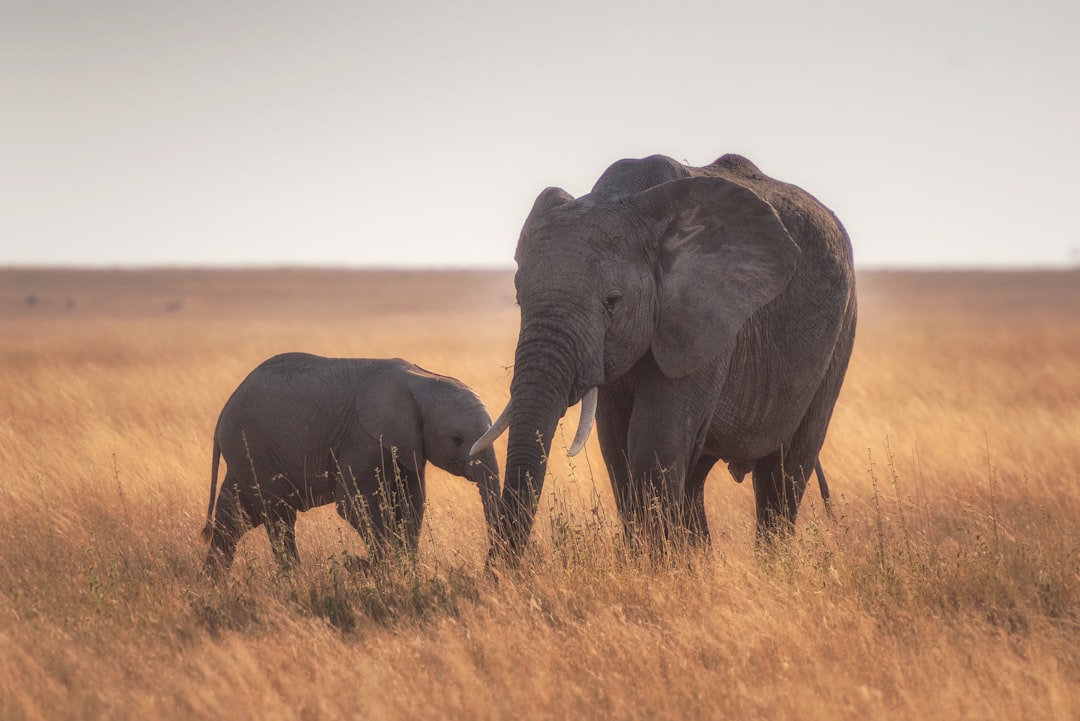
A newborn elephant weighs between 200 and 320 pounds (90–145 kg) at birth — making elephant calves among the heaviest land-mammal newborns on Earth. That weight is not accidental. It is the direct result of a 22-month pregnancy, the longest of any land mammal, during which the calf develops to a level of physical maturity that allows it to walk, nurse, and keep pace with the herd within hours of being born.
The short answer: A newborn elephant typically weighs between 200–320 lbs (90–145 kg) — roughly the size of a large adult human multiplied by 1.5. African bush elephant calves are the largest at birth; Asian elephants are slightly smaller.
How much does a newborn elephant weigh?
The average birth weight of an African bush elephant calf is approximately 250 pounds (113 kg), with a normal range spanning from around 200 lbs (91 kg) at the lower end up to 320 lbs (145 kg) for larger calves. Some exceptional births in the wild have been recorded close to 350 lbs (159 kg), though these are outliers. To put that in perspective, the average adult human male weighs around 197 lbs (89 kg) — meaning a newborn elephant outweighs most grown men before it has even taken its first step.
That extraordinary birth weight is a product of gestation length. Elephants carry their young for approximately 22 months — nearly two full years — before giving birth. During that time, the calf undergoes a level of neurological, skeletal, and muscular development that is simply impossible in shorter pregnancies. Unlike many mammal newborns that are born helpless (altricial), elephant calves are precocial: they arrive with open eyes, coordinated limbs, and a brain that is already roughly 35% of its adult size. Within 30 to 60 minutes of birth, a healthy calf will be standing. Within a few hours, it will be keeping pace with the herd.
This level of readiness comes at a cost. Carrying such a large, well-developed fetus requires enormous energy investment from the mother. Elephant cows typically give birth to a single calf every four to six years, in part because of how physiologically demanding each pregnancy is. The birth itself is attended by other herd members — females who gather around the mother, offering protection and assistance — because a calf that cannot stand quickly is vulnerable to predators. Size at birth is not just a biological footnote; it is a survival mechanism.
The long gestation also explains why elephant populations recover slowly from poaching or habitat loss. A species that produces one large, energy-intensive offspring every several years cannot bounce back quickly when adults are removed from the population. Understanding how long elephants are pregnant is inseparable from understanding why birth weight matters so much ecologically.
Birth weight by species: a comparison
There are three recognised species of elephant, and they differ meaningfully in birth weight. The African bush elephant is the largest of the three and produces the heaviest calves. The African forest elephant, a separate and genetically distinct species that was only formally recognised in 2001, is smaller in overall body size and gives birth to proportionally lighter calves. The Asian elephant — a different genus entirely — produces the smallest calves of the three, though “smallest” is relative when we are talking about animals that still weigh more than many large dogs at birth.
| Species | Average birth weight (lbs) | Average birth weight (kg) | Gestation length | Notes |
|---|---|---|---|---|
| African bush elephant (Loxodonta africana) | 220–320 lbs | 100–145 kg | ~22 months | Largest of the three species; heaviest calves on record |
| African forest elephant (Loxodonta cyclotis) | ~200 lbs | ~90 kg | ~22–24 months | Limited published data; body size is 25–30% smaller than bush elephants |
| Asian elephant (Elephas maximus) | 150–200 lbs | 68–91 kg | ~18–22 months | Smaller overall frame; calves noticeably lighter at birth |
The African forest elephant’s birth weight data is worth addressing directly: because forest elephants live in dense Central African rainforest and were only classified as a distinct species relatively recently, comprehensive birth-weight datasets are smaller than for their savanna-dwelling cousins. The figures cited above are drawn from published studies and captive breeding records, but the range is wider and the sample sizes are lower. What is consistent across all three species is the fundamental pattern: elephant calves are born large, mobile, and socially integrated almost immediately.
Asian elephants — found across South and Southeast Asia — have a slightly shorter gestation range (some records suggest as low as 18 months in captivity, though wild births cluster closer to 21–22 months) and produce calves that are noticeably smaller at birth. Borneo pygmy elephants, a subspecies of Asian elephant, are proportionally smaller throughout their lives, and their calves reflect that scaling. Even at the low end of the Asian elephant birth weight range, 150 lbs (68 kg) represents a substantial newborn by any measure.
How big is a baby elephant at birth?
Weight is one dimension of a newborn elephant’s size, but the full picture is more striking. An African bush elephant calf stands approximately 2.5 to 3 feet tall at the shoulder (76–91 cm) at birth — roughly knee-height on an adult human, though that comparison undersells how solid and compact a newborn calf actually is. Body length from chest to hindquarters is typically around 3 to 3.5 feet (90–107 cm). The calf is not a miniature adult, but it is unmistakably an elephant: barrel-chested, thick-legged, with the same wrinkled grey skin, fan-shaped ears, and stubby proto-trunk.
One detail that surprises many people is that newborn elephant calves are noticeably fuzzy. They are covered in a sparse but visible coat of reddish-brown or dark hair, most prominent on the head, back, and trunk. This hair gradually thins as the calf matures, though it never disappears entirely — adult elephants retain sparse hair across their bodies, particularly in younger individuals. If you have ever wondered whether elephants have hair, the answer is yes, and it is most visible in calves.
The trunk at birth is still relatively underdeveloped in terms of muscular coordination. A calf spends its first weeks figuring out how to control it. Calves commonly suck their trunks the way human infants suck their thumbs — a comfort behaviour that is also thought to help them develop the hundreds of muscle groups the trunk requires for full dexterity. Nursing is accomplished by placing the mouth directly under the mother’s foreleg, not by using the trunk, in the early months. Full trunk control typically develops gradually over the first year.
Eyes are open at birth. Hearing is functional. The sense of smell — arguably the most important sense for elephants, used for social bonding, threat detection, and finding water — appears to be operational within the first hours of life. This combination of functional senses and mobile legs means that a calf born in the wild is integrated into the herd’s movement almost immediately. There is no period of helplessness comparable to that of many other large mammals.
How fast do baby elephants grow?
Elephant calves grow rapidly in their first years of life, fuelled by some of the most calorie-dense milk produced by any land mammal. The growth curve is steep early and then gradually flattens for females, while males continue adding mass well into their twenties and sometimes beyond. The divergence between male and female growth rates becomes significant around the age of 10, when bulls begin to pull decisively ahead in body mass.
In their first year of life, African elephant calves gain roughly 2–3 pounds per day — adding nearly their entire birth weight again within six months.
| Age | Approximate weight (African bush elephant) | Notes |
|---|---|---|
| Birth | ~250 lbs (113 kg) | Range 200–320 lbs depending on individual |
| 6 months | ~500 lbs (227 kg) | Weight roughly doubled; still nursing exclusively |
| 1 year | ~700–800 lbs (318–363 kg) | Beginning to sample solid vegetation |
| 2 years | ~900–1,100 lbs (408–499 kg) | Nursing continues; solid food intake increasing |
| 5 years | ~1,500–2,000 lbs (680–907 kg) | Weaning typically complete by this age |
| 10 years | ~3,000+ lbs (1,360+ kg) | Male/female divergence begins to be pronounced |
| Adult female | ~6,000–8,000 lbs (2,720–3,630 kg) | Full size reached around age 25 |
| Adult male (bull) | ~11,000–13,000 lbs (4,990–5,900 kg) | Full size reached around age 35–45 |
The 2–3 lbs per day figure in the first year is not a rough estimate — it is consistent with documented growth rates across multiple long-term elephant study populations in Amboseli (Kenya), Addo (South Africa), and captive breeding programmes. It requires the mother to produce several litres of high-fat milk daily, which in turn requires her to consume enormous quantities of vegetation. This is one reason why the dry season is particularly hard on nursing mothers, and why calves born just before or during droughts face disproportionately higher mortality rates.
Growth rates slow considerably after weaning, though elephants — unlike most mammals — continue growing throughout their adult lives. A 40-year-old bull elephant will typically be noticeably larger than a 20-year-old bull of the same lineage. This open-ended, indeterminate growth is one of the features that makes elephants biologically distinctive, and it means that the largest individuals in any population are almost always the oldest.
What do baby elephants eat, and how does diet affect weight?
For the first three to four months of life, elephant calves feed exclusively on their mother’s milk. This section covers diet only as it drives weight gain; for the full feeding timeline through to solid food, see our guide to what baby elephants eat. Elephant milk is extraordinarily calorie-dense — approximately 700 calories per litre, with a fat content that rises from around 8% in the first weeks to over 20% as the calf grows and demands more energy. For comparison, whole cow’s milk contains roughly 3.5% fat and around 65 calories per 100ml. Elephant milk is not just richer; it is biochemically tailored to drive the rapid growth and neurological development that the calf requires.
Around three to four months of age, calves begin reaching for and mouthing vegetation — grasses, leaves, bark — though they cannot yet digest plant material efficiently. This exploratory behaviour is partly nutritional and partly social learning. Calves watch closely what their mothers and other herd members eat, beginning to build the botanical knowledge they will need when they are fully weaned. Nursing continues alongside solid food intake for years; most calves are not fully weaned until the age of four to five, and some continue nursing opportunistically even longer if the mother does not become pregnant again.
The composition of the mother’s milk changes over time. In the early months it is higher in protein and lactose to support rapid growth; as the calf matures and begins eating more plant material, the milk shifts toward higher fat content to provide concentrated energy. This dynamic adjustment is one of the ways elephant lactation is more sophisticated than that of many other mammals. Understanding what elephants eat as adults helps contextualise why the transition from milk to vegetation is gradual — the digestive adaptations required to extract nutrition from fibrous, often low-quality plant material take time to develop.
Calves born in environments with high food availability to their mothers tend to gain weight faster and have better survival rates in their first year. Research from Amboseli has shown that maternal body condition at the time of birth is one of the strongest predictors of calf survival — heavier, better-nourished mothers produce heavier calves and more nutritious milk. This creates a direct link between landscape quality, maternal nutrition, birth weight, and long-term population health.
How does birth weight compare to adult weight?
One of the most striking facts about elephant growth is how small a fraction of their adult mass calves represent at birth. A male African bush elephant calf born at 250 lbs (113 kg) will, if he survives to full adulthood, eventually reach 12,000–14,000 lbs (5,440–6,350 kg). That means his adult weight will be roughly 50 to 56 times his birth weight. For full detail on how much adult elephants weigh, the range across species is substantial — from Asian elephant females at around 6,000 lbs to the largest recorded African bull elephants at over 24,000 lbs.
For context, the average adult human male weighs roughly 20 times their birth weight. Dogs typically reach about 50–60 times their birth weight by adulthood, depending on breed. Elephants sit in a similar range to dogs — which is counterintuitive given how large their calves already are at birth, but reflects the fact that the absolute adult mass is so enormous that even a 250-pound newborn is a tiny starting point relative to the destination.
Female elephants follow a shallower growth trajectory. An adult cow elephant in the 6,000–8,000 lb range has grown to roughly 25–32 times her birth weight. The sexual dimorphism in African bush elephants is pronounced: bulls are typically 2–2.5 times heavier than cows at full maturity. This dimorphism is not visible at birth — male and female calves are roughly the same size — but it begins to emerge around the age of 10 and accelerates through the teenage years and into the twenties as bulls continue growing long after females have plateaued.
The role of the herd in calf survival
Elephant calves do not grow up in isolation. They are born into highly social herds structured around matrilineal family groups, and the welfare of a calf is a collective concern shared across multiple adult females. In the hours immediately following birth, the mother is typically surrounded by other herd members — female relatives who crowd around the newborn, touching it with their trunks, rumbling softly, and forming a protective circle that discourages predator approach. This birth attendance behaviour is well-documented across African and Asian elephant populations and appears to be important for calf survival in the critical first hours.
Beyond the birth itself, calves benefit from what researchers call allomothering — care provided by non-mother females, most commonly younger females who have not yet given birth themselves. These allomothers, sometimes called “aunties,” will shepherd calves away from danger, help them navigate obstacles, and occasionally allow calves to attempt nursing (though true milk is only produced by the biological mother). Allomothering provides direct protection and nutrition support for the calf, and also serves as a learning mechanism for the allomother herself, who is developing the maternal skills she will later need. Understanding the full dynamics of elephant herd behaviour puts calf development in its proper social context.
Research from Amboseli and other long-term study sites consistently shows that calves born into larger, more stable herds with multiple adult females have meaningfully higher survival rates in their first year than calves born into small or disrupted family groups. The presence of experienced allomothers — older females who have already raised offspring successfully — appears to be particularly beneficial. This is one reason why the loss of older matriarchs to poaching has cascading effects on calf survival that extend well beyond the immediate family: the knowledge and social stability those matriarchs provided is not easily replaced.
The largest and smallest elephant births on record
The heaviest reliably documented elephant birth in a managed care setting on record is approximately 364 lbs (165 kg), recorded at a North American zoo in the early 2000s. Several African bush elephant births in the wild have been reported at over 320 lbs, though precise weighing in field conditions is difficult, and some figures in the literature are estimates rather than direct measurements. The practical upper limit for viable births appears to be around 350–370 lbs, above which the physical demands of delivery become life-threatening for the mother.
At the lower end of the scale, Borneo pygmy elephants — a subspecies of Asian elephant found on the island of Borneo — produce the smallest calves of any recognised elephant population. Adult pygmy elephants themselves are notably smaller than mainland Asian elephants (with adult females sometimes under 5,000 lbs), and their calves reflect that proportional scaling, typically born in the 100–150 lb range. Despite their relative small size, Borneo pygmy elephant calves follow the same developmental pattern as their larger relatives: mobile within hours, nursing intensively, and integrated into a tight family group.
Premature births have been recorded in captive elephant populations and represent a significant welfare challenge. Calves born before 20 months of gestation typically lack the muscle development and body fat reserves needed to thermoregulate effectively, and survival rates are considerably lower. Several zoos have documented premature elephant births and the intensive intervention required to support them, including supplemental feeding with specially formulated milk replacers and round-the-clock monitoring. These cases underscore how finely tuned elephant birth weight and developmental timing are — the 22-month gestation is not excess; it is exactly what is required to produce a calf that can survive.
The bottom line
Baby elephants are remarkable at birth — large, mobile, and already embedded in a social structure that actively works to keep them alive. The 200–320 lb (90–145 kg) birth weight of an African bush elephant calf is the product of one of nature’s most impressive biological investments: 22 months of gestation, a mother who devotes enormous metabolic resources to producing that single large offspring, and a herd of related females that collectively ensures the calf’s first hours and months go as safely as possible.
That birth weight is both a starting point and a signal. A heavier calf born to a well-nourished mother in a stable herd has better odds of surviving to adulthood than a lighter calf born during a drought or into a fragmented family group. The journey from 250 lbs at birth to over 12,000 lbs at adulthood takes decades — but it begins with those first, unsteady steps in the first hour of life.
A newborn African bush elephant weighs between 200 and 320 pounds (90-145 kg) at birth, with an average of around 250 lbs (113 kg). Asian elephant calves are slightly smaller, typically weighing 150-200 lbs (68-91 kg) at birth.
In kilograms, a newborn African elephant weighs between 90 and 145 kg (averaging around 113 kg). Asian elephant calves weigh approximately 68-91 kg at birth. These figures reflect normal birth weight ranges across published field and captive-animal studies.
At birth, an African elephant calf stands approximately 2.5-3 feet (76-91 cm) tall at the shoulder and weighs 200-320 lbs. It is born with open eyes, a functioning trunk, and the ability to stand and walk within one to two hours of birth.
African elephant calves gain roughly 2-3 pounds per day in their first year, reaching approximately 700-800 lbs by 12 months. Growth continues for decades: females reach adult weight around age 25, while males continue growing into their late thirties or forties.
A newborn human weighs around 7-8 lbs (3-3.6 kg) on average. A newborn African elephant weighs roughly 250 lbs – about 30-35 times heavier than a human baby. Despite this, the elephant calf represents a smaller fraction of its eventual adult mass than a human newborn does.