
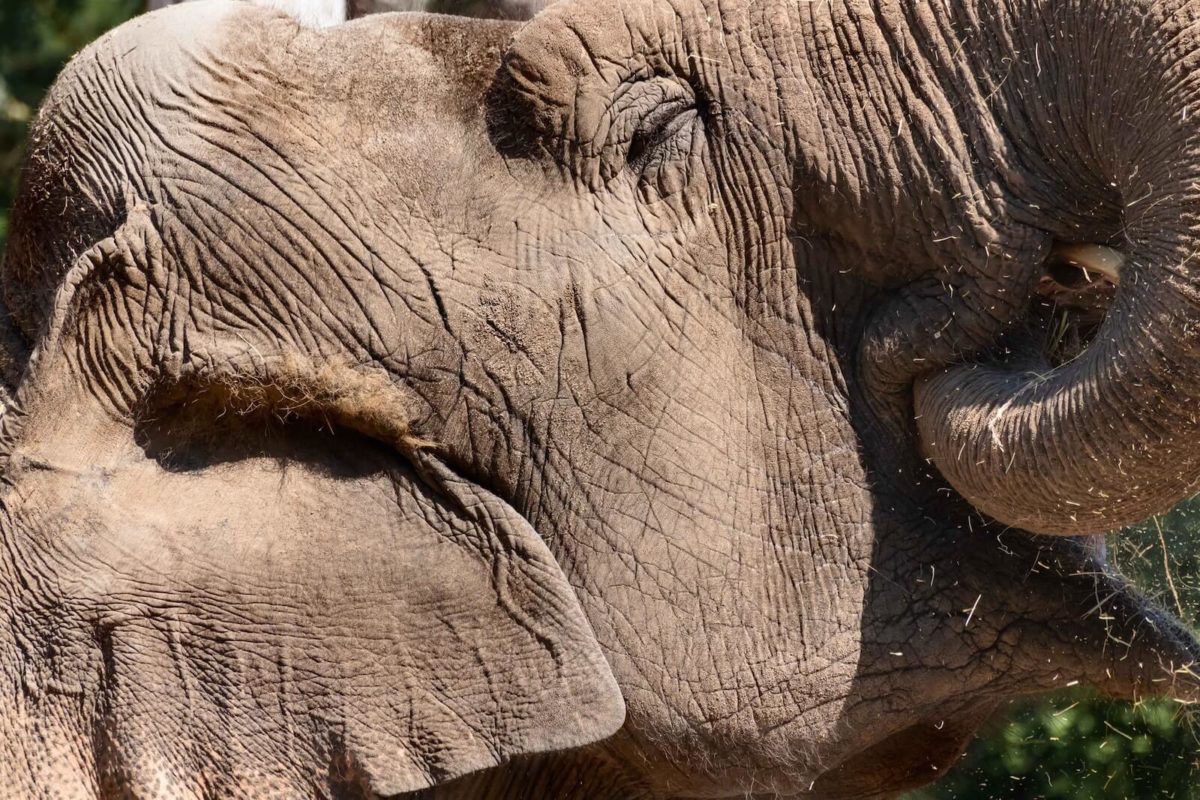
An adult elephant consumes between 300 and 400 pounds (136–181 kg) of vegetation every single day — and spends up to 18 hours doing it. That extraordinary commitment to eating isn’t gluttony; it’s a biological necessity. Elephants have surprisingly inefficient digestive systems that absorb only around 40 percent of the nutrients in everything they eat, which means they must process enormous volumes of food just to meet their energy needs. Understanding what elephants eat reveals a great deal about how these animals shape the ecosystems they live in.
Are elephants herbivores?
Yes — elephants are strict herbivores. They eat only plants and plant material, and no part of their anatomy or behavior is oriented toward consuming meat. Their flat, ridged molars are designed for grinding fibrous vegetation, not tearing flesh, and their multi-chambered digestive tract is built for fermenting and breaking down cellulose. In practice, being a herbivore at elephant scale means dedicating the majority of each waking hour to foraging. A 13,000-pound African bush elephant needs roughly the same caloric input as 50–70 adult humans, sourced entirely from leaves, grass, bark, and fruit.
What do African elephants eat?
African elephants — both the savanna elephant (Loxodonta africana) and the smaller forest elephant (Loxodonta cyclotis) — are highly adaptable, generalist feeders. Their diet shifts significantly between wet and dry seasons.
Wet season diet
When the rains arrive and grasses flush green, African elephants become predominantly grazers. Tall grasses such as elephant grass (Pennisetum purpureum) and various Themeda species make up the bulk of their intake. Grasses are relatively easy to process in large quantities and provide good nutrition when young and green.
Dry season diet
As vegetation dries out and grasses become less nutritious, elephants switch to browsing. They strip bark from trees — including acacia, marula, and baobab — using their tusks and trunk. Baobab bark is particularly sought after because the tree stores large quantities of water in its trunk, making it both a food and hydration source during droughts. Elephants also dig for roots with their tusks and forage for dried fruit fallen to the ground. The marula tree (Sclerocarya birrea) is a favorite; its large, fleshy fruits are nutrient-dense and elephants will travel considerable distances to reach a fruiting marula stand.
According to WWF research, a single adult African elephant can consume up to 50 different plant species in a week depending on what is seasonally available. This dietary flexibility is one reason elephants can survive across such a wide range of habitats, from dense woodland to semi-arid savanna.
What do Asian elephants eat?
Asian elephants (Elephas maximus) live in more densely forested habitats across South and Southeast Asia, and their diet reflects that environment. They are more forest-specialist feeders compared to their African relatives.
Bamboo shoots and bamboo grass are staple foods across much of the Asian elephant’s range. In forests across India, Sri Lanka, Thailand, and Sumatra, elephants also feed heavily on palm leaves, wild bananas, and a wide variety of tropical grasses. During crop-foraging incidents — a significant source of human-elephant conflict — they target rice, sugarcane, and banana plantations, which are calorie-dense foods they can consume quickly.
Asian elephants tend to feed at a somewhat shorter height than African elephants, partly because their backs are more arched and their necks shorter. They are also more likely to use their front feet to pin down and uproot grass clumps, supplementing trunk and tusk work. Like African elephants, they strip bark during dry periods and are known to consume mineral-rich soil at natural salt licks to supplement micronutrients.
How much do elephants eat per day?
The numbers are staggering. An adult African elephant consumes between 300 and 400 pounds (136–181 kg) of food per day. Asian elephants, being somewhat smaller, eat between 220 and 330 pounds (100–150 kg) daily. To hit those targets, elephants forage for 12 to 18 hours out of every 24.
The key reason for such enormous intake is digestive inefficiency. Unlike cattle or deer, which are ruminants that re-chew their food and extract nutrients very thoroughly, elephants are non-ruminant hindgut fermenters. Food passes through their digestive system relatively quickly — in as little as 24 hours — and they absorb only about 40–44 percent of the nutrients it contains. The rest passes out as waste. That is why elephant dung is so fibrous and why it plays an important ecological role: undigested seeds pass through intact, and elephants effectively plant trees across vast distances as they travel. You can read more about this fascinating side effect in our guide to every fact about elephant poo.
This inefficiency also has landscape-scale consequences. A herd of 20 elephants consumes roughly 3–4 tons of vegetation per day, which is why elephant populations can significantly reshape the vegetation structure of parks and reserves — converting dense woodland to open grassland in a matter of years.
How much water do elephants drink per day?
Water is as critical to an elephant’s daily routine as food. Adults drink up to 50 gallons (190 liters) of water per day in hot conditions — though they can survive on considerably less if water is scarce. Calves and juveniles need proportionally large amounts given their growth demands.
During the dry season, elephants don’t just drink from surface water — they find it. Matriarchs lead herds to dry riverbeds where they know water lies just below the surface, and use their tusks and feet to dig wells several feet deep. These excavations are then used by other species — from smaller mammals to birds — making elephants a keystone species for water access across African savannas. Research by the Wildlife Conservation Society (WCS) has documented matriarchs navigating to water sources they haven’t visited for decades, demonstrating the crucial role of long-term memory in herd survival during drought.
Water also drives daily movement patterns. Elephant herds typically plan their foraging routes around water sources, moving toward water in the late afternoon and early morning. In very hot weather, they will spend midday in shade near water, using it to cool themselves and coat their skin in mud as a form of sunscreen and parasite control.
How do elephants find and gather food?
The elephant’s toolkit for gathering food is extraordinary. The trunk alone — a fusion of the upper lip and nose containing over 40,000 muscles — can strip bark from a tree, pluck a single blade of grass, or crack open a hard-shelled fruit. Learn more in our dedicated guide to what the elephant trunk does. Tusks function as crowbars and digging tools, levering up roots and stripping bark. Large males with longer tusks can access bark and roots that younger animals cannot reach.
Foraging is also a social activity. Herds are led by a matriarch whose experience — often spanning 60–70 years — determines where the group travels to find food. She knows which areas hold the best browsing at different times of year, which trees fruit in which season, and where emergency water sources lie. Studies have shown that herds led by older, more experienced matriarchs fare significantly better during drought years than those with younger leaders. This knowledge transfer is a form of cultural learning that makes the behavioral ecology of elephants genuinely remarkable.
What do elephants eat in captivity?
Replicating an elephant’s wild diet in captivity is genuinely difficult. In zoos and sanctuaries, hay forms the nutritional backbone — typically timothy grass hay or orchard grass hay, offered in large quantities throughout the day to keep the animals foraging for natural periods. Good facilities provide at least 100–200 pounds of hay per adult animal daily.
This is supplemented with fresh browse (branches and leaves), root vegetables such as sweet potatoes and carrots, and fruits including apples, watermelon, and bananas. Fruits are generally offered in moderation because of their high sugar content — too much fruit can cause digestive imbalance and contribute to obesity, which is a real welfare concern for captive elephants with limited range.
Many accredited zoos and sanctuaries also offer enrichment feeding — hiding food in logs, hanging browse at height, or burying vegetables to encourage natural foraging behaviors. The Association of Zoos and Aquariums (AZA) publishes nutrition guidelines for elephant care that specify target intake ratios across food groups.
Foods elephants should not be given include processed human foods, high-sugar snacks, and any plants toxic to elephants such as oleander, avocado leaves, or bracken fern. If you are considering visiting an elephant sanctuary or orphanage, responsible facilities will never allow visitors to feed elephants sugary treats, and that is a positive sign of welfare standards.
Frequently asked questions about what elephants eat
No. Elephants are strict herbivores and do not eat meat under any circumstances. Their digestive anatomy, tooth structure, and jaw mechanics are entirely adapted for processing plant material. There are occasional anecdotal reports of elephants consuming bones for minerals, but this is mineral-supplementing behavior, not carnivory.
Most elephants show a strong preference for fruit when it is available — particularly marula fruit, wild figs, and various berries. In captivity, watermelon and bananas are consistently popular. That said, the bulk of any elephant’s daily diet is grass or browse rather than fruit, which is calorie-dense and seasonally scarce in the wild.
Yes, and they tend to enjoy them. Wild elephants eat wild bananas (Musa species) when they encounter them, which is common in Asian elephant habitats. African elephants will also eat cultivated bananas when they raid farms near parks. In captivity, bananas are a popular treat but offered in limited amounts due to their high sugar content.
Volume is the answer. Because elephants only absorb around 40 percent of the nutrients in what they eat, they must consume enormous quantities — up to 400 pounds per day — to meet their energy needs. They also supplement their diet with mineral-rich soil at salt licks, which provides micronutrients (particularly sodium and calcium) that vegetation alone cannot supply in adequate amounts.
Elephant calves nurse from their mothers for three to five years, using their mouths rather than their trunks to suckle. From around three to six months of age, calves begin experimenting with solid food — often by watching and mimicking adults. They gradually increase solid food intake while nursing continues, and are typically fully weaned between age two and five depending on species and circumstances.
Elephants are non-ruminant hindgut fermenters, meaning digestion relies on microbial fermentation in the large intestine rather than re-chewing food like cattle do. Food passes through in as little as 24 hours, which is fast for an animal of their size. This speed is part of why absorption rates are relatively low — only around 40 percent of nutrients are extracted.
Elephant diets connect directly to some of the most pressing conservation issues of our time. As habitats shrink and wild food sources become patchy, understanding how many elephants remain in the world and what they need to survive has never been more important. Their role as ecosystem engineers — dispersing seeds, opening up woodland, and creating water sources for other species — depends on their ability to feed across vast, unfragmented landscapes. Protecting that access is at the core of what organizations like WWF and the WCS work toward every day.