Elephants produce up to 100 kg of dung each day. The average elephant will produce this by taking a poop 8-10 times per day. That’s a lot of poop, and it can tell us a lot about an elephant’s health and diet. Scientists even study elephant poo to learn about the animals’ behavior and social interactions.
Dung beetles also love elephant poo! These little critters can roll a piece of elephant dung up to 20 times their body weight. They use the dung as food and as a place to lay their eggs.
Elephants poo mainly consists of seeds, leaves, fruit, and grass. It also contains a lot of undigested food, which is why dung beetles and other smaller animals are so attracted to it.
Here are some more amazing facts about elephant poo that will ding-dung your mind.
🐘 An elephant produces up to 100 kg of dung per day — enough to fill a large swimming pool in a year.
What Does Elephant Poop Look Like?
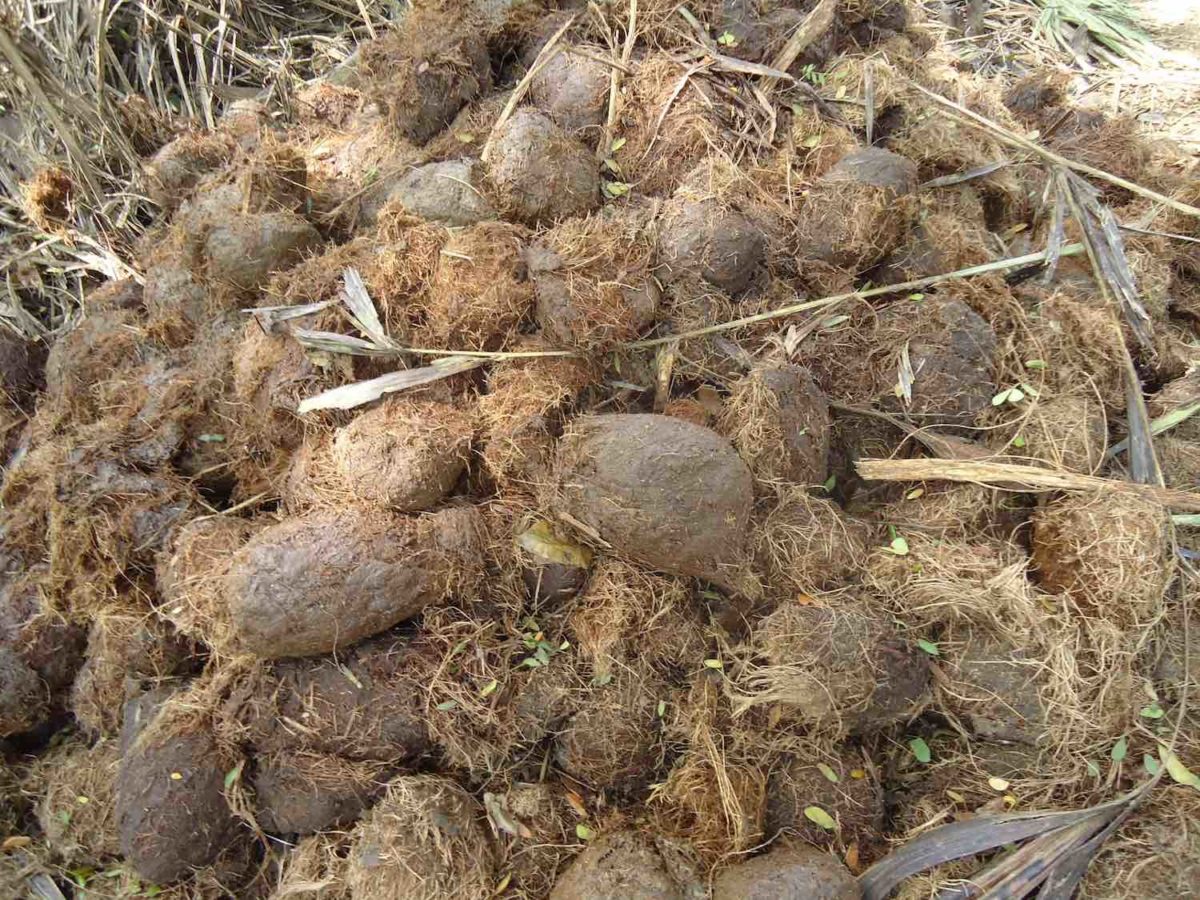
Elephant dung is dark brown to olive-green in colour, roughly spherical, and can measure up to 30 cm (12 inches) across. The texture is coarse and fibrous — you can clearly see undigested plant matter like grass stems, bark, and seed husks on the surface.
A single dropping can weigh anywhere from 3 to 15 kg, depending on the size of the elephant and what they have been eating. (Many sources claim “up to 3.8 kg” — this is incorrect; a fresh, large bolus from a bull elephant regularly exceeds 10 kg.)
What Does Elephant Poop Smell Like?
Elephant dung smells earthy and grassy — more like freshly mown hay than the pungent smell most people expect. This is because elephants have a relatively short and inefficient digestive tract; around 55% of what they eat passes through largely undigested, which means the fermentation process that produces strong odours in carnivore waste barely occurs.
Elephants can create up to 100 kgs of dung each day
The average elephant produces enough dung to fill one large swimming pool in a year. If we use the African forest elephant as an example here, they consumes over 300 pounds of leaves, bushes and grass every day but they only use about 45 percent of that consumption, leaving about 165 pounds of excrement to be dumped.
A single piece of poo can weigh up to 15kg (and not the 3.8 kgs which is click-baited across the internet). Enter elephant dung!
What’s does elephant dung contain?
Most of an elephant’s diet is passed through their guts undigested, and as such, the dung is packed with nutrients that support a wide variety of other animals.
As mentioned, the pile contains mainly semi-digested leaves, fruit, grass, and bark – things that make up excellent fertilizer for soil. It is incredibly rich in fibers.
Elephant Poop and the Ecosystem
Elephant dung plays a critical ecological role that extends far beyond simple waste. Because elephants digest only about 40–45% of what they eat, their dung is packed with intact seeds, undigested vegetation, and nutrients — making it one of nature’s most effective delivery systems.
Seed Dispersal
Elephants are one of the most important seed dispersers on Earth. A single elephant can travel up to 65 km per day, depositing dung — and the seeds it contains — across huge distances. Studies in Central Africa found that elephants disperse seeds of over 335 plant species, many of which rely almost entirely on elephants for their reproduction. In areas where elephants have been removed, forest regeneration has slowed dramatically.
Dung Beetles and the Food Chain
A single elephant dung pile can attract hundreds of dung beetles within minutes. These beetles bury the dung, aerating the soil and cycling nutrients deep into the ground. Dung beetles can roll balls up to 10 times their own body weight, and in some African ecosystems they bury as much as 6 tonnes of dung per hectare per year. Birds, small mammals, and insects also feed directly on elephant dung.
Fertiliser and Soil Health
Elephant dung is a near-perfect natural fertiliser. It is low in acidity, high in fibre, and rich in nitrogen, potassium, and phosphorus. In farming communities bordering wildlife reserves, elephant dung is prized as a soil amendment that can double crop yields on depleted soils without the use of chemical fertilisers.
What elephant dung is used for across the world
Across the world, elephant dung is used for a variety of reasons. It is turned into paper in Thailand, used as a fuel source in India, and even played with as a children’s toy in Africa.
In some cases, it is also dried and used as building materials. Perhaps most interestingly, it is thought that elephant dung may have even been used as a form of currency in some cultures.
Elephant feces can help farmers grow better crops
Not only is the dung great for the environment, it’s also great for farmers. The excrement helps to improve crop production and soil health due to the nutrients it contains.
It’s an extremely good acid free fertilizer. Studies have shown that by adding just a small amount of elephant dung to depleted soils, farmers can see a significant increase in crop yield.
Creating elephant dung paper, eco friendly!
In Thailand, a large proportion of the elephant dung is used to making regular handmade paper or poo paper.
It’s an eco-friendly paper making process, as the manufacturing doesn’t require any additional water or chemicals, and it also helps to reduce the amount of waste produced by elephants.
The end product is said to be extremely durable and can even be used for printing money.
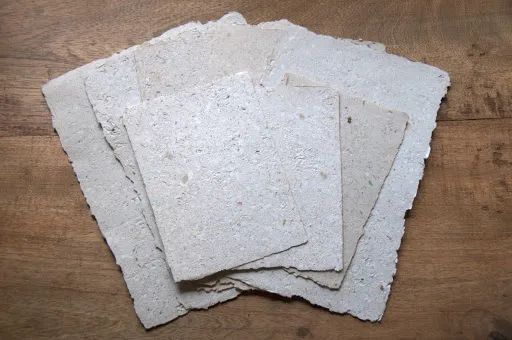
The elephant dung paper process is actually quite simple. First, the dung is collected and then it’s dried in the sun. Once it’s dry, it’s chopped into small pieces and then mixed with water to create a pulp.
The pulp is then placed onto a screen and left to dry, before being turned into paper products. Who thought making paper was so easy?
In China, elephant dung is used in traditional medicine
In China dung from both Asian and African elephants is dried and ground into a powder, which is then used as an ingredient in traditional medicines.
It’s thought to have anti-inflammatory, anti-microbial properties and can also be used as a mind pain killer
Elephant poop coffee as a delicacy?
Yes, you read that right. In some parts of the world, elephant dung is collected and used to make coffee. The coffee is said to have a unique flavor and is highly sought after by coffee connoisseurs.
The producers Black Ivory Coffee Company Ltd is located in northern Thailand and they produce their Black Ivory Coffee brand from Arabica coffee beans that have been consumed by elephants and is derived from their waste.
Black Ivory coffee is influenced by elephants’ digestive enzymes, which breaks down the coffee’s protein.
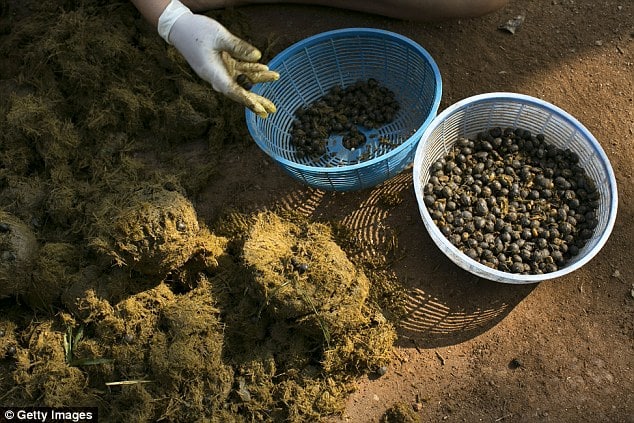
It is amongst the most expensive coffee beans in the world and sell at US$2,000 per kg. The end product sells at about $50 per cup at luxury hotels and restaurants.
Some people in India eat elephant dung in order to gain the elephants’ strength
It is believed that by consuming the dung of an elephant, one can gain the strength and power of the animal.
While this may sound far-fetched, there are actually some people in India who do eat elephant dung as part of their diet.
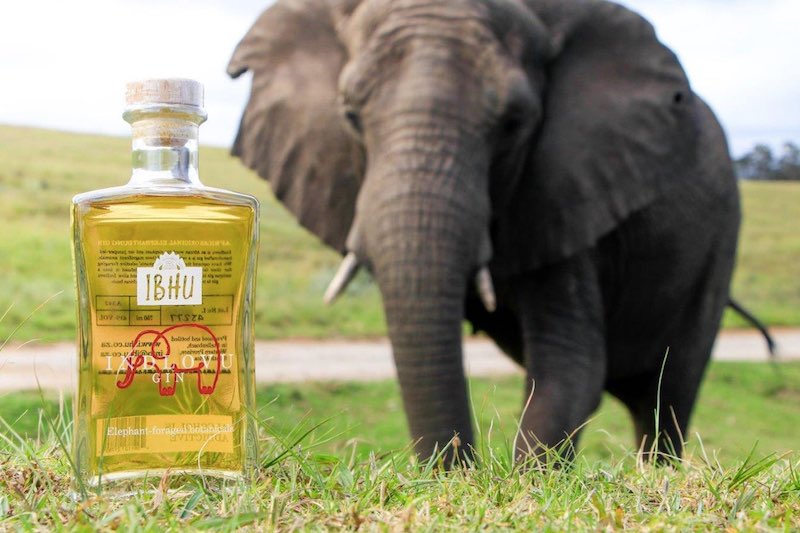
Elephant poo gin in a classical Gin&Tonic?
The makers of Dung Beetle Gin say that their product has a unique flavor and is made with foraged botanicals.
The gin is distilled in London and is said to be the world’s first ‘eco-friendly’ gin. Following the success of Dung Beetle Gin, Les Ansley, a South African producer has also created the Indlovu Gin.
He makes his gin by filtering the botanical mix from the dung of elephants.
Elephant poo as mosquito repellent?
It may sound strange, but elephant dung has actually been found to be an effective mosquito repellent.
In one study, it was found to be more effective than deet, which is a chemical used in many commercial mosquito repellents.
The dung contains a natural insecticide called pyrethrin, which is thought to be the active ingredient that repels mosquitoes. It has a natural disinfectant ability which is probably why this works.
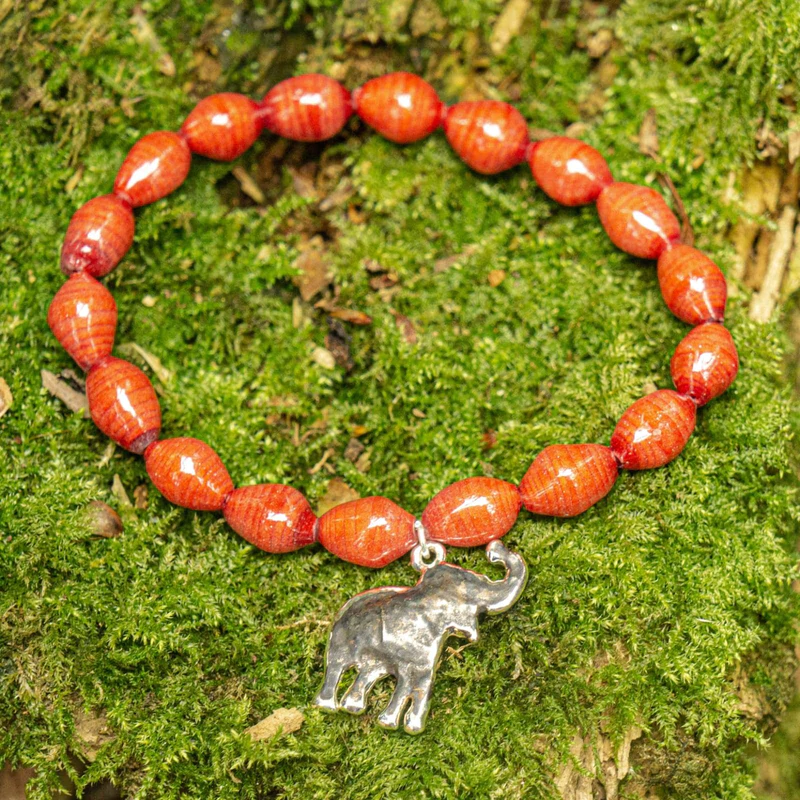
Elephant poo to create jewellery
In Africa, elephant dung from majestic elephants is used to create beautiful jewellery. The dung is collected, dried and then dyed in a variety of colors.
It is then used to create bracelets, necklaces and other pieces of jewellery.
The Bottom Line
Elephant dung is far more than waste — it is a cornerstone of the ecosystems elephants inhabit. From dispersing seeds across vast landscapes to feeding entire communities of beetles and insects, elephant poop plays a vital role that few other animals can match.
Whether it is being turned into paper in Thailand, brewed into some of the world’s most expensive coffee, or quietly fertilising the soil of an African savannah, elephant dung has earned its place as one of nature’s most versatile substances. At up to 100 kg per day, there is certainly plenty of it to go around.
FAQ on Elephant Dung
Elephant poo is the dung of an elephant.
A single dropping from an adult elephant can weigh 3–15 kg. African bull elephants produce the largest dung boluses.
Yes, elephant dung can be used to make paper products.
Elephant dung has many uses, including being used to make regular handmade paper, elephant poo paper, coffee, gin, and jewellery.
An elephant defecates 8–10 times per day, producing a total of up to 100 kg of dung in 24 hours. Their digestive system processes huge volumes of vegetation but absorbs only about 40–45% of nutrients.
Elephant dung disperses seeds across large distances, feeds dung beetles and other insects, and acts as a natural fertiliser. Elephants are considered a keystone species partly because of the ecological role their dung plays in forest and savannah ecosystems.