How Does an Elephant Scratch an Itch?
No hands, no scratching post, no problem. Elephants rub against trees, logs and boulders, and use their trunks, sometimes holding a stick, to deal with an itch.


Elephants, known for their size and strength, also face the challenge of itching and the need for relief. Understanding how elephants alleviate their itchiness is a fascinating subject worth exploring.
Elephants possess a range of physical tools that aid in relieving their itchiness. Elephants may use various methods such as rubbing against trees, rocks, or other rough surfaces to alleviate itching.
Their trunks, with their remarkable dexterity, could also be instrumental in reaching and scratching those hard-to-reach areas.
Additional insight can be gained by observing the behavior of elephants. In the wild they rub against logs, stumps and boulders, and sometimes hold a stick in the trunk to scratch.
Quick answer
Elephants scratch an itch by rubbing their bodies against trees, logs, stumps and boulders. They also use the trunk, sometimes holding a stick, to reach spots they cannot rub, and a bull may scratch an itch on his trunk against the tip of a tusk.
Key Takeaways:
- Elephants relieve itches by rubbing against objects and by using the trunk, sometimes holding a stick. Spots the trunk cannot reach are rubbed against objects.
- Elephants rub against natural objects like logs, stumps, boulders and trees to scratch their itches.
Unreachable Itches: The Limitations of their Trunk, Tusks, and Legs

The unique anatomy of elephants presents challenges when it comes to addressing unreachable itches. The trunk, although highly flexible and versatile, may not always reach certain spots on the elephant’s body.
Elephants have other tools, too. According to the ElephantVoices ethogram, a foot can reach the genitals and inner legs, a tail can scratch an itch on the rump, and a bull may rub an itch on his trunk against the tip of a tusk.
Elephants scratch by rubbing against objects and by using their trunks to scratch itches, sometimes holding a stick. Spots the trunk cannot reach are the ones elephants rub against objects.
The ethogram also records an elephant sliding a branch into the opening of its ear to scratch it.
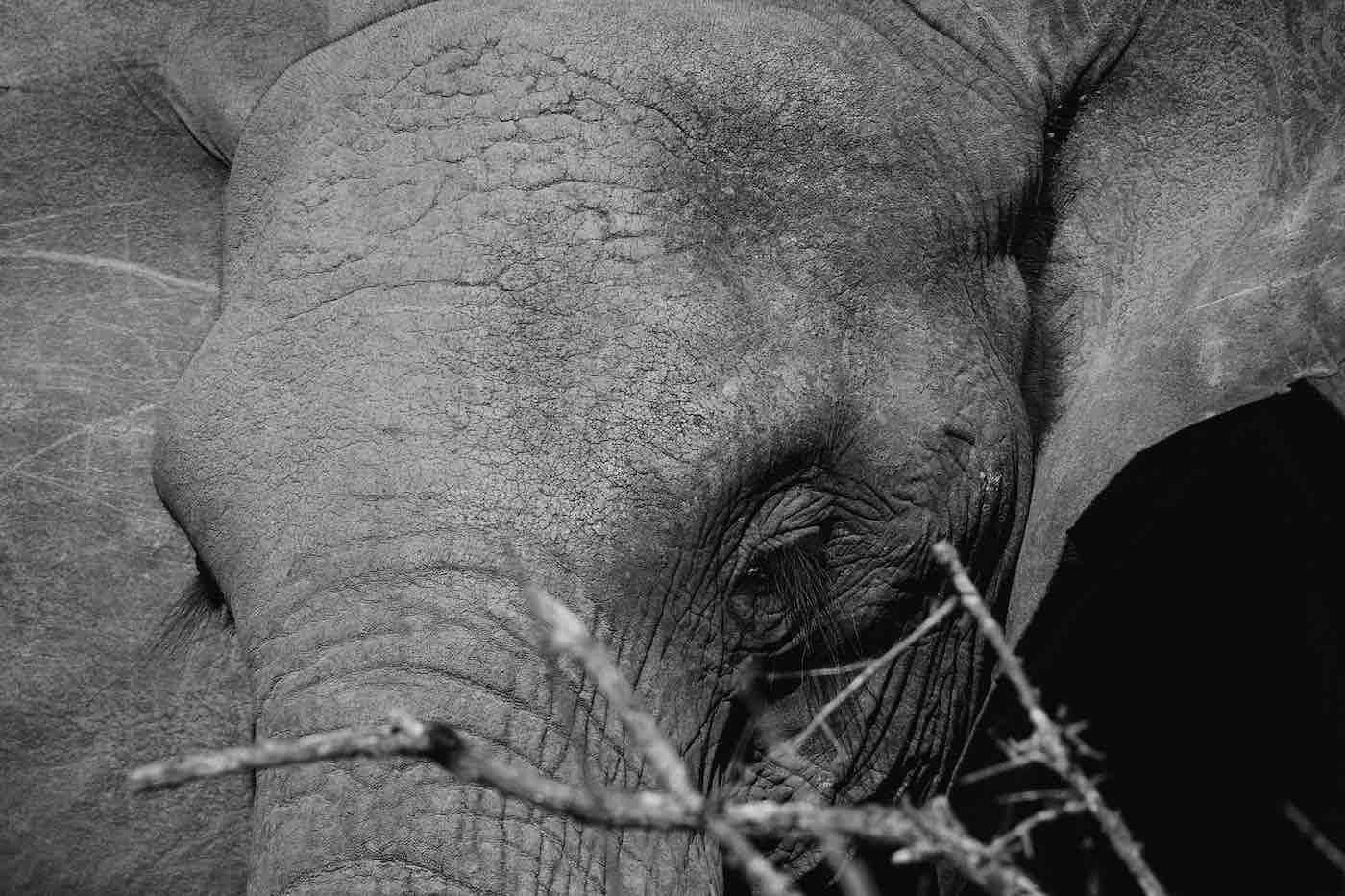
Furthermore, elephant skin is thick but very sensitive to touch and sunburn, which is one reason elephants care for it with mud, dust and water.
These observations demonstrate the elephants’ resourcefulness in finding alternative ways to alleviate itchiness when their appendages fall short.
How Elephants Scratch Their Itches
Elephants possess remarkable ways of alleviating their itchiness through ingenious methods.
When confronted with an irritating itch, elephants often employ their trunks to address the problem. Their flexible and agile trunks allow them to reach various parts of their bodies, which encountered an itch.
By utilizing their trunks, elephants can target specific areas in need of relief. This creative solution showcases the incredible adaptability of these animals.
In addition to using their trunks, elephants may also utilize different elements in their environment as scratching tools.
They may rub against trees, logs, stumps or boulders to relieve a persistent itch, often after a mud wallow.
Overall, elephants exhibit remarkable ingenuity and resourcefulness in their quest to scratch their itches effectively. By understanding their creative solutions, we can better appreciate their unique adaptations and continue to protect and support their well-being in their natural habitats.
Scratching With a Foot, a Tail or a Tusk
Rubbing and the trunk are not the only options. The ElephantVoices ethogram, a catalog of elephant behavior built from field observation, lists several more ways to deal with an itch.
Foot. Elephants of all ages and both sexes have been seen using a front or hind foot to scratch their own genitals or inner legs. ElephantVoices says it is especially common in newborns.
Tail. The ethogram describes an elephant using its tail to scratch an itch on its hindquarters carefully and precisely. Its example is a male in musth feeding in a swamp in Amboseli, Kenya.
Tusk. A male in the Maasai Mara, Kenya, rubbed an itch on his trunk back and forth over the jagged, broken tip of his tusk.
Held objects. An elephant can grasp a stick or a trunkful of vegetation and dirt to scratch its body or remove a tick. A matriarch in Gorongosa, Mozambique, was recorded scratching the inside of her ear with vegetation and dirt.
Mud, Dust and Rubbing Work Together
Scratching is tied to skin care. San Diego Zoo Wildlife Alliance says elephants spray themselves with water or roll in mud or dust to protect their skin from the sun and biting insects, and that frequent bathing and dusting is an important part of skin care. SeaWorld adds that once the mud and dust have dried, elephants rub against a hard surface, which it says removes most parasites.
ElephantVoices likewise notes that rubbing often follows mud wallowing or mud splashing.
Observing Elephant Scratching in the Wild
By observing elephants in their natural habitat, we can witness these extraordinary moments of relief. These instances provide valuable insights into how elephants alleviate their itchiness.
In the wild, elephants adopt unique methods to satisfy their scratching needs. They skillfully utilize various elements in their environment, such as tree trunks, branches, and rocks, to fulfill this basic instinct.
Their massive bodies make it challenging to reach all areas of their skin, making the scratching process an intriguing spectacle.
One astonishing detail concerning elephant scratching is their ingenuity in using available tools. They use their trunks to reach distant parts of their bodies, while also relying on surrounding objects to provide the necessary relief. This resourcefulness showcases their adaptability and intelligence.
Five Key Facts About How Does an Elephant Scratch an Itch?
✅ Elephants use various objects to relieve their itches, including logs, stumps, boulders and trees.
✅ Elephants can hold a stick in the trunk to scratch the body or remove a tick.
✅ A bull may scratch an itch on his trunk against the tip of a tusk.
✅ Elephants often rub against trees, logs, stumps and boulders after a mud wallow.
✅ Elephants also take a mudbath, which protects the skin from the sun and biting insects.
Conclusion
Elephants scratching their itch provides an intriguing glimpse into the resourcefulness of elephants seeking relief.
Elephants itch, as many animals do, and they relieve it by rubbing against objects and by using the trunk.
They rub against logs, stumps, boulders and trees, and the trunk, sometimes holding a stick, reaches spots they cannot rub.
Mud and dust baths also protect the skin from the sun and biting insects.
FAQs about How Does An Elephant Scratch An Itch?
Elephants rub their bodies against trees, logs, stumps and boulders to scratch their itches. They can also use the trunk, sometimes holding a stick, to reach spots they cannot rub.
Elephants scratch in several ways. The ElephantVoices ethogram describes rubbing the head, ears, legs or body against tree trunks, logs, stumps and boulders, scratching the inner legs and genitals with a foot, scratching an itch on the rump with the tail, and rubbing an itch on the trunk against a tusk tip.
None of the sources we checked describes stomach scratching specifically. ElephantVoices describes elephants rubbing the head, ears, legs or body against objects, and scratching the inner legs and genitals with a foot.
Elephants scratch to relieve itches, including those from biting insects and ticks. They scratch with the trunk, sometimes holding a stick to remove a tick, and by rubbing against objects. Mud, dust and water also protect the skin.
Elephants use trees, logs, stumps and boulders for scratching, and they sometimes hold a stick in the trunk to scratch.
Sources
Where the main facts in this article come from. Links open in a new tab.
- National Geographic, Why African elephants appear wrinkled
- Smithsonian's National Zoo, Asian elephant
- Smithsonian's National Zoo, Happy Asian Elephant Awareness Month
- Britannica, What are elephant trunks used for?
- ElephantVoices Ethogram, Rub
- ElephantVoices Ethogram, Scratch-with-Object
- ElephantVoices Ethogram, Scratch-with-Tusk
- San Diego Zoo Wildlife Alliance, Elephant
- ElephantVoices Ethogram, Scratch-with-Foot
- ElephantVoices Ethogram, Scratch-with-Tail
- SeaWorld, Elephant behavior
Keep reading

Why Do Elephants Charge?
Have you ever been on a safari or witnessed an elephant charge? Most charges you are likely to see are mock charges, and real…
Why Do Elephants Flap Their Ears?
Few sights in the animal kingdom are as immediately striking as an African elephant spreading its vast ears in the midday heat. Those enormous…

Unveiling the Mystery of Elephant Musth: A Comprehensive Guide
Elephant musth, a natural, yet extraordinary phenomenon that showcases nature’s raw intricacy. Musth triggers significant hormonal, physiological, and behavioral changes in adult male elephants,…