Travel guideElephant safari
Best Places to See Elephants in Africa

Africa holds most of the world’s wild elephants, and the best places to see elephants in Africa depend on what you want from a trip. Botswana has the most, Kenya’s Amboseli is home to one of the longest-running elephant studies, South Africa pairs Kruger, which holds most of the country’s elephants, with Addo, and Zimbabwe and Tanzania hold large populations of their own. This guide compares the five main elephant countries side by side, adds four more worth knowing about, and explains when to go and how to choose an ethical experience.
Africa holds about 415,000 elephants of two species, according to the most recent continent-wide estimate by the IUCN (2015 data, published in 2016). Both species are in trouble: the African savanna elephant is Endangered and the African forest elephant is Critically Endangered (IUCN, 2021). For the wider numbers, see our guide to how many elephants are left in the world, and for the differences between the two species, read our bush elephant versus forest elephant guide.
Quick answer
For the biggest herds, go to Botswana: about 131,909 elephants live there (2022 survey), more than in any other country, and large herds gather on the Chobe Riverfront in the dry season. Amboseli in Kenya is the place for elephants that scientists have followed since 1972, and Kruger in South Africa holds most of that country’s elephants. Zimbabwe (Hwange) and Tanzania (Tarangire) are the other main choices. The dry season is generally the best time to look.
Elephants in Africa at a Glance
| Species | African savanna elephant (Loxodonta africana), Endangered, and African forest elephant (Loxodonta cyclotis), Critically Endangered (IUCN Red List, 2021) |
|---|---|
| Population | About 415,000 of both species in 2015, the latest continent-wide IUCN estimate (an estimate, not a census). A separate IUCN report released in November 2025 counted 135,690 forest elephants in surveyed areas, a figure that reflects better survey coverage rather than growth |
| Range | 37 countries in sub-Saharan Africa (IUCN, 2016) |
| Largest populations | Botswana, with about 131,909 in 2022. The Kavango-Zambezi area (KAZA), which spans Botswana, Namibia, Zambia, Zimbabwe and Angola, held about 227,900 elephants in 2022, and Mongabay reports that more than half of the world’s savanna elephants live there |
| Best time to see them | The dry season, when herds gather at rivers and waterholes |
Which African Countries Have the Most Elephants?
Botswana is first by a wide margin. After that the order depends on which survey you trust, because countries count their elephants in different years and in different ways. Gabon is the stronghold of the forest elephant, holding about two-thirds of the species.
| Country | Elephants | Year and basis |
|---|---|---|
| Botswana | About 131,909 | 2022 KAZA aerial survey |
| Zimbabwe | More than 85,000 | ZimParks estimate, June 2026; no recent full survey (some reports say about 100,000) |
| Gabon (forest elephants) | About 95,000 | 2021 survey by the Wildlife Conservation Society and Gabon’s national parks agency |
| Tanzania | About 66,700 | 2024/25 national wildlife census |
| South Africa | About 43,700 | SANBI, end of 2023 |
| Kenya | About 42,000 (41,952 wild) | 2025 National Wildlife Census |
| Namibia | About 24,000 | 2022 national report by the Ministry of Environment, Forestry and Tourism |
The Five Main Countries Compared
| Country (our guide) | Elephants | Best-known places | Why go |
|---|---|---|---|
| Botswana | About 131,909 (2022) | Chobe National Park, Okavango Delta, Linyanti | The largest national population; dry-season herds on the Chobe Riverfront |
| Kenya | 41,952 wild (2025) | Amboseli, Maasai Mara, Tsavo | Amboseli’s elephants have been studied since 1972 |
| South Africa | About 43,700 | Kruger, Addo | Kruger holds most of the country’s elephants; SANParks reports more than 700 at Addo |
| Tanzania | About 66,700 (2024/25) | Tarangire, Serengeti, Ruaha | Tarangire’s dry-season gatherings along its river |
| Zimbabwe | More than 85,000 (estimate) | Hwange, Mana Pools, Matusadona, Gonarezhou | Hwange was reported in 2020 to hold 45,000 to 53,000 elephants |
Botswana: The Biggest Herds
Botswana’s population is about 131,909 elephants, according to the 2022 KAZA aerial survey, which is an estimate from a sample of the survey area rather than a headcount. That is more than any other country in Africa, and the survey found the population broadly stable. Chobe National Park is known for its dry-season herds on the Chobe Riverfront, and Botswana’s tourism board says visitors may see hundreds of elephants at once. The Okavango Delta, a UNESCO World Heritage Site, is the other major draw. Our Botswana guide covers the parks and how to get there.
Kenya: Elephants With a Long Record
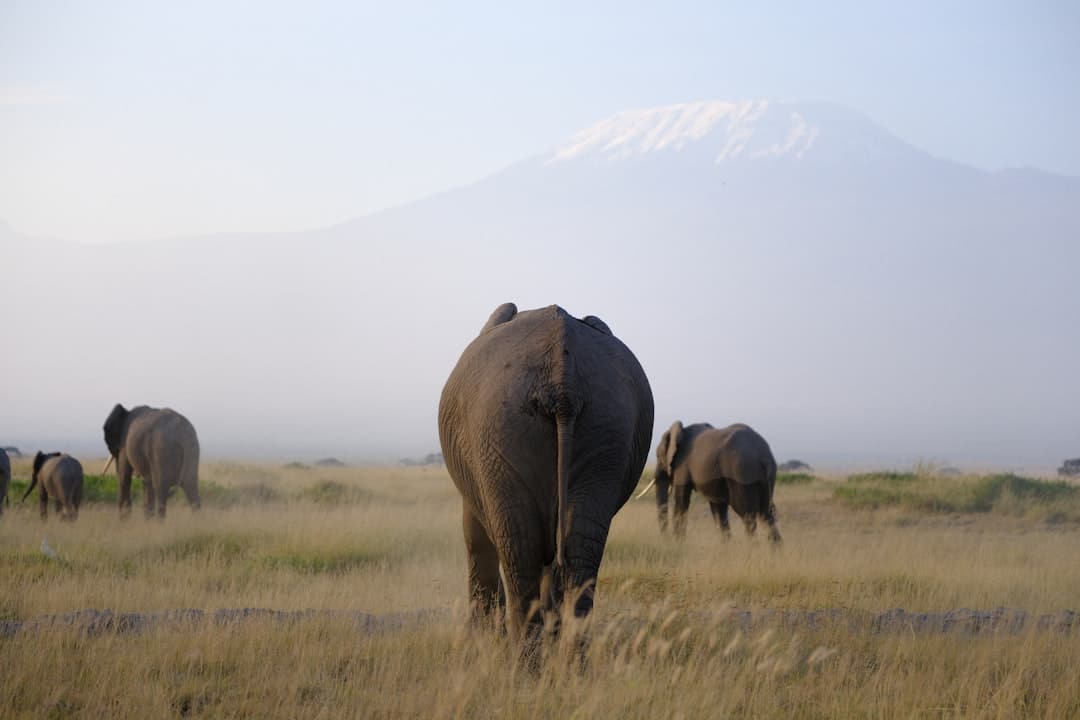
Kenya counted 41,952 wild elephants in its 2025 National Wildlife Census, up from 36,280 in 2021. Amboseli National Park, in the shadow of Mount Kilimanjaro, is home to the Amboseli Elephant Research Project, which began in 1972 and which ElephantVoices describes as the world’s longest-running study of elephants. The Amboseli Trust for Elephants says it has monitored more than 3,500 elephants. The Maasai Mara and Tsavo are the other main parks; see our Kenya guide for all of them.
South Africa: Kruger and Addo
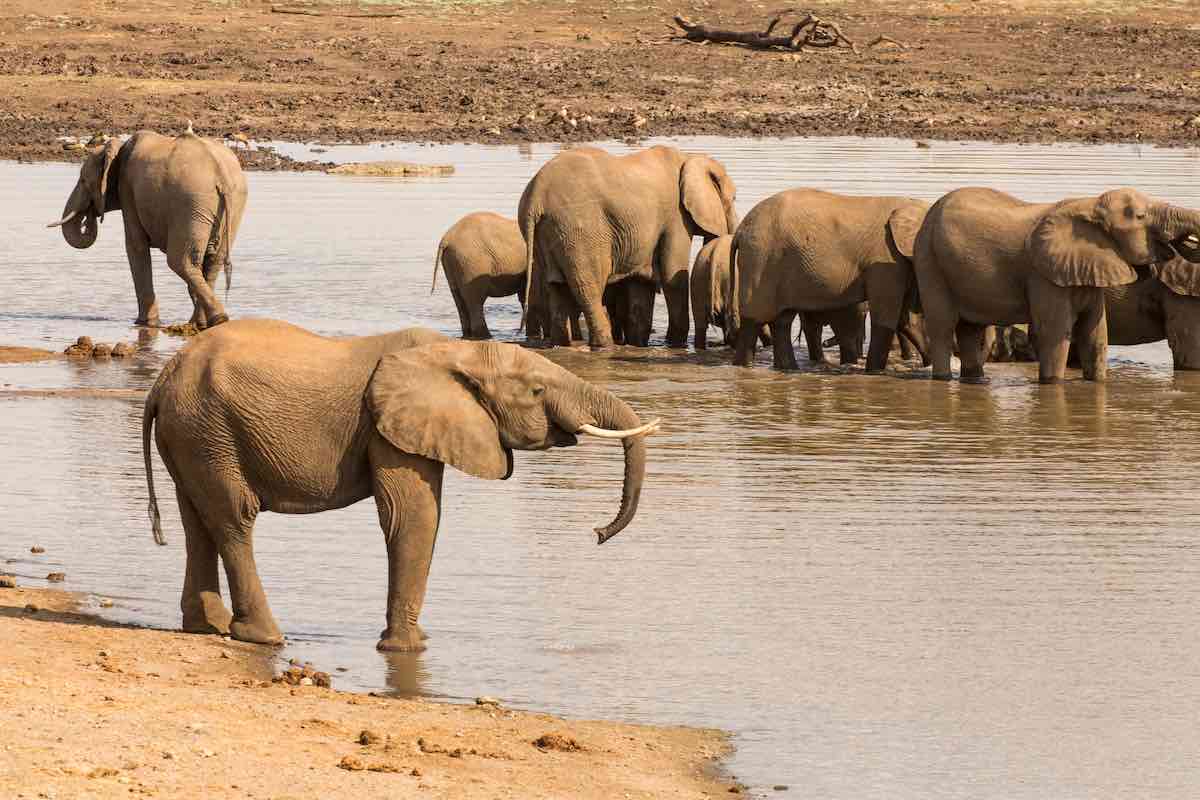
South Africa has about 43,700 elephants, and more than two-thirds of them live on state land, mainly in Kruger National Park, where a 2020 sample-based estimate put the population at 31,324 (SANBI; SANParks). Addo Elephant National Park in the Eastern Cape, where SANParks reports more than 700 elephants, is the other main destination. Both are covered in our South Africa guide, along with the private reserves.
Tanzania: A Recovery in Progress
Tanzania’s 2024/25 national census counted about 66,700 elephants, well below the more than 134,000 estimated for around 2005. In the north, National Geographic says Tarangire National Park is thought to hold about 2,500 elephants, which gather along the Tarangire River in the dry season; it gives July to November as the best months. Our Tanzania guide covers the northern circuit.
Zimbabwe: Hwange and Beyond
Zimbabwe has no recent full survey. ZimParks’ Director of Scientific Services said in June 2026 that the population was more than 85,000, some reports say about 100,000, and the Great Elephant Census estimated roughly 82,000 to 83,000, so treat any single figure with care. Hwange National Park is the main elephant destination, and The Herald reported in 2020 that it held 45,000 to 53,000 elephants against an ecological carrying capacity of about 15,000. Mana Pools, Matusadona and Gonarezhou are covered in our Zimbabwe guide.
Four More Countries Worth Knowing
Uganda. The Uganda Wildlife Authority counted about 6,350 elephants in its monitored protected areas in 2023 to 2025, about 4% fewer than in the previous count. A 2014 aerial survey counted 2,913 elephants in Queen Elizabeth National Park and 1,330 in Murchison Falls National Park. Uganda’s elephants fell to roughly 700 to 800 in the 1970s and 1980s because of poaching and have recovered since the 1990s, according to the Wildlife Conservation Society.
Namibia. Namibia’s elephant population was about 24,000 in 2022, the highest in about 150 years, according to the environment ministry’s national report. Etosha National Park held about 2,900 in a 2015 aerial count. The desert-adapted elephants of the Kunene region are not a separate species or subspecies: the conservation group Desert Elephant Conservation calls them an ecotype that learned to live in the northern Namib, and says about 150 remain.
Zambia. The 2015 Great Elephant Census estimated 3,302 elephants in South Luangwa National Park and 973 in the Lower Zambezi, and at the time The Nature Conservancy described the Luangwa and Kafue populations as stable or possibly increasing. The 2022 KAZA survey counted 3,840 elephants in Zambia’s part of the area, against 6,688 in the 2016 IUCN report, but changed survey methods mean the trend is unreliable.
Gabon. Gabon is where most forest elephants live: a 2021 survey by the Wildlife Conservation Society and Gabon’s national parks agency estimated about 95,000, roughly two-thirds of the species. Forest elephants live in dense rainforest rather than open savanna, so trips to see them are very different from a classic safari. Check current government travel advice before planning one.
When to Go to See Elephants in Africa
The dry season is generally the best time, because elephants gather at rivers and waterholes and are easier to find. Botswana’s tourism board points to the dry winter months for the herds on the Chobe Riverfront, and National Geographic gives July to November for Tarangire. Exact months vary by park, and our seasonal elephant viewing guide covers the destinations one by one. Rain, road conditions and park rules change, so check current conditions with your operator before you book.
Choosing an Ethical Elephant Experience
Both World Animal Protection and the Born Free Foundation advise against riding elephants or taking part in close-contact activities, and World Animal Protection has called on the tourism industry to stop promoting rides and shows in southern Africa. Watching wild elephants from a vehicle or on a guided walk, at a distance and without feeding or touching, is the safest choice for the animals.
If you want to see orphaned calves, the Sheldrick Wildlife Trust opens its Nairobi Nursery to visitors for one hour a day, by advance booking only, and does not accept bookings through third-party platforms. Our guide to choosing a responsible elephant sanctuary explains what to look for and what to avoid. Planning a longer trip? See our guide to the best places to see elephants in Asia, or browse every elephant destination we cover.
Frequently Asked Questions About Elephants in Africa
Botswana has the most elephants, with Chobe National Park and the Okavango Delta the standout areas. Kenya’s Amboseli, South Africa’s Kruger and Addo, Zimbabwe’s Hwange and Tanzania’s Tarangire are the other main choices. Our guide to the best places to see elephants worldwide puts Africa in context.
Botswana, with about 131,909 in the 2022 KAZA survey. Zimbabwe is next on ZimParks’ estimate of more than 85,000, and Gabon holds about 95,000 forest elephants, roughly two-thirds of that species.
The dry season, when herds gather at rivers and waterholes. Botswana’s tourism board points to the dry winter months for Chobe, and National Geographic gives July to November for Tarangire in Tanzania. Check the seasonal viewing guide for each destination.
About 415,000 of both species in 2015, the latest continent-wide IUCN estimate, which is a modelled estimate rather than a census. The IUCN lists the savanna elephant as Endangered and the forest elephant as Critically Endangered. See how many elephants are left in the world.
No. World Animal Protection and the Born Free Foundation both advise against elephant rides and close-contact activities, because training elephants to carry people involves harsh methods. Choose wild viewing on a game drive or walk, or a visit to an orphanage that keeps contact to a minimum.
Sources
Where the main facts in this article come from. Links open in a new tab.
- IUCN, African elephant species now Endangered and Critically Endangered, 2021
- IUCN, DNA methods help uncover further African forest elephants, 2025
- ScienceDaily (IUCN release), African elephant numbers, 2016
- Al Jazeera, Africa elephant report, 2016
- US Fish and Wildlife Service, African Elephant Conservation Fund
- Botswana Daily News, 2022 KAZA elephant survey results
- UNESCO World Heritage Centre, Okavango Delta
- Mongabay, Analysis of largest elephant surveys ever shows stable population, 2024
- Africa Geographic, KAZA elephants: new analysis
- KAZA TFCA, 2022 KAZA elephant survey results
- Botswana Tourism Organisation, Chobe National Park
- Citizen Digital (Kenya), New wildlife census shows elephant boom, 2025
- Amboseli Trust for Elephants
- ElephantVoices, Amboseli, Kenya
- SANBI, Biodiversity assessment: mammals
- SANParks, Big trunks, bigger questions: rethinking elephant numbers in Kruger
- SANParks, Elephant range expansion in Kabouga, Addo Elephant National Park
- Ferreira et al., Sample-based estimates of elephants in Kruger National Park, African Journal of Wildlife Research, 2024
- The Herald (Zimbabwe), Zim celebrates World Elephant Day
- Conservation Action, Killing without counting: South Africa’s elephant conflict debate
- The Citizen (Tanzania), Why Tanzania’s elephant population has declined, 2026
- The Peninsula, Tanzania’s elephant population rises to 66,714, 2026
- National Geographic, Which Tanzanian national park is right for you
- African Elephant News, Zimbabwe’s elephant population nears 100,000, 2026
- National Geographic, Great Elephant Census results, 2016
- Uganda Wildlife Authority, State of Wildlife Resources Report 2026
- Wildlife Conservation Society, Uganda’s elephants increasing in number
- The Brief (Namibia), Namibia’s elephant population reaches 24,000, 2023
- African Elephant Database, Namibia (2016 report)
- Desert Elephant Conservation, About desert elephants
- African Elephant Database, Zambia (2016 report)
- The Nature Conservancy, Documenting Zambia’s elephants
- Wildlife Conservation Society, Gabon is the largest stronghold for forest elephants, 2021
- Born Free Foundation, Elephant interaction
- World Animal Protection statement on the death of a Zimbabwe elephant handler, 2017 (reposted by eTurboNews)
- Sheldrick Wildlife Trust, Nursery visit
More places to see elephants

Best Places to See Elephants in Vietnam
Vietnam is home to one of the most precarious elephant populations in Asia. Vietnam’s wild Asian elephants are down to fewer than 200 animals,…
Best Places to See Elephants in Kenya
Eight places to see wild and orphaned elephants in Kenya, with the latest census numbers, when to go and what each visit is really…
Best Places to See Elephants in South Africa
South Africa has about 43,700 wild elephants (end of 2023, according to the national biodiversity institute SANBI), and most of them live in and…