
When you think of an elephant, your first thoughts are probably not about how they get their food. Most people probably wouldn’t have any idea how elephants go about feeding themselves on a daily basis. However, this is something that we all should know about. We know that most animals are plant-eaters.
However, it’s surprising to find out that there are so many different types of herbivores with unique methods for getting their food and nutrition.
With so many different species in the animal kingdom, it’s interesting to see where the elephants fit in with regard to where they get their food from.
In this article, we will see how do elephants get their food, what they eat in order to survive, and what are their eating behaviors are.
What Do Elephants Eat?
The majority of an elephant’s diet consists of grasses, roots, branches, twigs, hay , vegetables and fruits like bananas and sugar cane. They can also eat a tree bark, they are able to do this so well with their flat teeth.
In fact, elephants have been known to eat over several hundred pounds of vegetation in a single day, especially African elephants that can eat up to 300-400 pounds (140-180 kgs) of vegetation! That’s a lot of plants!
While they do drink a lot of water, most of the hydration that they need comes from the plants that they eat. This is due to the high water content in many of the plants that elephants eat.
Elephants do supplement their diet occasionally. They can dig part of the earth to get salt and other minerals. They are able to do this using their tusks and their trunk.
While they are herbivorous animals, these mammals have been known to eat the occasional carcass of a dead animal or a birds nest. This usually only happens if there is a lack of vegetation to eat or if the animal is particularly weak or sick.
Hindgut Fermentation
One of the most interesting things about an elephant’s diet is that they have a very unique digestive system. Unlike humans and many other animals, elephants don’t have a stomach that breaks down food with acids.
Instead, their digestive system is more like a fermentation chamber. This means that elephants actually digest food by allowing bacteria to break it down for them. This process is known as hindgut fermentation, and it’s what allows elephants to eat such a large variety of plants.
The interesting thing about hindgut fermentation is that it’s not very efficient. In fact, only about 40% of the food that an elephant eats is actually digested.
This means that a lot of the food that they eat passes right through them. However, this isn’t necessarily a bad thing. The undigested food that comes out the other end is full of nutrients and fiber which helps to keep the elephant’s digestive system healthy.
Recommended reading: How many stomachs does an Elephant have?
How Do Elephants Get Their Food?
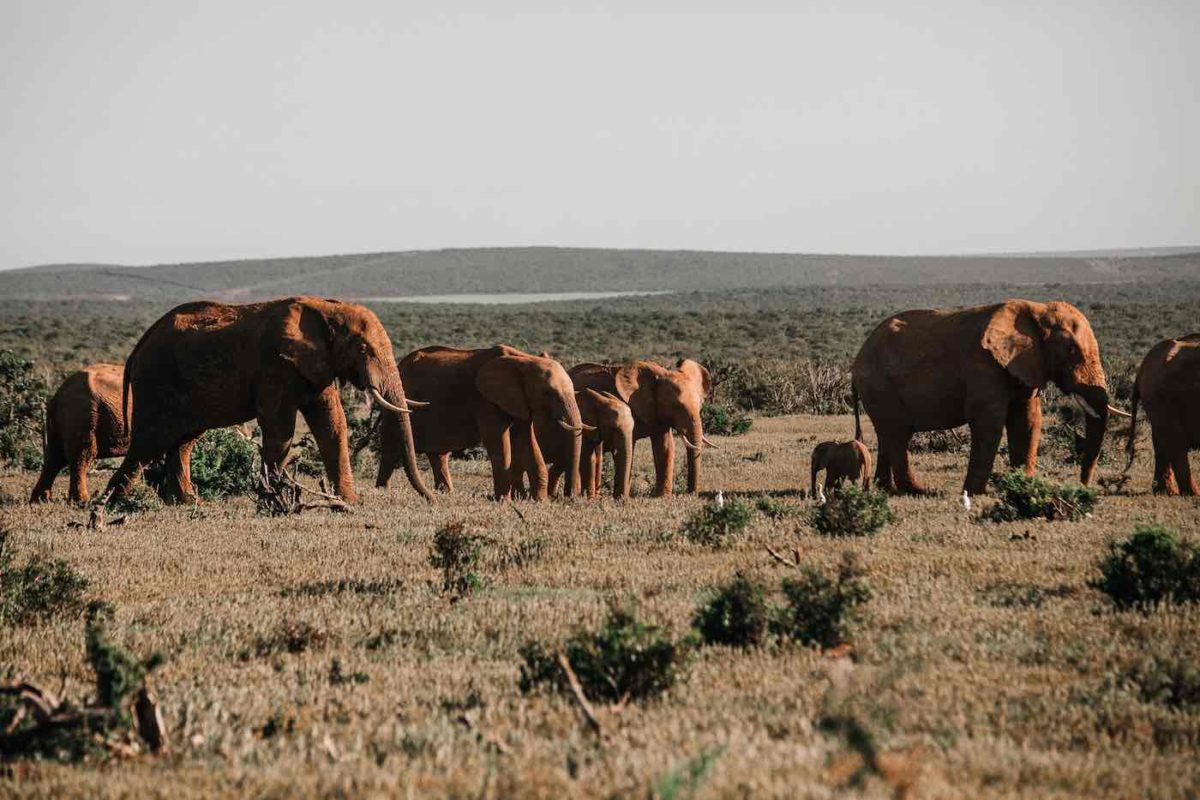
Elephants are wanderers by nature. They travel long distances in search of food and water. An elephant can travel up to 30 miles in a single day while looking for food!
This is one of the reasons why elephants need such a large amount of food. They burn a lot of calories just by walking around all day.
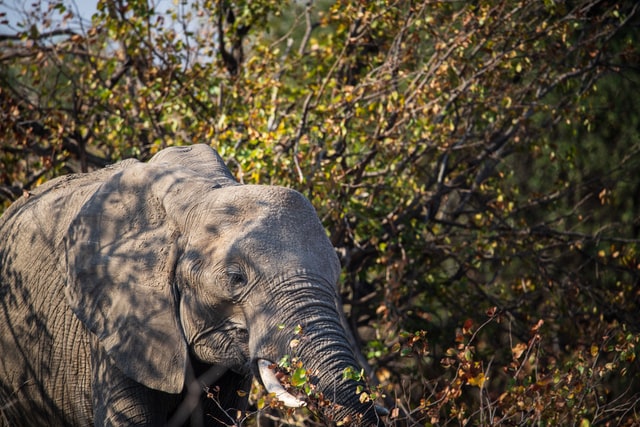
Most of the food that elephants eat is actually found on the ground. They use their trunks to uproot plants, pick small objects and strip leaves off trees by destroying trees.
They also eat a lot of grass and roots, which they find by using their trunk to pull the grass up from the ground.
How Much Does An Elephant Eat Daily?
On average, an elephant eats huge amounts of food. They will eat between 200 and 500 pounds of food per day. This can vary depending on the type of food that they’re eating and how active they are.
For example, elephants that are eating a lot of grass will need to eat more than elephants that are eating mostly leaves.
How Do Elephants Use Their Trunk to Eat?
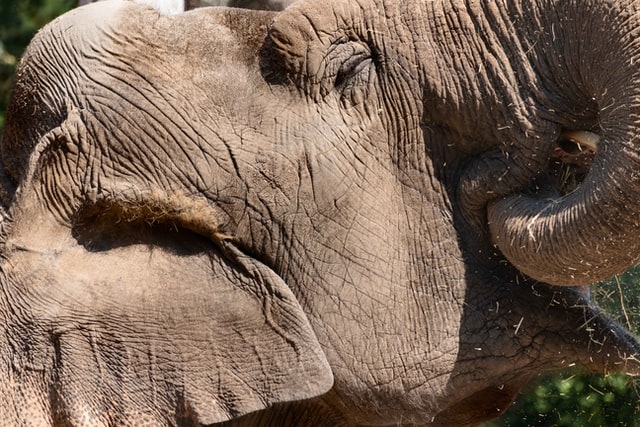
The trunk is the elephant’s most essential feeding tool. With around 40,000 muscles and no bones, it is extraordinarily precise — capable of picking up a single blade of grass or uprooting an entire tree, depending on what the situation demands.
When grazing, an elephant wraps the tip of its trunk around grass, twists and pulls to detach it from the ground, then brings the bundle to its mouth. For bark, the elephant hooks its tusks beneath a strip and uses trunk and head together to lever it free. For fruit, the trunk tip acts like a hand, feeling for and plucking individual pieces with remarkable accuracy.
African vs Asian Trunk Tips
There is a subtle but important difference between the two species. African elephants have two “fingers” at the tip of their trunk, allowing a pincer grip that is excellent for picking up small objects. Asian elephants have just one finger, using more of a scooping or pressing motion. Both are highly effective, but the African elephant’s two-finger grip gives it slightly more dexterity with small foods.
Chewing: The Role of Elephant Teeth
Once food reaches the mouth, elephants chew with large, ridged molars designed to grind fibrous vegetation. Unusually, elephants cycle through six sets of molars over their lifetime — as each set wears down, it moves forward and is replaced from behind. When the final set is gone (typically around age 60–70), the elephant can no longer process tough vegetation, which is one of the primary causes of death in old elephants in the wild.
How Long Do Elephants Spend Eating Each Day?
Elephants spend up to 16–18 hours a day eating and foraging.
That is roughly two-thirds of every day devoted entirely to finding and consuming food. An adult African elephant needs 140–180 kg of vegetation daily to maintain its body weight, and because their digestive system only extracts about 40–45% of available nutrients, they must eat in very large quantities to meet their energy needs.
This constant need to forage is one of the main reasons elephant herds travel huge distances — often 20–30 km per day during dry seasons when food is scarce. The matriarch of the herd plays a key role in remembering the location of water sources, fruiting trees, and seasonal salt licks across a home range that can span hundreds of square kilometres.
Elephant Eating Behavior
Elephants are generally very methodical eaters. They will often spend several hours a day grazing on vegetation. This is because they need to eat a lot of food in order to get the nutrients and calories that they need.
What Do African vs Asian Elephants Eat?
Diet varies by species and habitat:
| Species | Primary Foods | Notable Preferences |
|---|---|---|
| African Bush Elephant | Grasses, bark, roots, shrubs | Marula fruit, baobab bark |
| African Forest Elephant | Fruit, leaves, aquatic plants | High-fruit diet; important seed disperser |
| Asian Elephant | Grasses, bamboo, banana, sugarcane | Cultivated crops (conflict risk near farms) |
Elephants will also often travel long distances in order to find food. African elephants have been known to travel up to 30 miles in a single day while looking for food!
When an elephant finds food, it will use its trunk to grab the food and bring it to its mouth. They will then use their tongue and teeth to tear the food apart and eat it.
Elephants will usually eat several times a day. However, they can go for long periods of time without eating if they need to. For example, elephants in captivity will often be fasting for days at a time.
Survival Needs Of The Elephants
Elephants are herbivores, which means that they survive by eating plants. This is different from carnivores, which survive by eating meat, and omnivores, which survive by eating both plants and animals.
Herbivores are actually the largest group of animals on the planet. This includes animals such as cows, horses, and pigs. Elephants are the largest herbivores on the planet!
Herbivores have a few different survival needs. First, they need to find enough food to eat. This can be a challenge, especially for large herbivores like elephants. They also need to be able to digest the food that they eat. This is because many plants are difficult to digest.
Finally, herbivores need to be able to find water. This is because they need to drink water in order to stay hydrated. Many herbivores do however get the majority of their water from the plants that they eat.
The Bottom Line
Elephants are plant-eaters, which means that they survive by eating plants. They need to eat a lot of food in order to get the nutrients and calories that they need.
Elephants get the majority of their nutrition and hydration from the plants and fruits that they eat. They will often walk for long distances to be able to find the vast amount of food that they need to consume on a daily basis.
Frequently Asked Questions about How Elephants Eat
Elephants use their trunk to grab, pull, and bring food to their mouth. They then chew with large ridged molars designed to grind tough plant material. The trunk has around 40,000 muscles and can handle everything from a single blade of grass to a whole tree branch.
An adult elephant eats between 140 and 180 kg (300–400 lbs) of vegetation per day. Because their digestion is only about 40–45% efficient, they need to eat in very large volumes to extract enough energy and nutrients.
Elephants spend 16–18 hours each day eating and foraging. This leaves very little time for anything else and is why elephant herds are constantly on the move in search of new food sources.
Elephants are herbivores and do not eat meat as part of their normal diet. Extremely rare reports exist of elephants consuming animal carcasses during periods of severe food shortage, but this is not typical behaviour.
Elephants rely heavily on memory and the knowledge of older herd members — especially the matriarch — to locate food and water sources across vast home ranges. They also use their highly sensitive trunk to smell food from several kilometres away.