
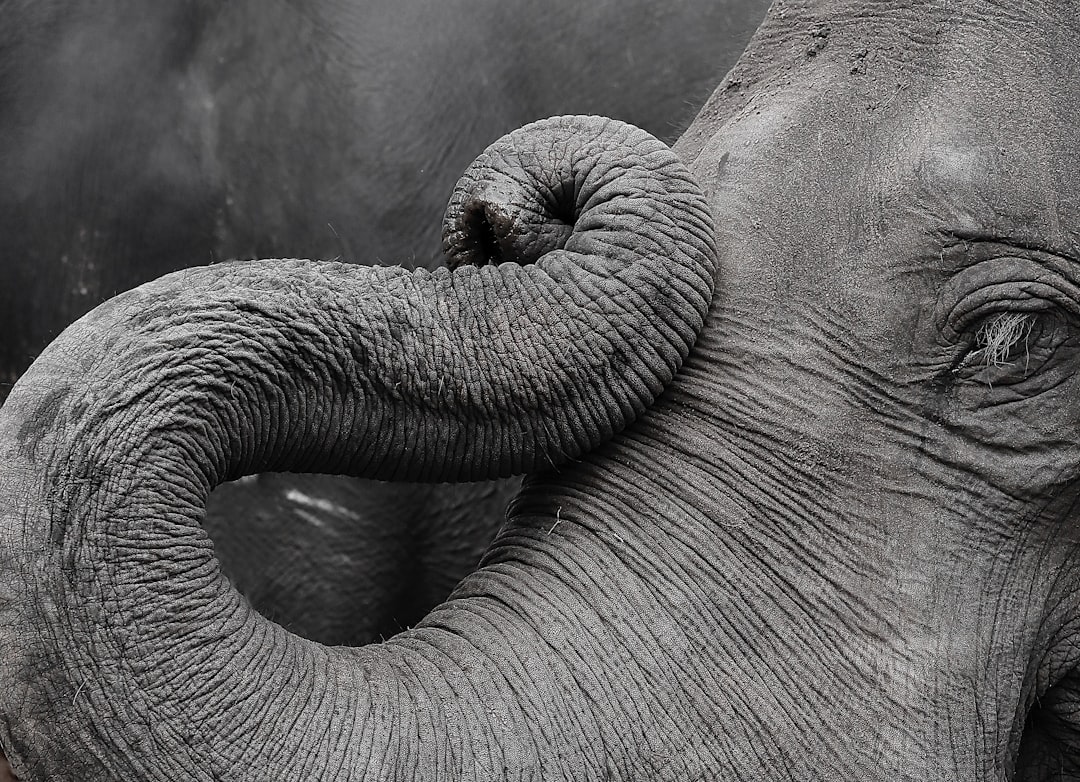
Few wildlife moments are more affecting than watching an elephant stand motionless over its dead calf, trunk resting on the still body, remaining there for hours as the rest of the herd moves slowly around it. We recognise something in that stillness. We call it grief. But does the animal itself cry — do actual tears run down that great grey face? The answer is more layered, and ultimately more fascinating, than a simple yes or no.
The short answer: Elephants have lacrimal (tear) glands and do produce visible eye secretions — but the scientific evidence that these tears are triggered by emotion is not yet confirmed. What is overwhelmingly documented is that elephants grieve, empathise, and experience joy in ways that are deeply compelling. The dark fluid often photographed running down an elephant’s face is not from the tear duct at all — it comes from a completely different organ called the temporal gland. The behavioral evidence for elephant emotion is far more convincing than any tear.
Do Elephants Have Tear Glands?
Yes — elephants have lacrimal glands, the same type of tear-producing structures that humans have. These glands continuously produce fluid that lubricates and protects the eye surface. In healthy elephants, you can often see a slight moisture at the inner corner of the eye, exactly as you might in a person.
However, there is a key anatomical difference. In humans and many other mammals, excess tear fluid is efficiently drained away through the nasolacrimal duct — the tiny channel that runs from the inner corner of the eye down into the nasal cavity. Elephants have a less developed version of this drainage system, which means excess eye secretions are more likely to spill onto the face rather than drain internally. This is part of why an elephant’s eyes often appear wetter or more visibly moist than those of many other large mammals — it is not necessarily more tear production, but less efficient drainage.
So when we ask “do elephants cry?”, the biological answer depends entirely on what we mean. If crying means producing tears — yes. If crying means producing emotional tears in response to sadness or distress — that remains scientifically unproven, though not implausible given what we know about the elephant brain.
What Is the Dark Fluid on an Elephant’s Face?
This is one of the most important clarifications in elephant biology — and one that is routinely misunderstood by tourists, photographers, and even well-intentioned wildlife writers.
Elephants possess a unique organ called the temporal gland, located on the side of the head, roughly halfway between the eye and the ear. This gland secretes a dark, oily, strong-smelling fluid called temporin. When it flows, it leaves a visible dark stain running down the side of the elephant’s face — a trail that is frequently photographed and described in captions as the elephant “crying.”
It is not. The temporal gland is a completely separate structure from the lacrimal (tear) gland, with a different location, different tissue type, different secretion, and different function.
In adult bulls, temporal gland secretion increases dramatically during musth — a period of heightened testosterone and reproductive drive in which bulls become highly aggressive and sexually competitive. The swollen temporal gland and streaming temporin are classic signs of a bull in musth.
In all elephants, the temporal gland also activates during periods of stress, excitement, or intense social stimulation. A calf separated from its mother, an elephant encountering a predator, or a herd engaged in a charged reunion may all show temporal gland secretion. This means you can see the dark trail flowing down an elephant’s face in moments of apparent distress — and it is genuinely associated with heightened emotional state — but it is not tears, and it is not from the eye.
The confusion is understandable. The fluid runs near the eye, it appears in emotionally charged moments, and it looks dramatic. But the science is clear: if you see a photograph of an elephant with a dark streak below its eye and it is described as “crying,” you are almost certainly looking at temporal gland secretion, not tears.
How Elephants Behave When They Grieve
If the tear evidence is ambiguous, the behavioral evidence for elephant grief is not. Within the complex social structure of the herd, death is not something elephants pass by unremarked. Researchers working across Africa and Asia have documented a consistent repertoire of behaviors that, in humans, we would call mourning without hesitation.
| Behavior | What it looks like | Researcher / Source |
|---|---|---|
| Vigil at the body | Standing near a dead herd member for hours or days; guarding the body | Cynthia Moss, Amboseli Elephant Research Project |
| Trunk touching | Exploring the body, face, and tusks of the deceased with the trunk | Joyce Poole; multiple Amboseli records |
| Covering behaviors | Placing branches, leaves, or soil over the deceased’s body | Documented at multiple sites; not universal but recurrent |
| Bone revisiting | Returning to the location of a death months or years later; handling the bones specifically | Cynthia Moss, 40+ years Amboseli data |
| Mourning silence | Reduced vocalization; stillness across the herd after a death | Multiple field observers, Amboseli and Samburu |
| Calf vigil | Mother or family members attempting to lift or revive a dead calf; loss of appetite | Joyce Poole; Sheldrick Wildlife Trust records |
These behaviors are not occasional anomalies. They have been recorded across decades of field research, across multiple elephant populations in East and Southern Africa, and across both African forest and savannah species. The behavioral evidence is consistent enough that the scientific community broadly accepts that elephants have a meaningful response to the death of conspecifics — something well beyond a simple startle or avoidance reaction.
In Cynthia Moss’s decades of research at Amboseli, elephants were documented returning year after year to the precise location where a matriarch had died — touching her bones specifically and ignoring the bones of other animals nearby. The herd knew whose bones they were.
This selective bone recognition is particularly striking. If elephants were simply responding to the smell of death or decay, they would attend to any bones. Instead, they seek out and return to the remains of specific individuals — a behavior that implies both long-term memory and individual recognition. This is deeply connected to their extraordinary memory, one of the most well-documented features of elephant cognition.
The bone-visiting behavior also connects to the popular myth of elephant graveyards — the idea that elephants instinctively travel to a specific place to die. While this is a myth in its literal form, it connects to the elephant graveyard myth in interesting ways: the reality of elephants congregating around bones is likely where these stories originated.
The Elephant Brain — Built for Emotion
The behavioral evidence does not exist in a vacuum. When you look at the elephant brain, you find neurological architecture that is consistent with rich emotional experience.
Elephants have a disproportionately large hippocampus relative to their body size. The hippocampus is the brain region most associated with memory formation and emotional memory — it is the part of the brain that encodes the emotional weight of experiences, not just their factual content. An elephant’s capacity to remember individuals, places, and events over decades — and to respond emotionally to those memories — likely reflects the development of this structure.
More significantly, elephant brains contain Von Economo neurons (also called spindle neurons). These large, fast-signalling neurons were once thought to be unique to humans and great apes. Researchers subsequently found them in cetaceans (whales and dolphins) and — in 2006 — confirmed their presence in elephants. Von Economo neurons are densely concentrated in the anterior cingulate cortex and the frontal insula, regions associated with empathy, social bonding, and rapid emotional decision-making.
Their presence does not prove that elephants experience emotion in the way humans do — neuroscience rarely offers such clean proofs. But it does mean that elephants have the neural hardware that, in species where we do accept emotional experience, underpins it. The structural evidence aligns with the behavioral evidence.
Mirror Test and Self-Awareness
In 2006, researchers at the Bronx Zoo presented three Asian elephants with a large mirror. One of them — a female named Happy — passed the mirror self-recognition test, touching a mark on her own forehead (visible only in the mirror) in a way that demonstrated she understood she was seeing herself, not another elephant.
The mirror self-recognition test is not a perfect measure of consciousness, and its interpretation remains debated. But it places elephants in a small and select group: humans, great apes (chimpanzees, gorillas, orangutans), bottlenose dolphins, and Eurasian magpies. These are the only species to have consistently passed this test under controlled conditions.
Self-recognition implies a sense of self — a mental model of one’s own body distinct from the external world. Whether this translates to subjective emotional experience (as opposed to purely functional processing) is a philosophical question that science has not yet resolved. But self-awareness is generally considered a prerequisite for emotions in the fullest sense: you cannot miss someone if you have no concept of yourself as the one doing the missing.
Elephant Empathy — Do They Feel Others’ Pain?
Empathy — the capacity to register and respond to the emotional states of others — is increasingly documented in elephants across multiple research programmes.
Karen McComb and colleagues at the University of Sussex conducted research showing that elephants respond to the distress calls of other elephants, including those outside their immediate family group. When a recording of a distressed elephant call was played, nearby elephants oriented toward the sound, produced contact calls in return, and in some cases moved toward the source. This is not simply a response to loud noise — elephants show different responses to different types of calls, selectively amplifying their response to distress.
Comfort behavior in elephants is also well documented. When an elephant shows signs of distress — running, vocalizing, exhibiting agitated posture — nearby elephants will approach, reach out with their trunks, and produce low rumbling contact calls. This physical comforting is structurally similar to what humans do when a companion is upset: we move closer, we touch, we make reassuring sounds. The elephant version is different in its mechanics but the pattern is recognizable.
At the David Sheldrick Wildlife Trust’s elephant orphanage in Nairobi — one of the most detailed long-term records of elephant behavior outside the wild — keepers document orphaned elephants comforting each other at night, with older calves draping their trunks over younger ones showing distress. These are animals that have lost their mothers to poaching or human-wildlife conflict, displaying inter-individual comfort that has no survival benefit beyond emotional support for the recipient.
Reunion Joy — The Other Side of Elephant Emotion
Elephant emotion is not only about grief. Reunions between separated elephants — whether separated for hours or for years — produce some of the most exuberant behavioral displays in the animal kingdom.
Elephants recognising a returning family member will typically trumpet, spin in place, flap their ears, rumble continuously, and run toward the individual. When family groups separated for months reunite, the response escalates: urination, defecation, and a mutual intertwining of trunks known as a trunk-greeting are all documented. The whole herd participates, surrounding the returnee in a collective display that researchers describe, straightforwardly, as joy.
Long-separated elephants — including known individuals reunited at sanctuaries after years apart — show recognition and excitement that goes well beyond generic social response. Joyce Poole, who has studied elephant communication for decades, has documented individual elephants producing a specific call type only heard in reunion contexts: a “let’s go” rumble combined with ear-flapping and a characteristic body posture that serves as a greeting unique to known individuals.
If grief is one end of the elephant emotional spectrum, reunion joy is the other — and both are documented with the same scientific rigor. An animal capable of this degree of individual recognition and social bonding is plausibly capable of missing individuals when they are gone.
The Verdict: Do Elephants Actually Cry?
Here is where the evidence lands, as fairly as we can state it:
Physiologically: Elephants produce eye secretions from lacrimal glands, and these are more visible in elephants than in many mammals due to less efficient nasolacrimal drainage. There is no confirmed scientific evidence that these secretions are triggered by emotional states. Emotional tears — the specific production of tears in response to sadness, pain, or overwhelm — are, as far as we know, unique to humans among all studied species.
The dark face-streaks: These are almost certainly temporal gland secretion (temporin), not tears. They do appear in emotionally aroused states, but they come from a different gland entirely. Describing these as “crying” is a misidentification, however understandable.
Behaviorally: The evidence for elephant grief, empathy, and joy is overwhelming. Forty-plus years of Amboseli field data, neurological evidence of Von Economo neurons, mirror self-recognition, documented comfort behaviours — all of it points toward an animal with emotional experience that, while different from ours, is not lesser in its depth or significance.
The most honest answer to “do elephants cry?” is this: they almost certainly experience emotions powerful enough to warrant the question. Whether those emotions produce tears the way human emotions do is unproven — but it is the wrong question. The right question is whether they grieve, empathise, and feel joy. And to that, the science answers clearly: yes.
The Bottom Line
Elephants have tear glands and produce eye secretions, but there is no confirmed evidence that emotion triggers these tears. The dark streaks on an elephant’s face that are often called “crying” come from the temporal gland — a separate organ associated with stress, excitement, and musth, not the eye’s tear ducts.
What the science does confirm, unambiguously, is that elephants have the brain architecture, the behavioral repertoire, and the social complexity associated with deep emotional experience. They grieve their dead. They comfort each other in distress. They recognize themselves in mirrors. They celebrate reunions with a joy that is unmistakable to any observer.
Whether or not a tear runs down that great grey face, something profound is happening behind those eyes.
Frequently Asked Questions
Yes — elephants have lacrimal glands that produce eye secretions for lubrication and protection, just as humans do. Because their nasolacrimal drainage system is less developed than in humans, this moisture is often more visible at the inner corner of the eye. However, there is no confirmed scientific evidence that these secretions are triggered by emotional states. Emotional tears — tears produced in response to sadness or overwhelm — are, as far as we know, unique to humans.
The dark streaks often seen on an elephant’s face come from the temporal gland — a unique organ located between the eye and the ear — not from the tear ducts. This gland secretes a dark, oily fluid called temporin during periods of stress, excitement, and especially during musth in adult bulls. It is frequently misidentified as crying, but it is a completely separate gland with a different function and a different location to the lacrimal (tear) glands.
Yes — decades of field research, particularly from Cynthia Moss’s Amboseli Elephant Research Project, have documented consistent mourning behaviors in elephants. These include standing vigil near a dead herd member for hours or days, touching the body and bones with their trunks, returning to the bones of deceased family members year after year, and reduced vocalization across the herd. Elephants will also specifically seek out and handle the bones of known individuals, ignoring the bones of unknown animals nearby — suggesting individual recognition and memory of the deceased.
Yes — elephants are one of very few non-human species to pass the mirror self-recognition test. In a 2006 study at the Bronx Zoo, an Asian elephant named Happy touched a mark on her own forehead when looking in a mirror — demonstrating awareness that she was seeing herself rather than another elephant. She joins humans, great apes, bottlenose dolphins, and Eurasian magpies as the only species to have consistently passed this test, which is considered an indicator of self-awareness.