
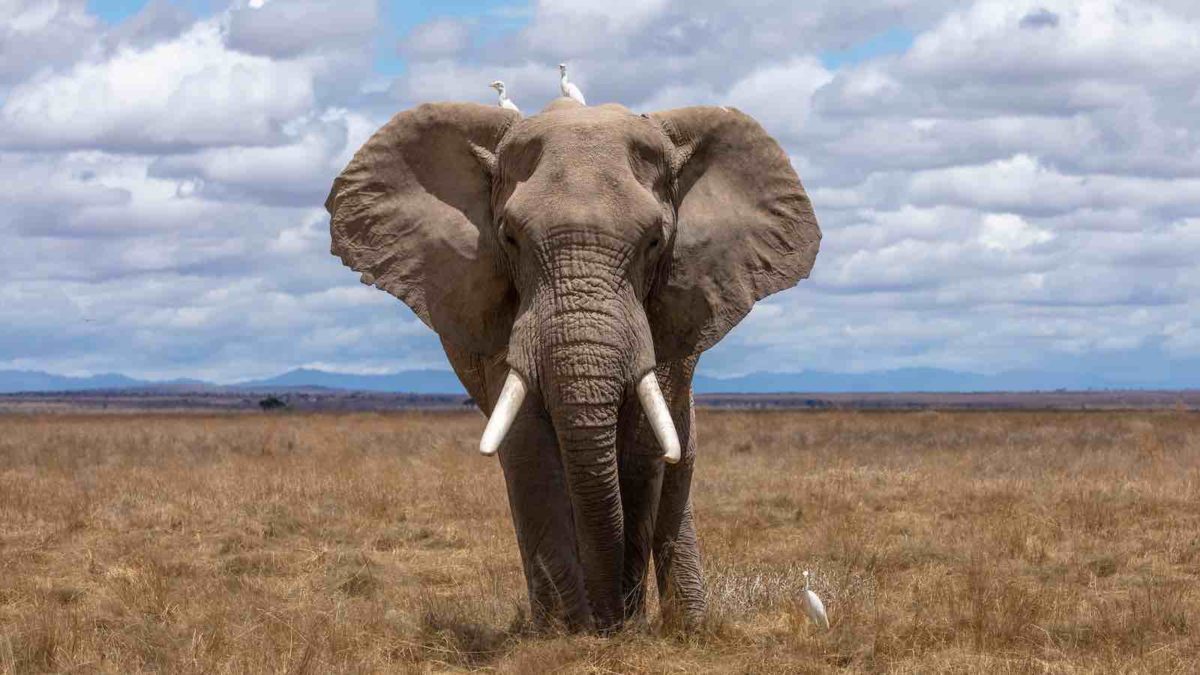
While some African elephant populations are growing primarily in southern Africa, other areas are seeing decreasing populations. A lot of work has been done trying to determine the elephant population in the world, but it’s incredibly difficult to get accurate numbers. Experts can only guess at the total number of African elephants remaining.
One commonly accepted estimate is that there are about 400,000 African Elephants remaining, and between 50,000 and 100,000 Asian elephants left living in the wild.
The African Elephant population has dropped by 62% in the last decade and is expected to drop another 30% by 2025 making them an endangered species.
In fact, the elephant is labelled as “critically endangered” with WWF (World Wildlife Fund) and other organisations trying various conservation efforts to help stop the killing of these threatened species.
The Elephant population as of 2026
As mentioned, a commonly accepted estimate says that there are about 450,000 to 500,000 elephants left in the world. However, some experts postulate that this number could be way off when it comes to how many elephants are left in the wild, saying that it’s more likely about 350,000 elephants.
Note: National population estimates are drawn from the most recent available surveys, which vary by country (2020–2025). Elephant census data is updated irregularly due to the logistical complexity of surveying wild populations.
Why do the numbers differ so much on how many elephants are there in the world? The primary reason is that the number of elephants in the world is constantly changing due to ivory poaching and habitat loss.
African elephants left in the world
There are an estimated 400,000 African elephants left in the world. The countries with the highest populations are Botswana, which has an estimated 100,000 to 130,000 elephants, and Zimbabwe, which has a population of around 100,000.
Several African countries have fewer than 1,000 elephants, including Eritrea and Equatorial Guinea. It’s estimated that the savanna elephant make up about 20 percent of the entire elephant population in Africa.
Table Overview of Elephant Population remaining in Africa by Country
If you’re wondering how many African elephants are left in the world; Below you’ll find an overview of the Elephant populations per country in Africa. The table is sorted from largest to smallest.
We’ve also added a note on what year the estimation was made (to the best of our sources knowledge).
| Country | Estimated Number of Elephants | Year of Estimation |
|---|---|---|
| Botswana | 131,909 | 2022 |
| Gabon | 95,000 | 2021 |
| Zimbabwe | 65,028 | 2022 |
| Tanzania | 60,000 | 2024 |
| Kenya | 36,280 | 2021 |
| South Africa | 31,324 | 2020 |
| Zambia | 21,758 | 2022 |
| Namibia | 21,090 | 2022 |
| Mozambique | 10,884 | 2022 |
| Uganda | 7,975 | 2022 |
| DR Congo | 7,000 | 2021 |
| Cameroon | 6,500 | 2021 |
| Angola | 5,983 | 2022 |
| Ethiopia | 1,017 | 2022 |
| Chad | 794 | 2022 |
| Nigeria | 400 | 2024 |
| Mali | 250 | 2016 |
| Malawi | 120 | 2020 |
Asian elephants left in the world
There are between 36,000 and 52,000 wild Asian elephants left in the world, with about 1/3 of those — 17,000 to 26,000 — living in India.
Other countries with the largest Asian elephant populations include Thailand (12,000–15,000), Indonesia (8,000), and Malaysia (4,500).
The Asian elephant is listed as endangered with extinction by the IUCN.
Table Overview of Elephant Population remaining in Asia by Country
If you’re wondering how many Asian elephants are left in the world; Below you’ll find an overview of the Elephant populations per country in Asia.
We’ve also added the states and union territories split for India, as populations vary.
The table is sorted from largest to smallest. We’ve also added a note on what year the estimation was made (to the best of our sources knowledge).
| Country | Estimated Number of Elephants | Year of Estimation |
|---|---|---|
| India | 22,446 | 2025 |
| – Karnataka State | 6,013 | 2025 |
| – Assam | 4,159 | 2025 |
| – Tamil Nadu | 3,136 | 2025 |
| – Kerala | 3,054 | 2025 |
| – Odisha | 1,976 | 2016 |
| – Uttarakhand | 1,839 | 2016 |
| – Arunachal Pradesh | 1,614 | 2016 |
| – West Bengal, Jharkhand, Nagaland, Chhattisgarh, Uttar pradesh and Tripura | 100 to 700 | 2025 |
| Sri lanka | 7,500 | 2021 |
| Myanmar | 2,000 | 2017 |
| Indonesia | 1,700 | 2020 |
| Thailand | 3,783 | 2017 |
| Malaysia | 1,500 | 2022 |
| Laos | 400 | 2022 |
| China | 300 | 2024 |
| Vietnam | 80 | 2020 |
Male elephants left in the world
The male elephant population is much smaller than the female population. In fact, it’s estimated that there are only about 20,000 African bull elephants left in the wild.
African bulls have been killed for their ivory throughout history, but current poaching rates have increased significantly from 2007 to 2013.
Asian bull elephants make up a larger portion of the male population. There are between 40,000 and 45,000 Indian elephants, which make up 60 percent of the Asian elephant population.
Are Elephants Going Extinct?
Both African and Asian elephants are officially classified as threatened species by the IUCN Red List. The African bush elephant is listed as Vulnerable, the African forest elephant was reclassified as Critically Endangered in 2021, and the Asian elephant remains Endangered. These are not abstract designations — they reflect a catastrophic population collapse that has unfolded over little more than a century.
In 1900, an estimated 10 million elephants roamed Africa and Asia. Today, the combined population sits at roughly 450,000–550,000. The primary drivers of that decline remain poaching for ivory and the steady erosion of habitat as human populations expand into elephant ranges. At current rates, some conservationists warn that African forest elephants — already the most endangered of the three species — could face extinction within 15 to 20 years without decisive intervention.
The 1989 CITES ivory trade ban was a turning point that slowed the decline significantly, but enforcement remains inconsistent across much of the range. Demand from Asia continues to fuel illegal markets — despite China’s domestic ivory ban in 2017, black-market trade persists and prices for raw ivory remain high.
There is, however, genuine reason for hope. Conservation corridors and anti-poaching units have shown measurable results in several countries. Botswana, Zimbabwe, and Kenya have each recorded population stabilisation or modest growth in recent years, demonstrating that targeted, well-funded conservation can reverse the trend. The fight to protect elephants is far from over — but it is far from lost.
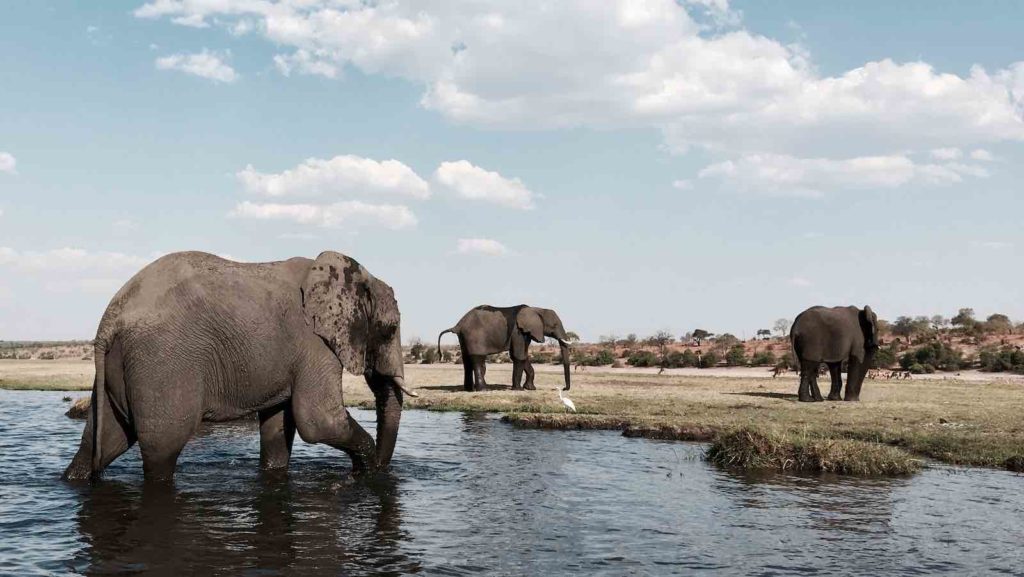
Table Overview of Elephants Remaining in the World, by Country and Region
The below table is simply a combined version of the African and Asian overview tables above.
| Country | Estimated Number of Elephants | Year of Estimation |
|---|---|---|
| Botswana | 131,909 | 2022 |
| Gabon | 95,000 | 2021 |
| Zimbabwe | 65,028 | 2022 |
| Tanzania | 60,000 | 2024 |
| Kenya | 36,280 | 2021 |
| South Africa | 31,324 | 2020 |
| India | 22,446 | 2025 |
| Zambia | 21,758 | 2022 |
| Namibia | 21,090 | 2022 |
| Mozambique | 10,884 | 2022 |
| Uganda | 7,975 | 2022 |
| Sri lanka | 7,500 | 2021 |
| DR Congo | 7,000 | 2021 |
| Cameroon | 6,500 | 2021 |
| Angola | 5,983 | 2022 |
| Thailand | 3,783 | 2017 |
| Myanmar | 2,000 | 2017 |
| Indonesia | 1,700 | 2020 |
| Malaysia | 1,500 | 2022 |
| Ethiopia | 1,017 | 2022 |
| Chad | 794 | 2022 |
| Laos | 400 | 2022 |
| Nigeria | 400 | 2024 |
| China | 300 | 2024 |
| Mali | 250 | 2016 |
| Malawi | 120 | 2020 |
| Vietnam | 80 | 2020 |
Great Elephant Census (GEC)
In 2016, the now late Paul Allen, co-founder of Microsoft set out to sponsor a project to prove that Africa’s Elephant population was decreasing.
The team did this in what was called the Great Elephant Census: Counting Africa’s Elephants.
See results from the Great Elephant Census. We’ve lifted out data from that study into the table above. Those populations are marked with “Year of Estimation: 2016” in the above table.
Biggest reasons the elephant population is decreasing
There are a lot of different reasons by the elephant population is decreasing. The primary reasons are poaching for the illegal trade of ivory, growing human populations in rural areas and therefore the loss of habitat for the elephants. But there are also other dangers to the elephant.
Elephant poaching
African elephants are being poached at an alarming rate for their tusks. The number of elephants killed in 2014 was the highest it’s been in 25 years, with about 33,000 Africans elephants being illegally slaughtered by poachers for ivory.
Thailand has become a hub for illegal trade in wildlife products, especially ivory.
One of the most significant milestones in the battle against illegal elephant poaching was the consumer boycott of ivory. This led directly to China’s decision to ban domestic sales of ivory by the end of 2017, which is key to reducing demand for African tusks.
Elephants are also poached for medicinal purposes or simply for their meat.
Human wildlife conflict
As populations grow, humans are encroaching on some elephant habitats. This often leads to conflict between the two species as elephants destroy crops or harm people.
Elephants are also killed because they accidentally damage infrastructure such as roads and railways. India has an estimated 100,000 incidents of human-elephant conflict per year, which results in about 400 deaths.
Illegal trade of ivory tusks
Ivory is illegally traded all around the world, but some of the worst offenders are countries in Africa. Ivory often travels through multiple middlemen before reaching its final destination.
Tradition in some areas is one of the main reasons why they kill elephants, even when it isn’t needed for food or medicine.
It’s estimated that the illegal trade of ivory tusks is worth about $10 billion per year. The price currently paid for raw ivory in Asia, according to an investigation by the Wildlife Justice Commission, is currently between $597/kg and $689/kg, in U.S. dollars.
In some cases elephants are even killed by poachers, who saw off their tusks while the animals are alive and then leave them to bleed to death.
Tusks that aren’t carved for sale or kept as trophies by hunters end up in two main markets – China and Thailand – where elephant tusks are used for ornamental carvings, chopsticks, hairpins and other trinkets.
Habitat loss
The elephant has been rapidly decreasing as a result of humans cutting down forests for development or farming purposes, generally leading to fragmentation of the once large home range that elephants need to live.
In addition to deforestation, man-made barriers have been blocking important migration routes and access to water sources for elephants.
Habitat fragmentation leads to issues with disease outbreaks, as elephants are forced to cross dangerous areas they wouldn’t normally cross in order to reach food and water. This also causes issues with their genetics, as small populations of the species don’t mix very often or at all.
FAQ on the Elephant populations
As of 2026, there are an estimated 415,000–500,000 African elephants and approximately 40,000–50,000 Asian elephants remaining in the wild. These numbers are derived from national surveys conducted between 2020 and 2025, and continue to be updated as new census data becomes available.
The percentage of Asian elephants that are left in the wild is about 60%.
It’s estimated that on average, about 90-110 elephants are killed each day by poachers.
Botswana is said to have somewhere between 130,000-150,000 elephants left, while South Africa comes in second with around 100,000.
As poaching continues to be a problem, the African elephant could go extinct in as few as 10 years if we don’t work fast enough.
About half of all elephants that were killed in Africa between 2010 and 2012 were killed by poachers.
In the early 1900s, there were an estimated 10 million elephants in Africa and Asia.
Somewhere between 3% and 4% of all African elephant were killed from 2010 to 2012, which is about 30,000 elephants.
Bottom Line
There are approximately 415,000–500,000 African elephants and 40,000–50,000 Asian elephants left in the world — a fraction of the 10 million that roamed the Earth a century ago.
The primary threats — ivory poaching, habitat loss, and human-elephant conflict — continue to put pressure on elephant populations globally. African forest elephants are now Critically Endangered, while Asian elephants remain listed as Endangered.
The good news: conservation efforts are working in some regions. Botswana, Kenya, and parts of southern Africa have seen stabilisation or growth. The fight to save elephants is far from over, but it is far from lost.

One reply on “How Many Elephants Are Left in the World?”
[…] 22 more rows•Feb 6, 2022 […]