
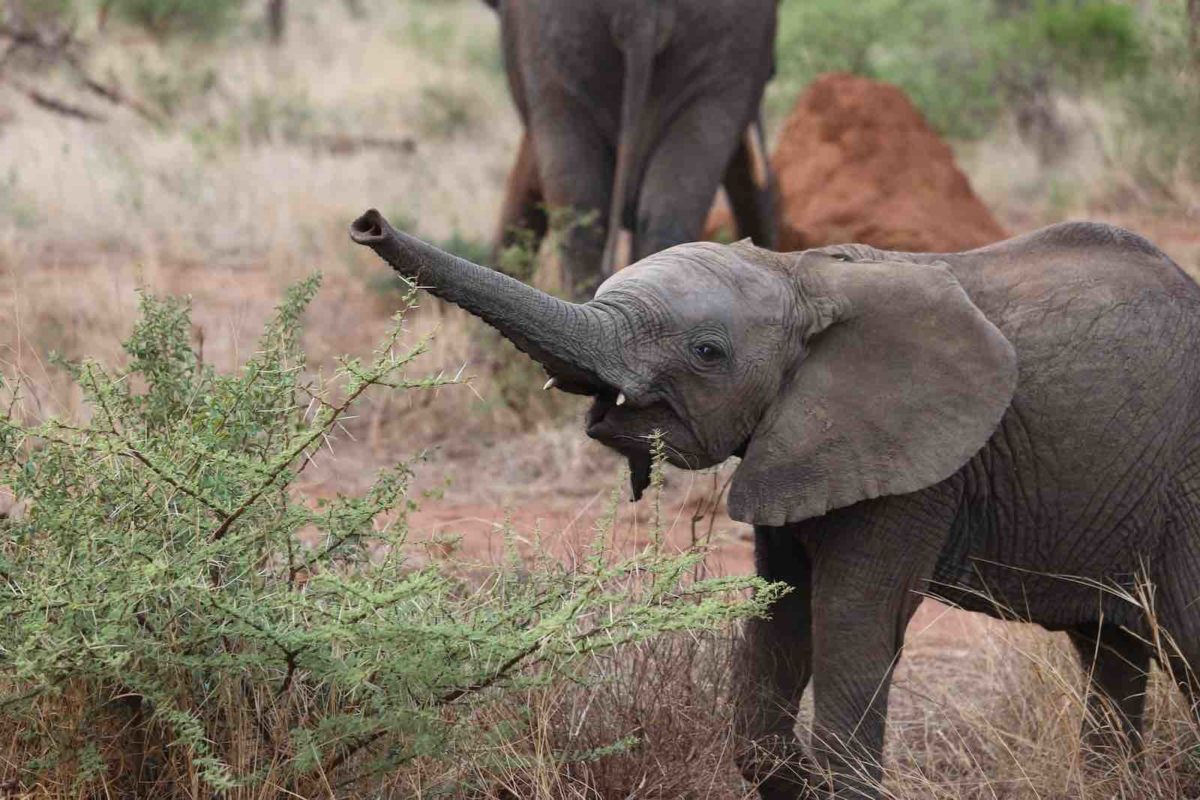
It’s a question that has puzzled scientists, zookeepers and animal lovers alike: Why is it that humans are so fascinated by the calves of elephants?
The answer may lie in our own biology. Elephants are mammals like us. And we’re drawn to live things, especially animals with babies.
It’s true for other species too; just think about how many people stop their cars on the roads when they see deer fawns cross the street or baby seals playing on a beach.
Baby elephants are playful and cute, and they make a lot of noise. They also tend to stay close to their mothers.
One mind-blowing fact about baby elephants is that almost all of them are born at night, most likely because it’s harder for predators to find them.
Fast Facts: Baby Elephants
- Average gestation period: 18-22 months
- Birth weight: about 250 pounds
- Height: about 3 feet tall
- Almost all calves (99%) are born at night
- Calves are born with curly black or red hair on their foreheads
- Calves drink about 3 gallons (about 11 liters) of milk a day
An introduction to baby elephants
The baby elephant weigh an average of 115 pounds (52 kg) at birth, but can be as heavy as 160 pounds (72 kg). Its gestation period is 22 months long with females usually giving birth to one calf at a time after a pregnancy lasting between 21 or 22 months.
The remarkable anatomy of baby elephants allows them to stand and walk shortly after birth, which is crucial for their survival in the wild.
Baby elephants are cared for by their mothers and other females in the herd for up to five years. They suckle on their mother’s milk for up to two years, and will continue to drink her milk until they are about eight or nine months old.
In the wild, baby elephants learn to fend for themselves at about 18 months old. At this age, the elephant baby will start to eat vegetation and learn to follow their herd. At this age, they are also able to travel long distances with the herd.
In captivity, baby elephants are often weaned from their mother’s milk at an earlier age, usually six to eight months old.
This is because they are kept in smaller enclosures than those found in the wild and need to be taught how to eat solid food.
The life of a baby elephant is filled with plenty of new experiences. They are constantly learning from their mother and others of the herd.
Baby elephants are also very playful and love to play with each other. They will often trump (make a noise that sounds like a trumpet) and flap their ears when they are happy or excited.
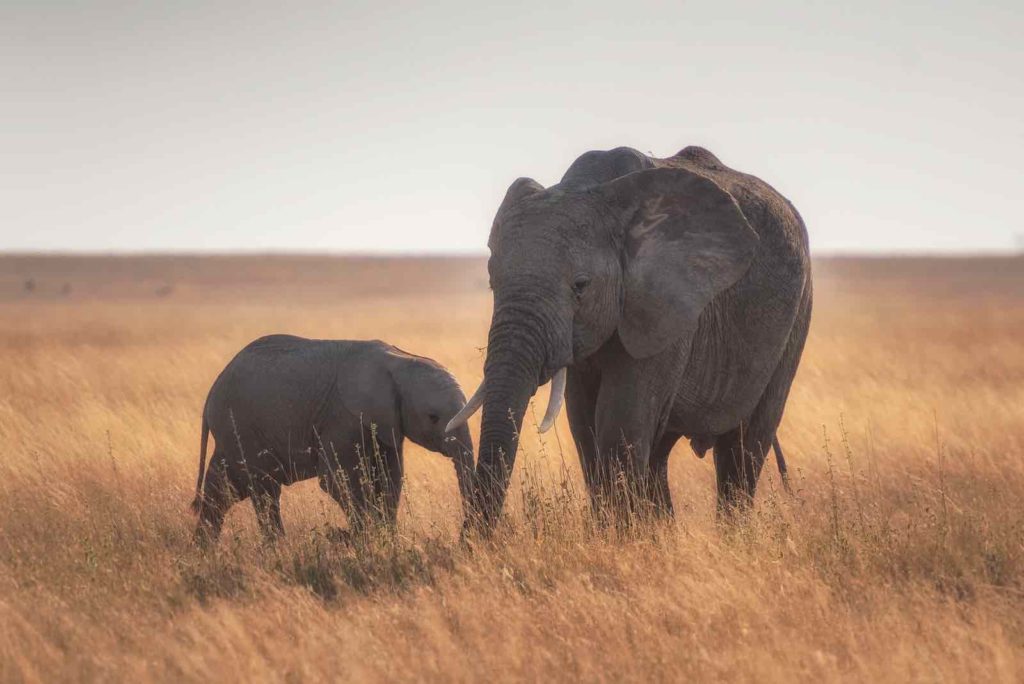
What are baby elephants like at birth and how do they grow up?
At birth, baby elephants have thin, curly black hair on their foreheads. Most babies are born during the night, when it is harder for predators to find them.
Calves drink around 3 gallons (11 liters) of milk a day and will continue to drink their mother’s milk until they are about eight or nine months old.
Baby elephants are nearly blind when they are born and rely on their trunk, mothers and other females in the herd to guide them. They will recognise their mother’s touch, sound and smell.
They learn to suckle from their mothers within the first hour of being born. By the time they are about seven or eight months old, they will start to eat solid food, mainly plants just like the grown ups of the herd.
A baby elephant will lose their tusks within the first few months of being born. They will start to grow their tusks again when they are about two years old.
| Age | Weight | Key Milestone |
|---|---|---|
| At birth | ~220 lbs (100 kg) African / ~110 lbs (50 kg) Asian | Stands within 1 hour; relies on mother completely |
| 1–3 months | Growing fast | Begins nursing confidently; follows herd |
| 6–8 months | Significant weight gain | Starts experimenting with solid food (grass, leaves) |
| 1 year | ~440 lbs (200 kg) | Weaned from milk; still under close maternal supervision |
| 2 years | ~770 lbs (350 kg) | Baby tusks begin growing; increasing independence |
| 4–5 years | ~1,300 lbs (600 kg) | Full weaning; begins learning social behaviours |
| 10 years | ~2,200 lbs (1,000 kg) | Approaching sub-adult stage; females stay with herd |
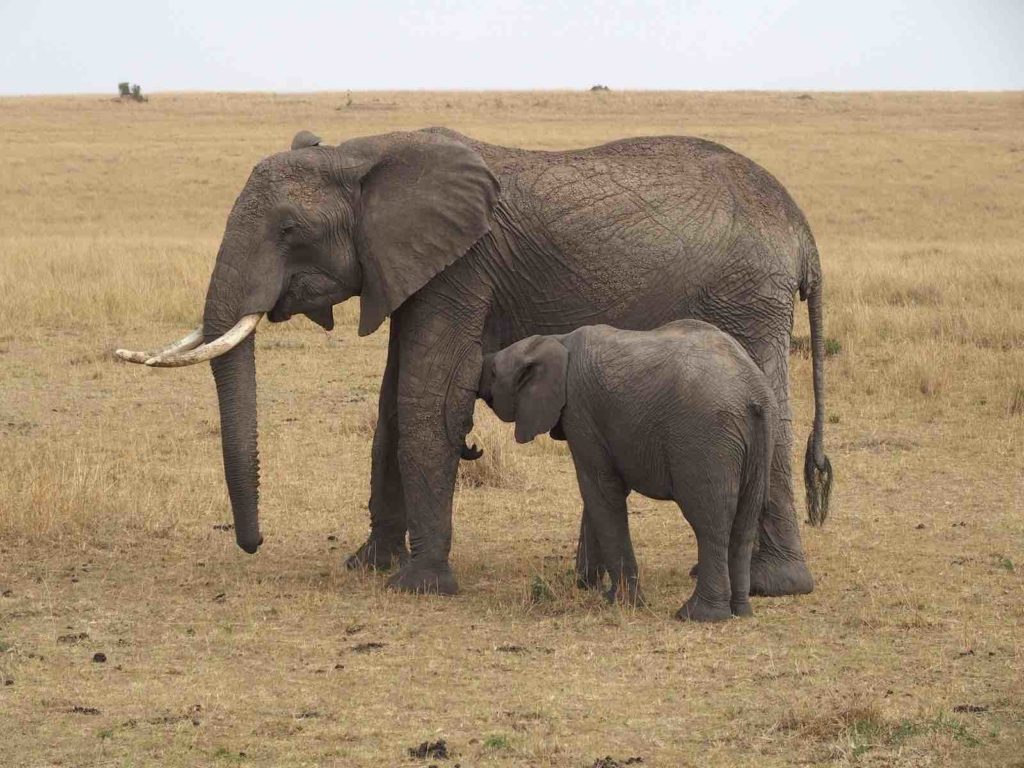
First few weeks of a baby calf’ life
In the first few weeks of a baby calf’s life, it will stay close to its mother. The calf will learn to suckle from its mother and drink her milk. It will also learn to follow the herd and do “elephants walk” with them.
Do baby elephants ever have twins or other multiple births?
Almost all calves are born one at a time, but there have been cases of twins being born. It is not fully understood why this happens, but it is thought that it might be due to the mother’s diet or stress levels.
Some believe that multiple births might occur because the mother’s body is trying to increase the chances of survival for at least one of her calves.
Differences between baby elephants of the African elephant and the Asian elephant
The calves of African elephants and Asian elephants differ in a few ways. African elephants have thinner and curlier black hair on their foreheads than Asian elephants.
Calves of African elephants are also usually born heavier than Asian elephant calves. Additionally, baby African elephants start drinking their mother’s milk at a younger age (about one hour after being born) than baby Asian elephants (who start drinking their mother’s milk at around three days old).
African and Asian elephants will treat their babies quite differently. African elephant mothers are very protective of their calves and will keep them close by.
Asian elephant mothers, on the other hand, allow their calves to roam more and play with other calves in the herd.
Elephant calves love to play
If you’ve ever seen elephant babies you know that they are real jokers! At first, they don’t really know what to do with their trunks which can be extremely joyful to watch.
They’ll swing them around, suck their trunk (like a pacifier!), and sometimes even accidentally step on them.
They’ll also chase each other, trumpet and flap their ears in delight. It’s a really cute sight to behold!
Just like humans, young elephants can often be seen mimicking female elephants or other elders of the herd. In captivity, baby elephants have been seen playing with toys given to them, just like adult elephants.
How Long Do Baby Elephants Stay with Their Mother?
Baby elephants are among the most dependent young animals on Earth. From their first breath, they rely entirely on their mother and the wider herd — and that dependency doesn’t fade quickly. The bond between a calf and its mother is one of the most enduring in the animal kingdom.
Calves nurse for up to 4–6 years, though they begin experimenting with solid food at around 6 months old. For the first 2–3 years of life, calves stay under their mother’s close physical protection, rarely straying far. Female calves (cows) typically remain with the natal herd for life — elephant herds are matriarchal family units, and daughters stay alongside mothers, grandmothers and aunts for decades.
Male calves follow a different path. Between the ages of 10 and 14, young bulls gradually drift away from the family group, eventually joining bachelor groups of other young males or living more solitary lives as they mature.
One of the most remarkable aspects of elephant calf-rearing is allomothering — the practice of other females in the herd helping to raise and protect calves. It’s not just the mother’s job. Aunts, sisters and older female relatives all play a role, which means calves absorb an enormous amount of learned social behaviour during their formative years. This extended period of dependence is directly linked to elephants’ exceptional intelligence and complex social lives.
FAQ on baby elephants
A baby elephant is called a calf.
Baby elephants drink their mother’s milk for the first eight to nine months of their lives.
African elephant calves weigh around 220 pounds (100 kgs) at birth, while Asian elephant calves weigh around 110 pounds (50 kgs).
An elephant calf is about three or four feet tall at birth.
Yes-ish, baby elephants are born nearly blind and rely on their mothers and their trunk. They will recognise their mother’s scent, touch and sound.
An elephant’s gestation period is the longest of any land mammal — approximately 22 months (nearly 2 years). African elephants tend toward the longer end of this range. During this time, the calf grows to around 220 pounds before birth.
Female calves typically never fully leave their mothers — they remain in the family herd for life. Male calves begin to gradually separate from the herd between ages 10 and 14, eventually joining all-male bachelor groups or becoming solitary bulls.
Bottom Line
Baby elephants — called calves — are born after the longest gestation period of any land mammal (22 months) and arrive weighing up to 220 pounds, ready to stand within an hour.
They are completely dependent on their mothers and the wider herd for years, nursing for up to 4–6 years and learning everything from foraging to social behaviours through close observation. Female calves stay with the herd for life; males branch out at around 10–14 years old to form bachelor groups.
That’s what makes baby elephants so endlessly fascinating — they’re not just cute. They’re complex social creatures at the very start of a long, intelligent life.

4 replies on “Baby Elephant Facts: Birth, Growth & Life in the Herd”
[…] Discuss the importance of weight gain during the early stages of a baby elephant’s life. […]
Do you have any photos of calves with the curly black hair?
All babies are adorable but elephant calves are hands down the cutest. I love their little smiles.😂
I have been crazy about Elephants all of my life and have never stopped. If you want to help in some way contact HERD or the Sheldrick Wildlife Trust. Both are located in Africa. Sheldrick is HUGE and HERD is a small South African Rehabilitation Unit for Orphaned Ellies of all ages. Both are Worthy and Vetted.