
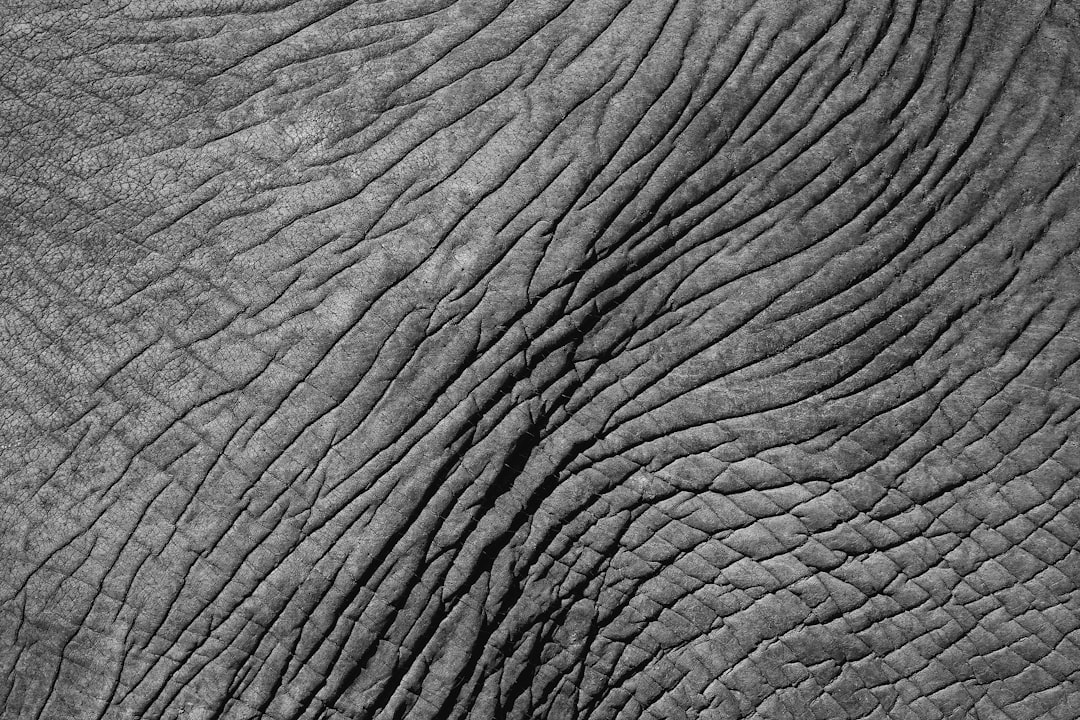
Touch an elephant and you’ll immediately sense the contradiction: skin tough enough to resist acacia thorns yet so sensitive it can feel a single fly land on its back. Elephant skin is one of the most remarkable biological structures in the animal kingdom — a multi-functional organ that simultaneously provides armour, thermoregulation, parasite defence, and sensory acuity. For an animal that can weigh up to seven tonnes and live in some of the harshest environments on Earth, that skin has to work extraordinarily hard. This guide explores everything science knows about elephant skin: how thick it is, why it is so deeply wrinkled, what colour it really is, how elephants protect it, and why — despite appearances — it may be the most sensitive skin of any land mammal. For a broader look at elephant biology, see our elephant anatomy guide.
The short answer: Elephant skin ranges from 0.75 to 1.5 inches (2–4 cm) thick on the back and neck, making it among the thickest skin of any land animal — yet it is extraordinarily sensitive, lacks functional sweat glands, contains no oil glands, and relies on deep wrinkles to trap moisture for cooling. Those wrinkles are present from birth and can increase effective surface area by up to ten times compared with smooth skin.
How Thick Is Elephant Skin?
Elephant skin does not have a single uniform thickness — it varies considerably from one part of the body to another, and differs between species too. In African elephants (Loxodonta africana and Loxodonta cyclotis), the skin on the back, shoulders, and top of the head reaches its maximum thickness: between 0.75 and 1.5 inches (roughly 2–4 cm). The flanks and sides are somewhat thinner, while the most delicate areas — behind the ears, around the mouth and lips, and in the fold behind the knees — can be as thin as 0.4 inches (about 1 cm) or less. This variation is not random. The thicker regions correspond to areas most likely to be grazed by thorns, rubbed against rough tree bark, or exposed to the midday sun; the thinner regions need flexibility for movement or, in the case of the ears, efficient heat dissipation.
Asian elephants (Elephas maximus) generally have slightly thinner and smoother skin than their African cousins — a difference most visible in the face and trunk. Both species are classified in the order Proboscidea and share the same fundamental dermal architecture, but millions of years of divergent evolution in different climates and habitats have introduced subtle differences. Asian elephants also have patches of depigmented (pink-mottled) skin on the ears, trunk, and around the mouth that become more pronounced with age and sun exposure — a trait almost never seen in African elephants.
To put elephant skin thickness in context: human skin averages just 0.04–0.12 inches (1–3 mm) depending on body site, meaning elephant skin is roughly twenty to forty times thicker. A rhinoceros has skin of comparable thickness — rhino dermis can reach 1.5–2 inches — but it is far smoother and more rigid, lacking the elaborate wrinkle network that gives elephant skin its unique functional properties. Hippopotamus skin is typically 1–2 inches thick and, unlike elephants, hippos secrete a reddish fluid from pores (sometimes called “blood sweat”) that acts as both sunscreen and antimicrobial agent. Elephants have no such secretion.
Despite the formidable thickness, elephant skin is not numb. Exactly the opposite is true. Mechanoreceptors — pressure-sensing nerve endings — are densely distributed throughout the dermis, including in the thick regions. Elephants can detect vibrations conducted through the ground via the sensitive pads of their feet, a capability researchers believe allows them to pick up infrasound communication from other elephants kilometres away. The skin of the trunk tip is so sensitive it can discriminate between objects differing in diameter by less than a millimetre. The apparent paradox of armour-thick yet butterfly-sensitive skin is resolved by the architecture: the outer epidermis provides mechanical resistance, while the inner dermis is richly innervated.
Why Is Elephant Skin Wrinkled?
The most visually striking feature of elephant skin is its extraordinary network of deep, interlocking wrinkles and fissures. These are not a sign of age — an elephant calf is born with wrinkled skin, and the wrinkling deepens and elaborates through life. The wrinkles are a primary evolutionary adaptation, and understanding them requires thinking about the elephant’s fundamental thermal challenge.
Elephants are the largest living land animals. Large body size brings an unavoidable thermodynamic problem: as an animal grows, its volume (and therefore heat-generating capacity) scales with the cube of its linear dimensions, while its surface area (and therefore heat-dissipating capacity) scales only with the square. A seven-tonne elephant generates an enormous amount of metabolic heat but has a relatively small surface area through which to shed it. Unlike most mammals, elephants have very few functional sweat glands — a critical limitation. In the absence of sweating, the skin must find other ways to manage heat.
Wrinkles are the primary solution. Each wrinkle channel dramatically increases the total skin surface area available for evaporative cooling. Estimates from biophysical modelling suggest that the wrinkle network multiplies effective surface area by as much as ten times compared with a hypothetically smooth elephant skin. Crucially, the wrinkles act as capillary channels: when an elephant bathes, rolls in mud, or sprays itself with water (using the trunk), the moisture wicks deep into the crevices and is held there by surface tension. A 2012 study published in the Journal of the Royal Society Interface by mathematicians Michel Milinkovitch and colleagues modelled the wrinkle network and demonstrated that it retains five to ten times more water or mud per unit of projected surface area compared with smooth skin, acting as a portable, continuously replenishing coolant reservoir.
The wrinkles form through a process called “buckling morphogenesis.” As the elephant grows, the relatively stiff outer epidermis expands more slowly than the inner dermis and subcutaneous tissues beneath it. This mismatch creates compressive forces that cause the skin to buckle into folds — mathematically similar to the wrinkling of a drying raisin or a crumpled sheet of paper. The pattern is not random; it follows stress lines in the dermis that are laid down during embryonic development. Interestingly, research has shown that elephants raised in captivity with access to regular water sources develop slightly less pronounced wrinkles than wild counterparts living in arid environments, consistent with the hypothesis that the wrinkles are a dryness-management adaptation under strong selective pressure.
What Color Is Elephant Skin?
Ask most people what colour an elephant is and they will say grey. That is technically correct for the base colour of the dermis, but in practice a wild elephant almost never looks uniformly grey. The true appearance of an elephant’s skin at any given moment is a product of its base pigmentation, the soil and water it has most recently bathed in, and its age and health.
The natural skin of both African and Asian elephants is a dark brownish-grey, produced by melanin distributed through the epidermis. However, elephants lack sebaceous (oil-producing) glands entirely — unlike dogs, humans, or most other mammals, they cannot naturally moisturise or condition their skin from within. This means the outermost layers of the epidermis are constantly drying out and keratinising, creating a slightly ashy or powdery surface texture that appears lighter than the underlying skin colour. Newly wet skin looks almost black; dry skin between dust baths can look pale brownish-grey.
Soil coloration radically changes an elephant’s apparent colour. Elephants in the red laterite soils of parts of Kenya, Uganda, and southern Africa appear distinctly reddish-orange — a colouration that has led some observers to misidentify them as a different type. The elephants of Amboseli in Kenya, living among the pale volcanic soils at the foot of Kilimanjaro, often appear beige or cream-coloured after a dust bath. This “soil dyeing” is not merely incidental: the dust and soil coat the skin, providing UV protection and insect-deterrent effects, and the colour of the coating reflects the local geology of an elephant’s home range.
Truly white or pale elephants — revered as sacred in Buddhist traditions and historically kept as royal animals in Thailand, Myanmar, and Laos — are not albinos in the strict genetic sense. True albinism (complete absence of melanin) is vanishingly rare in elephants. Most “white elephants” instead have a form of hypopigmentation or localised depigmentation, appearing pinkish-white with blue-grey eyes and pink-mottled skin, particularly on the ears and face. They are highly sensitive to sunlight and require diligent human care to prevent severe sunburn. As of current records, fewer than ten living white elephants are documented in Thailand.
Do Elephants Get Sunburned?
Yes — and the risk is more significant than most people expect. Despite the thickness of their skin, elephants are vulnerable to solar radiation, particularly on areas where the skin is thinner (behind the ears, the belly, and young calves whose skin has not yet fully thickened) or where natural pigmentation is reduced. The lack of both sweat glands and sebaceous glands means there is no natural layer of oils or moisture on the skin surface to buffer UV exposure.
Mud isn’t just a spa treatment — for an elephant, a thorough mud bath is the equivalent of applying SPF sunscreen, insect repellent, and a cooling vest simultaneously.
Sunburn in elephants presents as reddening, flaking, and thickening of the skin, particularly across the back and top of the head. In severe cases — most commonly seen in elephants kept in poorly managed captivity without shade or bathing access — the skin can develop painful fissures and open sores. Wild elephants in arid environments such as Etosha National Park or the Namib desert show evidence of chronic sun damage in their skin histology, with thickened stratum corneum layers and increased melanin density in exposed areas.
The behavioural countermeasures elephants deploy are sophisticated and deeply embedded in their daily routine. Mud bathing is the most important. When an elephant wallows in a mud pool, the mud coats every fold and fissure of the skin, drying to a thick mineral crust that physically blocks solar radiation. Studies measuring reflectance of mud-coated versus clean elephant skin show that dried mud reduces UV transmission to the skin surface by 70–90%, depending on mud thickness and mineral composition. The protection lasts until the mud is mechanically abraded or the elephant re-wets.
Dust bathing achieves a similar but less intense effect. Elephants throw fine dry soil over their backs using the trunk, creating a particulate UV-scattering layer. Fine volcanic or calcareous dusts, which scatter UV most efficiently, appear to be preferentially selected by elephants in areas where both soil types are available. Calves are particularly assiduous about dust bathing — they have thinner skin, more residual neonatal hair, and are less experienced at seeking shade. Adult females have been observed actively dusting calves who have not yet bathed, a behavior interpreted as maternal skin protection.
How Elephants Protect Their Skin: The Daily Routine
Skin care is not incidental to elephant life — it occupies a significant portion of each day and represents one of the most important welfare indicators for both wild and captive animals. Water is at the centre of this routine: elephants that have reliable access to water sources show markedly better skin condition than those in drought-affected areas or poorly resourced captive facilities.
A typical day for a wild elephant in a well-watered habitat might include one or more water baths (the elephant fully immerses or partially submerges and sprays water over its back and flanks), a prolonged mud wallow, and one or more dust baths. The sequence matters: water bathing first opens the skin folds and hydrates the dermis; mud bathing then fills the wrinkles with protective mineral-laden mud; dust bathing later, when the mud is dry, adds a final UV-scattering layer and helps dislodge any parasites that have attached in the mud phase.
Parasite management is a serious and persistent skin health issue. Despite the thickness of elephant hide, several tick species — particularly Amblyomma and Rhipicephalus genera — are able to penetrate the thinner folds of wrinkled skin. Tick infestation can cause anemia, carry disease, and lead to secondary bacterial infections in the skin fissures. Elephants’ behavioural countermeasures include rubbing against trees and rocks to dislodge ticks, wading through deep water, and the all-important mud bath. They also benefit from mutualistic relationships with tick-eating birds, particularly red-billed oxpeckers (Buphagus erythrorynchus) in Africa, which comb through skin folds removing ticks and other ectoparasites. The wiry, sparse bristle hairs embedded in elephant skin — more numerous in young animals and in Asian elephants than adult African elephants — help detect insects before they bite, giving the animal time to use its trunk or tail as a fly-swatter.
Much like their large ears — which serve as radiators, fanning blood through the highly vascularised pinna to dissipate heat, as explained in our guide to elephant ears — elephant skin plays a vital role in thermoregulation. The two systems work in concert: during the hottest parts of the day, an elephant will seek shade, fan its ears, and if water is available, spray itself or wallow, maximising evaporative cooling across the maximum possible skin surface area.
Elephant Skin vs. Other Large Animals
How does elephant skin compare to the skin of other megafauna? The comparison reveals both the shared challenges of large body size and the very different evolutionary solutions each lineage has developed.
| Animal | Average Skin Thickness | Sweat Glands | Primary UV Protection | Key Skin Adaptation |
|---|---|---|---|---|
| African Elephant | 0.75–1.5 in (2–4 cm) | Very few; largely non-functional | Mud and dust bathing | Deep wrinkle network traps moisture; no oil glands |
| White Rhinoceros | 0.75–2 in (2–5 cm) | Absent | Mud wallowing; thick keratin layer | Smooth, rigid hide; folded only at joints |
| Hippopotamus | 1–2 in (2.5–5 cm) | Absent; secretes “blood sweat” (hypusudoric acid) | Reddish secretion acts as natural SPF | Unique antimicrobial + sunscreen secretion from skin pores |
| African Buffalo | 0.2–0.4 in (5–10 mm) | Present but limited | Mud wallowing; thick hair | Mud as parasite deterrent; moderate UV protection |
| Human | 0.04–0.12 in (1–3 mm) | 2–4 million; highly functional | Melanin pigmentation; behaviour (shade-seeking) | Eccrine sweating for evaporative cooling; sebaceous glands for moisturisation |
The table reveals a striking pattern: the largest land animals — elephant and rhinoceros — have entirely abandoned sweat glands as a thermoregulatory strategy, relying instead on behavioural moisture management. The hippopotamus has evolved a unique chemical secretion to compensate. Only humans, among large mammals, have invested heavily in sweat-based cooling — a strategy that works exceptionally well but depends on ready access to drinking water to replace what is lost through perspiration.
Is Elephant Skin Sensitive Despite Its Thickness?
This may be the most counterintuitive aspect of elephant skin, and it bears emphasis. Thickness and sensitivity are not opposites in the elephant dermis — they coexist in a structure that is both mechanically robust and neurologically exquisite.
The elephant trunk tip alone is thought to have more mechanoreceptors per square centimetre than human fingertips — the most sensitive human skin surface. Elephants can use the trunk tip to pick up a single grain of rice, sort objects by weight and texture, and identify shapes through touch alone. The sensitivity of skin elsewhere on the body is less extreme but still remarkable: elephants react to the touch of a small insect on the back, flicking their skin, twitching muscles, or deploying the trunk or tail to swat it away. Studies in which elephants were fitted with behavioural monitoring equipment have recorded defensive skin movements in response to simulated fly-landing weights of less than one gram.
The sensory capabilities extend below the skin. Seismic communication — the transmission of infrasound through the ground — is detected partly through specialised mechanoreceptors in the feet and partly through the skin of the foreleg. When a distant elephant produces a low-frequency rumble, the vibrations travel through the substrate and are detected by the herd. Elephants have been observed stopping, leaning forward, and pressing their front feet firmly onto the ground to better detect these vibrations — a posture that maximises skin-substrate contact and therefore signal fidelity. This capacity for seismic sensing is unique among large mammals and depends on the particular sensory architecture of elephant skin and underlying tissue.
Is elephant skin waterproof? Not truly. Unlike crocodile skin or a duck’s feathers, elephant skin is water-permeable: prolonged immersion causes the dermis to swell and soften. The lack of sebaceous glands means there is no natural oil barrier to repel water. This permeability is not a design flaw — it allows the skin to absorb moisture during bathing, contributing to hydration of the dermis. But it also means that when an elephant cannot access water for extended periods, the skin dries out, the wrinkle fissures widen, and painful cracking can occur. Cracked, fissured skin is both a welfare concern in its own right and a portal for bacterial and fungal infections. In drought years, field veterinarians working with elephant populations in southern Africa frequently document cracking and secondary skin infections as sequelae of inadequate water access.
The Bottom Line
Elephant skin is far more than a simple outer covering. It is a thermodynamic system, a sensory organ, a parasite-management platform, and a structural marvel — all simultaneously. The wrinkles that give elephants their characteristically ancient, leathery appearance are in fact a sophisticated moisture-retention network, present from birth and fine-tuned by evolution over 55 million years of proboscidean history. The apparent paradox of thick-yet-sensitive skin reflects the same evolutionary principle: thickness provides mechanical protection and moisture retention; sensitivity provides the neural feedback an intelligent, social animal needs to navigate its environment.
For elephant welfare — whether in the wild or in zoological settings — skin condition is one of the most visible and reliable indicators of overall health. An elephant with access to adequate water, mud, and shade will maintain smooth, moist, well-folded skin. An elephant deprived of these resources will show it in cracked, dry, fissured skin long before more acute signs of illness emerge. Understanding elephant skin biology is therefore not merely an academic exercise: it is the foundation of informed conservation practice, ethical elephant management, and a genuine appreciation of one of the most extraordinary animals on Earth.