
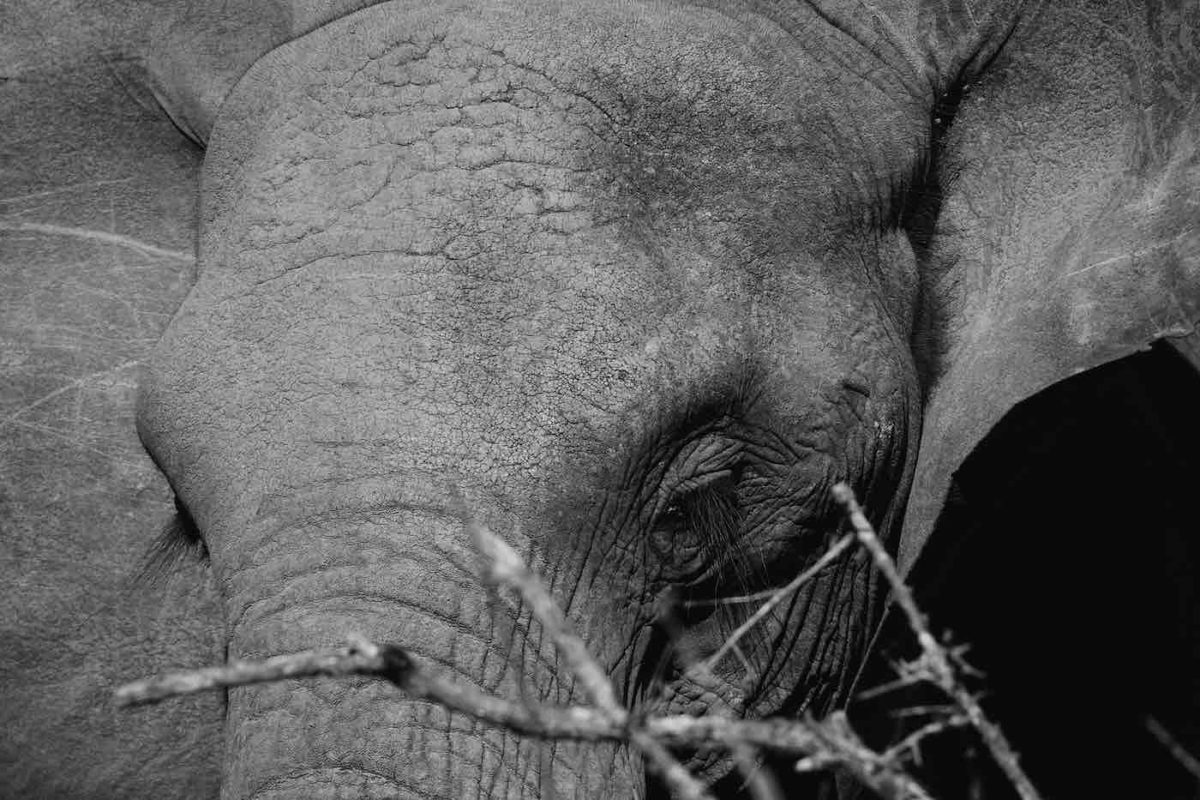
Few sights in the animal kingdom are as immediately striking as an African elephant spreading its vast ears in the midday heat. Those enormous panels of skin — as tall as a grown adult and wider than a dinner table — are in constant, subtle motion, and that motion is doing a great deal of work.
Ear flapping is one of the most important and multifunctional behaviors in an elephant’s repertoire. It regulates body temperature, communicates emotional state, and signals threat levels to other elephants and potential rivals alike. Though you might not know it by looking at them, elephants are smart and expressive animals with a rich set of mannerisms that science is only beginning to fully understand.
So why do elephants flap their ears? The short answer is: thermoregulation, communication, and display — often all at once. Let’s look at each in detail.
The Primary Reason: Thermoregulation
The most important function of ear flapping is temperature regulation. Elephants face a fundamental biological problem: they are enormous. An adult African elephant can weigh up to 6,000 kg (13,000 lb), and all that mass generates a huge amount of metabolic heat. Unlike humans, they cannot sweat efficiently through their skin to shed that heat, so they have evolved other mechanisms — and their ears are the most dramatic of them.
The ears function as natural radiators. Running through the thin, heavily vascularized skin of each ear is a dense network of blood vessels, including the temporal artery, which carries warm blood from the body’s core. When an elephant fans its ears — whether gently or vigorously — it creates airflow across this blood vessel network. The moving air cools the blood before it circulates back into the body.
Studies have measured a temperature difference of between 3°C and 5°C (approximately 5–9°F) between the blood arriving at the ear and the cooled blood returning to the body. In a large animal generating continuous heat, that differential, multiplied across thousands of blood cycles per day, represents a significant contribution to thermoregulation.
Observations in the wild confirm this: ear-flapping rates increase sharply in hotter conditions and during the warmest parts of the day. Elephants in captivity with access to shade and water flap their ears noticeably less than their wild counterparts in open savanna environments.

The Anatomy of an Elephant’s Ear
To appreciate how ear-flapping works as a cooling mechanism, it helps to understand the structure of the ear itself. An adult African elephant’s ear measures roughly 1.5 meters tall by 1.2 meters wide — approximately the size of a queen-sized bed sheet — and weighs up to 20 kg (44 lb) per ear. The shape is famously said to resemble the outline of the African continent, a useful mnemonic for distinguishing species.
The outer surface of the ear is covered in thin, leathery skin — as little as a few millimeters thick at the edges — that allows heat to dissipate rapidly. Toward the base of the ear, where it connects to the skull, the skin thickens and the tissue becomes denser. This structural gradient is important: the thinner outer margins are the primary heat-exchange zones, while the thicker base provides mechanical support for the flapping motion.
Beneath the skin runs an elaborate network of arteries and veins, most notably the auricular artery branches and their associated venous return vessels. In the surface of a healthy adult ear, these blood vessels are often visible as ridges and channels, particularly in the cooler parts of the day when the ear is less engorged with warm blood. This vascular anatomy connects directly to the broader skull structure — for more detail, see our guide to how many bones an elephant has, where ear and skull anatomy intersect.
The ears are moved by a group of muscles at the base — the auriculares muscles — which allow for a wide range of motion from gentle fanning to the dramatic full-spread display seen during threat responses. Unlike human ears, which have largely vestigial musculature, elephant ear muscles are robust and heavily used throughout the animal’s daily life.
African vs. Asian Elephants: Why the Difference?
One of the most visually distinctive differences between the two main elephant species is ear size — and the reason is directly linked to thermoregulation and habitat. For a broader exploration of this topic, see our guide on why elephants only live wild in Africa and Asia.
African savanna elephants (Loxodonta africana) inhabit open grasslands and bush where temperatures regularly exceed 35°C (95°F) and shade is scarce. Their ears — those enormous, Africa-shaped panels — are approximately three times the size of Asian elephant ears relative to body size. The thermal pressure in open savanna habitat is intense, and large ears are a direct evolutionary response.
African forest elephants (Loxodonta cyclotis), which live in the dense rainforests of Central and West Africa, have somewhat smaller ears than their savanna relatives, reflecting the cooler, shadier conditions of their habitat.
Asian elephants (Elephas maximus) evolved in the forests of South and Southeast Asia, where dense canopy cover moderates temperatures considerably and shade is readily available. Their ears — roughly India-shaped, smaller and with a distinctive folded upper edge — are far more modest in size. They still function as radiators, but the cooling demands in forested habitat are less extreme, and the smaller ear surface area reflects this.
This relationship between habitat, temperature, and ear size is a textbook example of Allen’s Rule, the biological principle that warm-blooded animals in hotter climates tend to have larger appendages to aid heat dissipation. In elephants, the rule plays out at dramatic scale.
Comparison: African Elephant Ears vs. Asian Elephant Ears
| Feature | African Savanna Elephant | Asian Elephant |
|---|---|---|
| Ear size | ~1.5m × 1.2m (very large) | ~0.6m × 0.5m (much smaller) |
| Ear shape | Resembles outline of Africa | Resembles outline of India; folded upper edge |
| Cooling need | High — open savanna, intense heat | Lower — forested habitat, canopy shade |
| Habitat | Open grasslands, bushveld, semi-arid regions | Tropical and subtropical forests, grasslands |
| Flapping frequency | High, especially during midday heat | Lower; compensates more with shade-seeking |
Ear Flapping as Communication
Beyond thermoregulation, ear position and movement are one of the most expressive elements of elephant body language. Learning to read an elephant’s ears is essential for anyone who spends time around them — whether as a researcher, wildlife guide, or safari visitor. This connects closely to what’s discussed in our article on ears as a fear signal, where ear position reveals emotional state in high-stakes situations.
Ears Spread Wide: Warning and Aggression
When an elephant perceives a threat, its first visible response is usually to spread its ears wide — held out at right angles to the head, dramatically increasing the animal’s apparent size. This display serves two purposes simultaneously: it makes the elephant look much larger to a potential threat, and it improves its ability to localize sounds in the environment. A head-up, ears-wide posture combined with a direct gaze is a clear warning signal.
The mock charge — where an elephant rushes forward with ears spread before stopping — is an escalation of this display. It is usually accompanied by loud ear slapping against the neck and shoulders, producing a loud crack that reinforces the threat signal audibly as well as visually.
Ears Pinned Back: Submission and Fear
In contrast, an elephant with its ears pressed flat against its neck and head is exhibiting submission, fear, or focused aggression. A silent charge with ears pinned back — the opposite of the loud spread-ear display — is the most serious threat signal an elephant can give and indicates a committed, rather than demonstrative, attack.
Ear Slap and Rumble: Excitement and Social Communication
Elephants in social groups use ear slapping — rapidly flapping one or both ears against the neck — as a contact call equivalent, often accompanying vocalizations. This is commonly seen during greetings, play, and moments of excitement within the herd. Young calves are particularly expressive ear-flappers, and watching a group of juveniles interact reveals just how much social information is carried in ear movement alone.
Researchers studying elephant communication have noted that herd members visually scan each other’s ear positions continuously during group movement, using the information to gauge the emotional state of the group. The matriarch’s ear position is particularly closely monitored by younger herd members, who use it as a guide to threat assessment and behavioral decisions.

Do Elephants Only Flap When Hot?
No — and this is an important distinction. While thermoregulation is the primary driver of ear flapping, elephants also flap their ears in cooler conditions for communicative and display purposes. Observational studies in East Africa have documented ear-flapping rates increasing significantly above ambient temperatures of 25°C (77°F), but the behavior does not disappear in cooler weather — it simply shifts function.
In cool conditions, ear flapping is more likely to indicate communication or emotional arousal than thermal need. An elephant that is agitated, excited, or engaged in a social interaction will flap its ears regardless of the ambient temperature.
Captive elephant studies have provided useful comparative data: elephants in zoological facilities with access to shaded enclosures, water features, and indoor housing flap their ears noticeably less than wild elephants of comparable size and age. The reduction is most pronounced during midday hours, when thermal pressure would otherwise be highest. This is strong indirect evidence that the majority of high-frequency ear flapping in wild elephants is thermally driven.
Other Ways Elephants Cool Down
Ear flapping is just one tool in the elephant’s thermoregulatory toolkit. In practice, most cooling happens through a combination of behaviors used together, particularly during the hottest hours of the day. This behavioral flexibility is part of what makes elephants so well-adapted to a wide range of environments, and it overlaps significantly with other cooling behaviors like throwing dirt on themselves.
Mud Bathing
Rolling in mud is one of the most important and multifunctional behaviors in an elephant’s day. Mud applied to the skin acts as a sunscreen, protecting against UV radiation, and as a cooling layer that evaporates slowly over several hours. It also provides protection against biting insects. Elephants will travel significant distances to reach favored mud wallows, and the behavior is highly social — herds will often visit wallows together, turning it into a communal activity.
Water Spraying with the Trunk
Elephants use their trunk to draw water — up to 15 liters at a time — and spray it over their bodies, particularly the head, neck, and behind the ears where blood vessels are close to the surface. In areas near rivers and waterholes, this is one of the most efficient ways to reduce core body temperature quickly. The evaporation of water from the skin provides immediate cooling in the same way human sweating does.
Shade Seeking and Reduced Activity
During the hottest part of the day — typically between 11:00 and 15:00 in savanna environments — elephants reduce their activity dramatically. Large herds will cluster under available trees, standing in loose groups with minimal movement. In the absence of shade trees, they may orient their bodies to minimize direct sun exposure. This behavioral thermoregulation is particularly important for calves, who have a less efficient thermal regulation system than adults and are more vulnerable to heat stress.
For the full picture of elephant physical adaptations, explore our Elephant Anatomy hub alongside the Elephant Behaviors hub for behavioral context.
How Often Do Elephants Flap Their Ears?
The frequency at which an elephant fans its big ears depends greatly on the climate they’re in and what time of year it is. When it’s very hot, you’ll see it a great deal. When it’s cooler, the rate drops — this is because it’s easier for the body to maintain temperature when ambient heat is lower.
In cold conditions, elephants actively conserve heat and will keep their ears relatively still against their bodies to minimize heat loss from the highly vascularized ear surface. The same anatomical feature that makes the ear so effective as a radiator also makes it a potential liability in cold weather — so elephants have evolved fine behavioral control over ear position across a wide temperature range.
Frequently Asked Questions
Elephants flap their ears primarily to regulate body temperature. The ears are densely vascularized, and fanning them creates airflow that cools blood circulating near the surface before it returns to the body. Ear flapping also serves as a communication tool — spread ears signal warning or aggression, while pinned ears indicate submission or focused threat. Both functions often operate simultaneously.
Research has measured a temperature reduction of approximately 3–5°C (5–9°F) in blood passing through the ear before it returns to the body’s core. In large elephants generating significant metabolic heat, this differential contributes meaningfully to overall temperature management throughout the day.
African elephants evolved in open savanna habitats where temperatures are high and shade is scarce, creating intense thermal pressure. Their larger ears — up to approximately 1.5m × 1.2m — provide greater surface area for heat dissipation. Asian elephants evolved in forested habitats with canopy shade, meaning their cooling demands are lower and their ears are correspondingly smaller, roughly a third the size of African elephant ears.
An elephant spreading its ears wide — holding them out at right angles to the head — is almost always a warning or threat display. It makes the animal appear larger and improves sound localization. Combined with a direct gaze and a raised head, it is a clear signal that the elephant feels threatened or is warning off a perceived intruder. A mock charge with ears spread is an escalation of this display.
Yes — ear spreading is a key component of the elephant fear and threat response. When frightened or alarmed, elephants spread their ears wide to appear larger and gather more sound information. However, in extreme fear or committed aggression, ears may be pinned back instead. For more on how fear signals work in elephants, see our article on what elephants are afraid of.