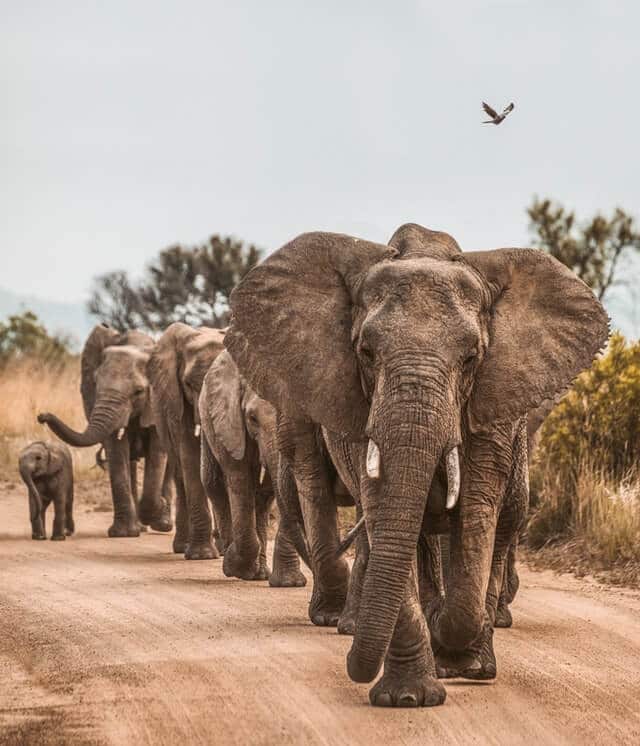
Olifanten kun je het beste in het wild zien. De beste plaatsen om olifanten te zien in Afrika zijn onder andere: KeniaTanzania, Botswana and Uganda.
In Asia, Sri Lanka, India, and Thailand are all outstanding destinations for seeing elephants in their natural habitat.
Top 3 National Parks to see Elephants in Africa
- De best place to see elephants in southern Africa is Kruger Nationaal Park. Het heeft de grootste populatie olifanten en de hoogste dichtheid. Het park heeft een oppervlakte van 19.633 vierkante kilometer en heeft een aantal lodges waar toeristen kunnen overnachten.
- De de beste plaats om olifanten te zien in Oost-Afrika is Tsavo Nationaal Park in Kenia. Het park heeft een oppervlakte van 9.065 vierkante kilometer en heeft een scala aan hotels voor toeristen.
- De de beste plaats om het grootste aantal olifanten op één plek te zien is Addo Elephant National Park in Zuid-Afrikagelegen ten zuidoosten van Kaapstad.
Best Places to See Elephants in Asia
While Africa tends to dominate the conversation around elephant tourism, Asia offers equally memorable experiences. Asian elephants are smaller than their African cousins, but encounters in dense jungle and open grassland can be just as thrilling.
Sri Lanka
Udawalawe National Park is often compared to a mini African safari. Herds of 50 or more elephants roam the open grasslands, and sightings are virtually guaranteed year-round. Nearby, Minneriya National Park hosts “The Gathering”, one of the largest wild elephant congregations on earth. Between July and October, up to 300 elephants converge around the Minneriya Tank reservoir, making it a bucket-list spectacle for wildlife lovers.
India
Jim Corbett National Park in Uttarakhand is India’s oldest national park and home to a healthy population of Asian elephants alongside Bengal tigers. Jeep safaris and elephant-back rides through the sal forests offer excellent chances of spotting herds. In the south, Periyar Wildlife Sanctuary in Kerala provides a unique experience: boat safaris across Periyar Lake, where elephants come to bathe and drink along the shoreline.
Thailand
Elephant Nature Park near Chiang Mai is widely regarded as one of the most ethical elephant sanctuaries in the world. Visitors can observe rescued elephants living in semi-wild conditions, feed them, and walk alongside them without riding. For a wilder setting, Khao Sok National Park in southern Thailand is home to free-roaming elephants in ancient rainforest. Guided treks and lake safaris give visitors a chance to see elephants, gibbons, and hornbills in one of the most biodiverse regions in Southeast Asia.
Wilde populatie: hoeveel olifanten zijn er nog in het wild?
According to the International Union for Conservation of Nature (IUCN), there are approximately 415,000 African elephants remaining in the wild. The species is split into two distinct types: the African savanna elephant and the smaller African forest elephant. Both face ongoing threats from poaching and habitat loss.
De largest populations of elephants in the wild wonen in Centraal- en Oost-Afrika. Zuid-Afrika, Botswana en Zimbabwe hebben de grootste populaties.
Aanbevolen lectuur: Hoeveel olifanten zijn er nog in de wereld?
The IUCN estimates that there are between 35,000 and 40,000 Asian elephants left in the wild. The population is decreasing due to loss of habitat, human-elephant conflict, and the illegal wildlife trade. Sri Lanka, India, and Thailand hold the largest remaining populations.
Ethical Elephant Tourism
Not all elephant experiences are created equal. As awareness grows in 2026, travellers are increasingly seeking out ethical encounters that prioritise the welfare of the animals over entertainment.
What to look for in a responsible sanctuary
A genuinely ethical elephant sanctuary will allow elephants to roam freely in large, natural enclosures. Visitors should be able to observe and walk near elephants, but riding, bathing, or performing tricks are red flags. Look for facilities that focus on rescue and rehabilitation rather than breeding for tourism.
- No riding. Carrying tourists on their backs causes long-term spinal damage to elephants.
- No chains or bullhooks. Responsible sanctuaries use positive reinforcement, not fear-based training.
- Transparent about their elephants’ histories. Good sanctuaries openly share rescue stories and veterinary care details.
- Accredited or endorsed. Look for endorsements from organisations like the Global Federation of Animal Sanctuaries (GFAS) or World Animal Protection.
Riding camps vs. sanctuaries
Traditional elephant riding camps, still common in parts of Southeast Asia, typically use a training process called “phajaan” (the crush) to break young elephants’ spirits. These camps often keep elephants chained when not working and provide inadequate food and veterinary care. By contrast, ethical sanctuaries like Elephant Nature Park in Thailand or the Elephant Transit Home in Sri Lanka focus on giving rescued elephants a life that is as close to wild as possible.
Before booking any elephant experience, research the facility thoroughly. Read recent visitor reviews, check for accreditation, and avoid any venue that offers direct riding or performances. Your choices as a traveller directly influence the demand for ethical treatment of these incredible animals.

2 reageert op "Where is the best place to see elephants?".
Hallo, ik heb een fout opgemerkt onder waar is de beste plek om olifanten te zien. Tsavo National Park ligt in Kenia, Oost-Afrika, niet in Azië. Gelieve deze verklaring te corrigeren. Dank u.
Dank je Vaishalee! Het is gecorrigeerd.